- IOTA puts trading, trade finance and cross-border payments at the center of its strategy.
- With TWIN, the project aims to create a global level of trust for international trade.
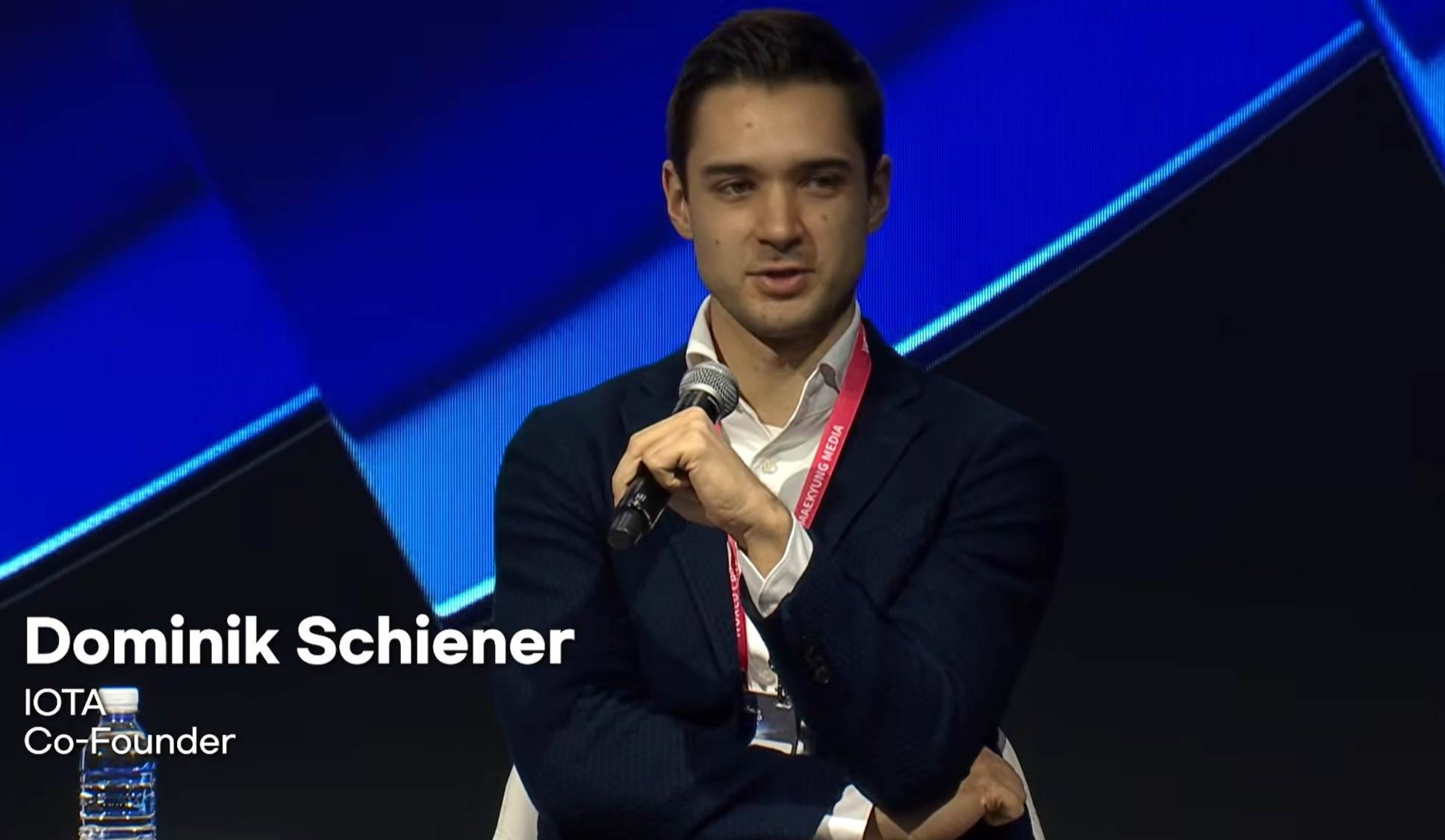
At the World Crypto Forum in Korea in mid-February, IOTA co-founder Dominik Schiener explained that the project is specifically building an infrastructure for trade, trade financing and cross-border payments. The project would like to differentiate itself from the crypto casino. Schiener explained:
“Since the founding of IOTA, we have always said that blockchain only makes sense if it is used in the real world. It is not about building a casino. It is not just about trading use cases. It is about how we can ensure that industries, governments and people really benefit from this technology.”
At the @wkforum in Korea, @DomSchiener explains how IOTA is replacing archaic paper systems with a „Digital Highway“ for global trade.
From Kenya to the UK, IOTA is proving that blockchain can be an infrastructure to bring the world onchain.
Full interview:…
— IOTA (@iota) March 17, 2026
Two years ago, the IOTA Foundation therefore redefined its strategic direction:
“We said: No, we just focus on trade. We focus on the digitalization of trade, on trade finance solutions and on payments for cross-border trade. That was our focus and that was our success.”
At the heart of this strategy is TWINIOTA’s digital trading solution. According to Schiener, this is not competition to existing national platforms, but rather an additional level for international trust building.
“We are not competing with the national single window systems. We are not competing with the national trading systems. Instead, we are building the international highway,” he said. Countries should not use this to replace their existing systems, but to connect their local data to a global infrastructure that facilitates export to other markets.
Schiener explained why IOTA considers this approach necessary with the structural weaknesses of today’s trading:
“The biggest trust issues we’ve seen really arise in this cross-border context. How can one country trust another country? How can an exporter trust an importer’s data? That’s why everything in trade today is still paper-based.”
IOTA joked internally for a long time that its biggest competitor was paper documents. In fact, according to Schiener, trade is still “a very archaic system” in which paper documents are often still the primary source of truth for customs authorities, ports and banks.
Africa plays a central role
Schiener said IOTA launched an initial pilot in Kenya five years ago together with the Kenya Tax Authority, the government and TradeMark Africa to digitize trade documents and bring paper-based processes to the blockchain. We have now arrived at a new phase:
“Last November we had together with the AfCFTAwith TradeMark Africa and with the Tony Blair Institute, which is also one of our partners, a very big announcement to digitize the entire African continent. It is a huge vision to connect 55 countries in Africa through IOTA and this digital trading solution we are building.”
This should increase intra-African trade while reducing costs, payment times and payment effort. Schiener announced further expansion for 2026. IOTA wants to connect three more countries to the trading solution this year. The system is also supposed to be in Kenya until the end of the second quarter will be put into productive operation after having previously been used primarily in a pilot for the flower industry.
Also in the UK Schiener referred to initial successes. According to Schiener, around 4,000 shipments have been processed between Poland and the United Kingdom in pilot programs at several British ports over the past two years. The main advantage is the speed.
“If there is just one error in a paper document, the entire shipment must be discarded. What we have done is digitized the certificates, the export certificates and all the trade documents. Our solution allowed the goods to be released within hours – something that would normally have taken two days.”
In addition, IOTA wants to combine tokenization with financing. Schiener pointed out Projects in Rwandawhere critical minerals were tokenized as physical assets.
“Today, these companies pay around 20 percent interest to obtain trade financing. Imagine: 20 percent of the total value is lost just because you need access to liquidity.”
New focus on UK and Korea
In an initial pilot project worth several million dollars, IOTA tokenized assets, digitally mapped warehouse receipts and titles of ownership, and enabled payments in stablecoins so that producers can obtain capital more quickly and cheaply.
That’s new Focus on Korea. IOTA wants to cooperate with local trading systems there:
“There is no set of contracts, no set of consortia or standards that can really compete with this permissionless global common source of truth that is enabled by a blockchain. Because with the blockchain, with IOTA, we can really prove the origin of the data. We can prove the authenticity of the data, and we can prove that the data has not been tampered with.”
According to Schiener, TWIN should become a SWIFT for cross-border trade worldwide: open, organized in a consortium and closely linked to governments.