
- On-chain indicators point to a new bullish phase in Bitcoin as whales accumulate heavily and the market is structurally more structural than previous cycles, according to CryptoQuant.
- Providing additional tailwind are US spot Bitcoin ETFs, which have posted their first five-day streak of net inflows of 2026.
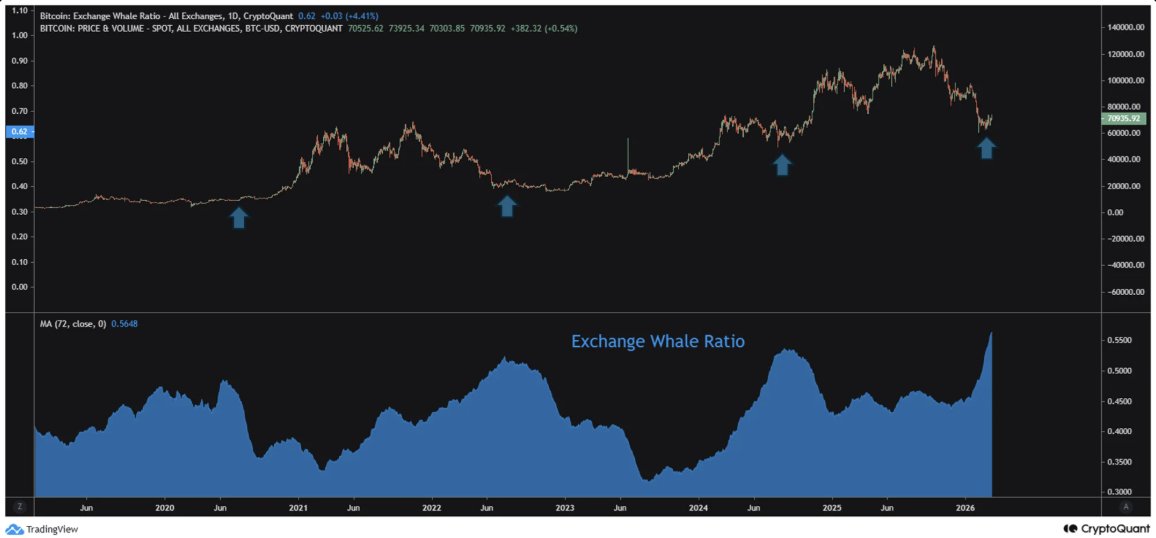
Several on-chain signals and a striking series of ETF inflows show the current bullish momentum in Bitcoin, consolidating evidence of a new upward phase. A well-received post by CryptoQuant analyst CW8900 refers on the so-called exchange whale ratio, which has currently reached its highest level in six years.
His core message is clearly bullish: “Whales buy low and sell high. Retail investors, on the other hand, often buy high and sell low,” he wrote. When the whale ratio rises on stock markets, it marks “a short-term bottom,” and when the ratio peaks, an uptrend begins. CW8900 concludes:
“The current exchange whale ratio is at its highest level in six years. At the same time, the proportion of retail investors is at its lowest level in the past six years, and whales are accumulating very strongly. On-chain indicators are signaling the start of an uptrend, and the exchange whale ratio also suggests that the current level marks the bottom.”
The image is supported by a Analyse from CryptoQuant analyst Darkfost, pointing to the ongoing shift between Long-Term Holders and short-term holders. According to him, this cycle was significantly different than previous cycles:
“First, it is important to note that the majority of supply continues to be held by long-term holders. Today they represent approximately 79% of total supply.”
This point in particular is for them Cycle debate central. In previous market phases, the share held by LTH fell significantly faster as Bitcoin neared the end of the cycle. Darkfost refers here to 2021: At that time, the LTH share fell from 82% to 70% in just over six months. This was “largely due to insufficient liquidity on the part of short-term holders, who were unable to adequately absorb the selling pressure.”
In the current cycle, however, this transition has taken place in waves. The analyst writes:
“During the current cycle, this transfer occurred in waves. At each stage, short-term holders emerged, took up the offer, and over time themselves became long-term holders. We have observed six waves of this type in this cycle.”
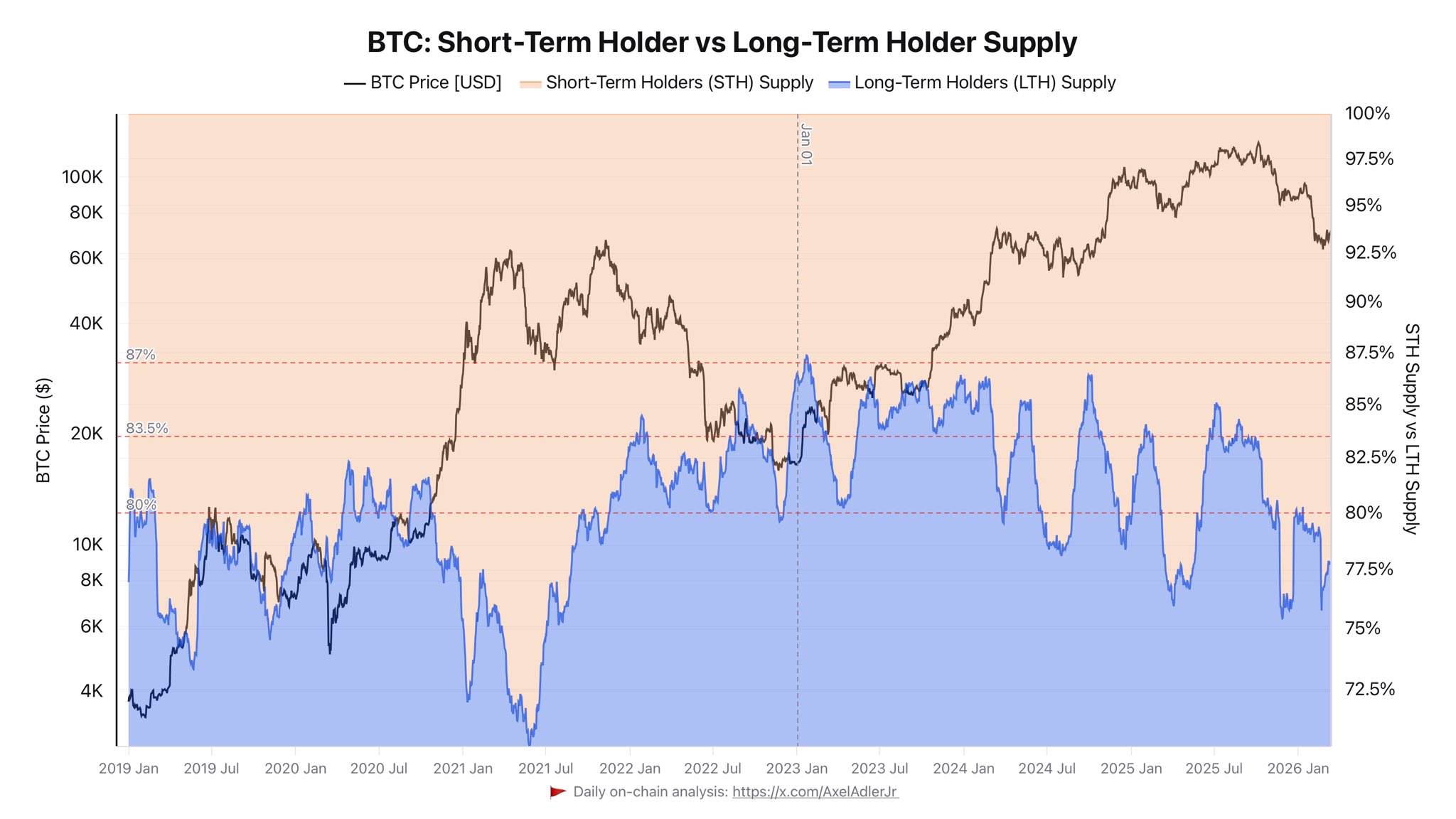
His analysis derives two observations from this. First, liquidity appears to be significantly deeper this cycle, so long-term holders repeatedly found counterparties while Bitcoin continued to perform. Secondly, speculation was more pronounced because some of the short-term holders apparently realized profits shortly after the six-month mark was exceeded.
The main reason for this could be the growing role of new market participants via ETFs and Treasury-Firmen be. Taken together, Darkfost said, all of these factors changed Bitcoin’s market structure.
This is also shown by the current tailwind from the US spot Bitcoin ETF market. As of March 14, 2026, US spot Bitcoin ETFs recorded loud Data from SoSoValue its first streak of five consecutive days of net inflows this year. For the week of March 9-13, these inflows totaled around $767.32 million.
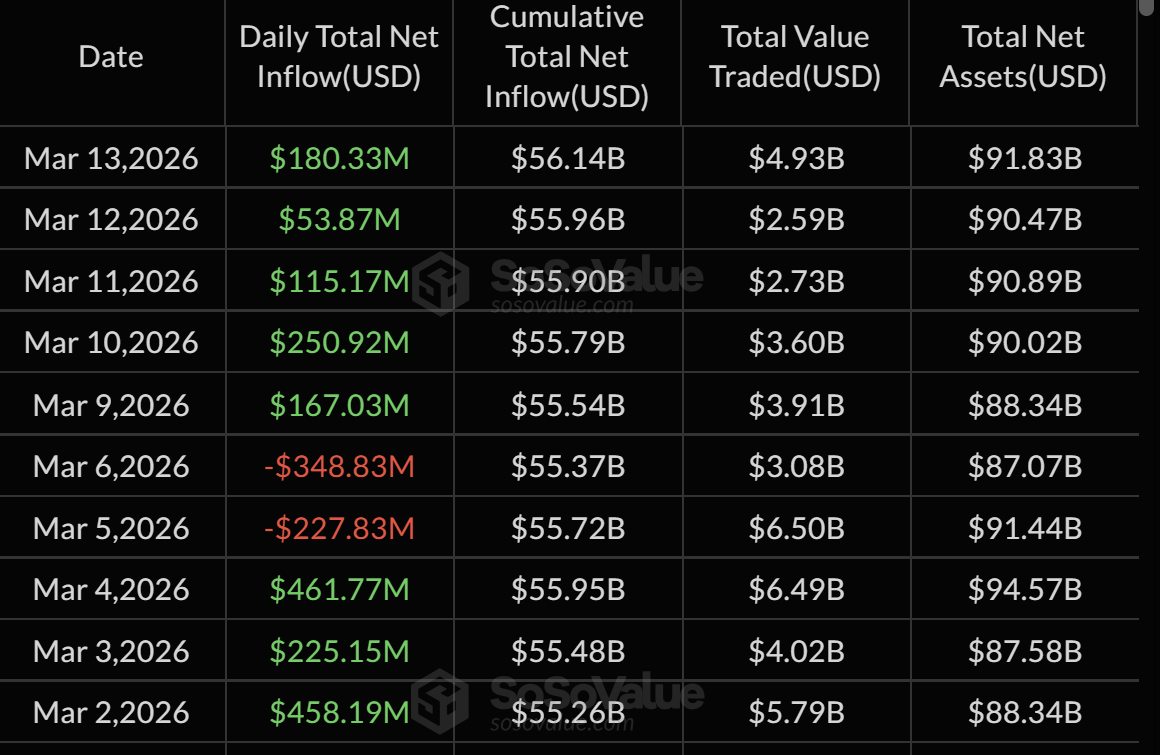
The strongest day last week was Tuesday, March 10, with $250.92 million. The series continued on Friday: a further $180.33 million in net inflows were reported for March 13.
BlackRock’s iShares Bitcoin Trust was once again particularly noticeable. IBIT provided around $144 million on Friday, around 80% of the day’s movement; over the entire five-day phase, the fund’s inflows were around $600 million.