
United Airlines Bets on Smaller Planes for Long-Haul International Routes
United Airlines is taking a different approach to international travel in 2026. Rather than relying exclusively on giant wide-body aircraft such as the Boeing 747 or Airbus A380, the Chicago-based carrier plans to launch 10 new nonstop destinations next spring using a mix of aircraft, including smaller single-aisle jets.
The new routes will connect the United States with destinations including Luxembourg, Slovenia, the Azores and Sicily. Several will be operated by United’s Airbus A321XLR, a long-range narrow-body aircraft equipped with premium cabins.
United expands long-haul service with smaller aircraft
United is increasingly betting that travelers would prefer nonstop flights to less-touristy international destinations, even if those flights operate on smaller aircraft than traditional transatlantic services.
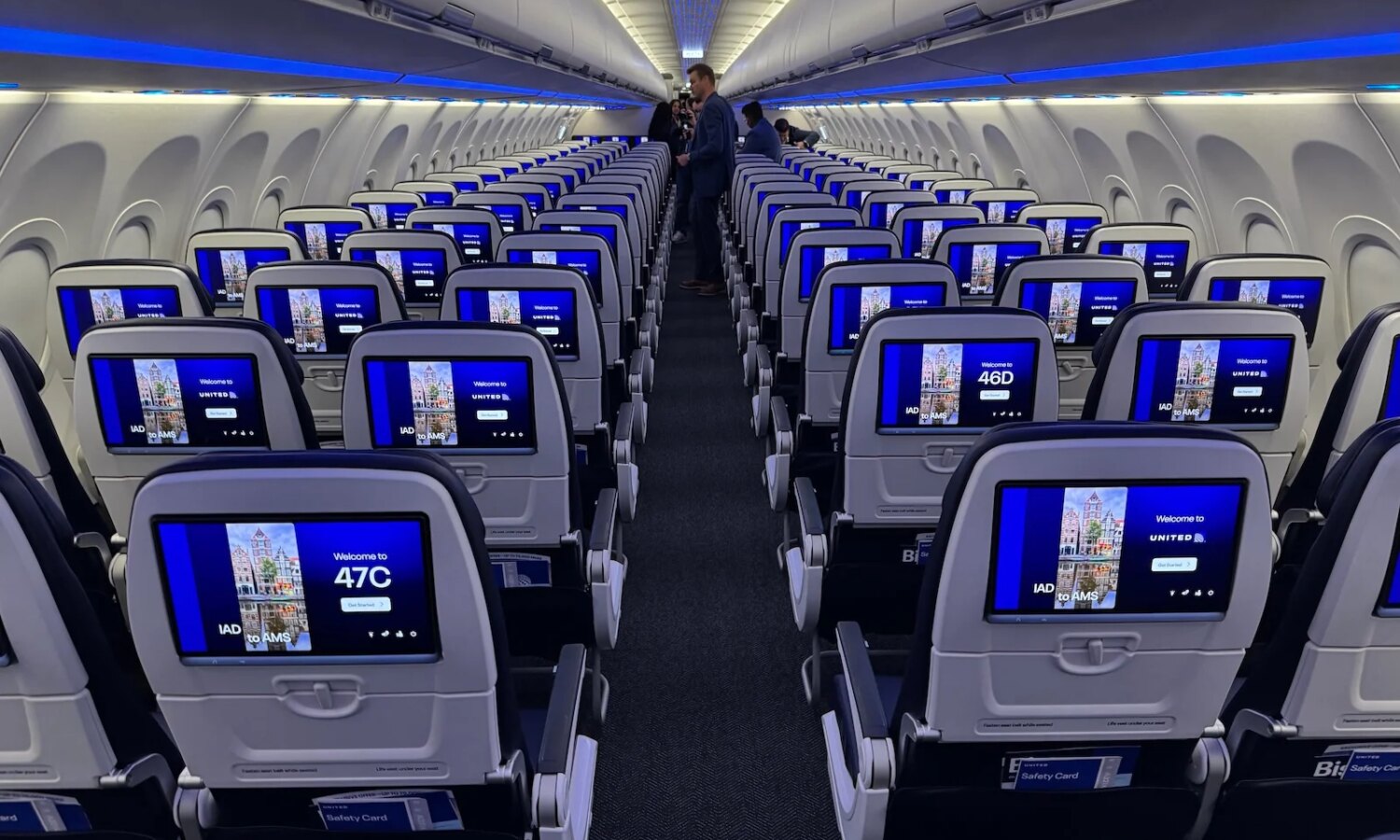
The airline’s Airbus A321XLR features a true international business-class cabin, along with premium economy. United has 50 of the aircraft on order, making the jet an important part of its international growth strategy for years to come.
“There’s really no other U.S.-based carrier that’s leaning in to this narrow-body platform in a premium configuration the way United is,” chief commercial officer Andrew Nocella said last week.
United’s A321XLR is expected to include 20 Polaris suites and 12 Premium Plus recliners, as well as a walk-up snack bar in economy. One row will also allow passengers to pay extra for a guaranteed empty middle seat.
Delta questions the narrow-body experience
Flying for eight hours or more on what is essentially a domestic-size aircraft may not appeal to every traveler. Delta Air Lines, United’s top rival, has made clear that it does not plan to use single-aisle aircraft on long-haul international routes.
“I don’t know if it’s the best product,” Delta’s chief commercial officer, Joe Esposito, told me bluntly in a recent interview.
Delta has repeatedly said it will continue using larger aircraft for intercontinental flights, even as competitors use narrow-body jets to serve smaller and more specialized international markets.
“I think we’ve got a best-in-class product,” Esposito said, “It’s hard to put a great product on a narrow-body [plane] for international. Especially if you’re trying to go far.”
A smaller aircraft generally offers less space for passengers to move around and less galley space for flight attendants to prepare meals. It also typically has fewer lavatories, potentially creating longer lines on lengthy international flights.
United highlights nonstop convenience
United believes the premium features of its A321XLR will make the aircraft attractive to travelers. The airline also sees the ability to reach final destinations without a European connection as the plane’s biggest advantage.
“When you add that in with the fact that it’s a nonstop flight and it avoids the connection in Europe, this is all the ingredients for success,” Quayle said. “So, we’re quite bullish on it.”
Patrick Quayle, United’s chief network planner, said the narrow-body aircraft will allow passengers to travel directly to their final destination instead of changing planes in major European hubs such as Paris, Rome or Frankfurt.
Travelers divided over smaller transatlantic planes
Frequent flyers responding to United’s new route announcement were split over whether they would take a single-aisle aircraft across the Atlantic.
“I won’t take a single [aisle] airplane across the ocean … if I can help it,” one TPG reader commented on an Instagram post.
“As for me, I’ll get on the nonstop and not spend my time at a European megahub wondering if I’m [going to] miss my connecting flight,” another wrote. “By the time you show up, I’ll already have done a half-day tour, had dinner and be at the bar with a drink in my hand.”
Airlines expand international routes with A321XLR aircraft
United is not the only airline using long-range narrow-body aircraft to reshape international service. American Airlines began operating its own Airbus A321XLR earlier this year on a route to Edinburgh and plans to fly the aircraft to Porto, Portugal, Vienna and Amsterdam in 2027.
Spain’s Iberia and Ireland’s Aer Lingus have already used the aircraft to introduce nonstop flights between smaller U.S. markets and Madrid or Dublin. JetBlue has operated narrow-body aircraft across the Atlantic since 2021 and has received recognition for its premium Mint business-class cabin.
United continues to invest in wide-body aircraft
United is not abandoning wide-body aircraft. The airline has a historically large order of twin-aisle jets scheduled for delivery in the coming years, including Boeing 787 Dreamliners that are expected to anchor its long-haul network for decades.
At the same time, newer long-range narrow-body aircraft give airlines greater flexibility to open routes that may not have been viable with larger jets. That strategy is increasingly appealing as travelers look for lesser-known and less-touristy destinations.
The shift would have been difficult to imagine at the turn of the century, when Airbus began building the A380 and the Boeing 747 still ruled as the “Queen of the Skies.” Delta, however, appears content to sit this trend out.