Former Australian treasurer Josh Frydenberg is preparing to publish a memoir that combines a coming-of-age story, family history and reflection on the Covid-19 pandemic.
Published by HarperCollins Australia, the book promises to examine “on what political power can and cannot achieve, on the cost of public life in an increasingly divided world, and on the unique promise and potential of Australia”.
The publisher also describes Frydenberg’s account of how Australia achieved “one of the strongest economic and health recoveries in the world” after the pandemic. It presents his response to antisemitism and hate following Australia’s deadliest domestic terrorist attack at Bondi as another example of his leadership: “In his inspiring advocacy against antisemitism and hate in the aftermath of Australia’s deadliest domestic terrorist attack at Bondi, he found the words many were searching for.”
Some observers regard the memoir as part of a broader strategy to position Frydenberg for a political comeback. He lost his seat to independent Monique Ryan in 2022.
If the speculation is correct, Frydenberg’s midlife memoir would suggest the former treasurer has yet to learn from the experience of his predecessors.
Political memoirs and American influence
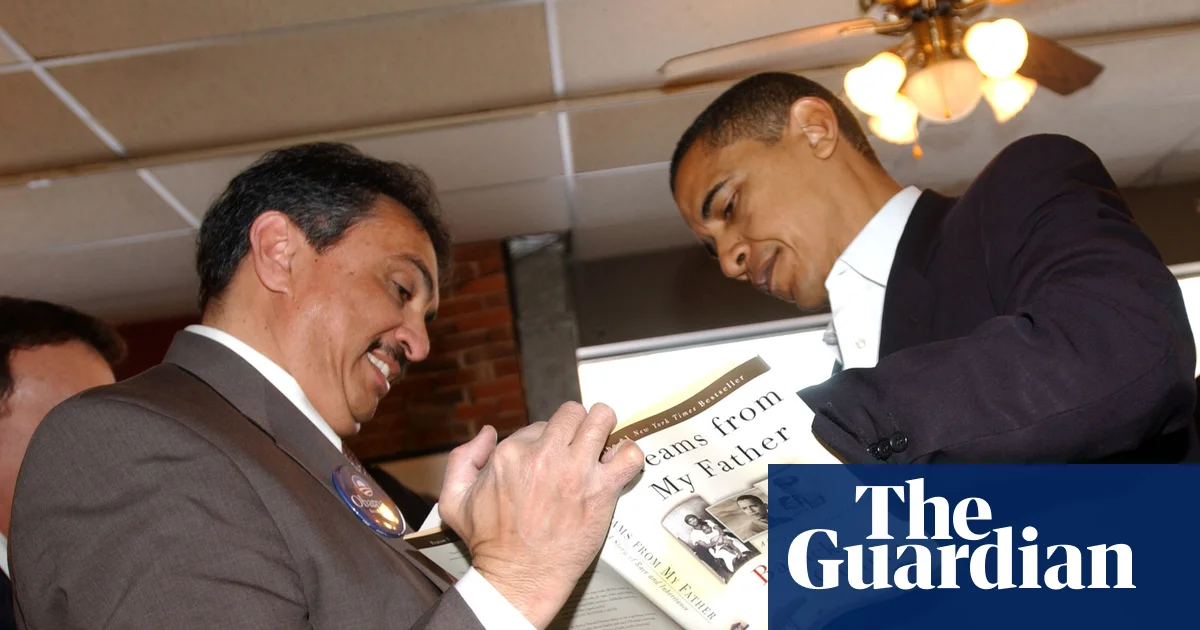
Book-length political myth-making is a long-established feature of modern politics. In the United States, it has been a tried and tested tool for presidential candidates, from John F Kennedy to Joe Biden. Barack Obama demonstrated how a well-timed book could raise the profile of an emerging leader.
During the 20th century, Australian Labor figures in opposition were particularly inclined to follow the American example, encouraged by a growing local publishing industry. Opposition leader Arthur Calwell and senior leftwing figure Jim Cairns published books in the 1960s, but quickly discovered that, to borrow Lloyd Bentsen’s immortal words, they were “no Jack Kennedy”.
Labor parliamentarians including Lindsay Tanner and Wayne Swan published political reflections during the Howard years. Sales were rarely exceptional. One rising western Sydney MP, Mark Latham, used his densely argued book Civilising Global Capital (1998) to establish himself as a possible future leader.
Observers such as Michelle Grattan understood the political risk, noting that “Labor books” could soon become “Liberal weapons”.
How Liberal politicians used memoirs
More recently, Liberal politicians have embraced memoir as a form of performance politics, building public personas and shaping personal histories around broader ambitions.
The Liberal party’s crisis of authority after the Howard era produced bitter conflict between factions, leaders and competing ideological traditions. In that environment, controlling one’s own history, and the party’s history, became increasingly important to conservative political strategy.
Tony Abbott’s mid-career memoir, Battlelines, helped him become Liberal leader. The book began as an effort to recover from what colleagues described as a “political funk”. It gave Abbott a larger public platform and a range of controversial policy proposals to discuss, including carbon charges, a referendum to expand Commonwealth constitutional power, age pension reforms and a special “covenant” form of marriage.
A promotional tour for the book also demonstrated Abbott’s communication skills and some of his charisma. His book events became opportunities to speak with increasingly disillusioned Liberal members who opposed the Rudd government’s emissions reduction policy.
Abbott, who had previously been inclined to concede the climate issue, was encouraged to confront Labor and, initially, climate-conscious opposition leader Malcolm Turnbull. Abbott defeated Turnbull for the leadership by a single vote in a party-room ballot on 1 December 2009.
But Battlelines was the exception, not the norm.
In 2011, Liberal frontbencher Andrew Robb published Black Dog Daze, a frank account of his experience of and treatment for diurnal variation, a condition involving serious morning depression. The book was an honest and courageous examination of a sensitive personal issue, but it was also shaped by leadership ambitions that were never fulfilled.
While in government, Christopher Pyne published A Letter to My Children, outlining his approach to public service and the influence of his father, the late ophthalmologist Remington Pyne. The book and its marketing softened Pyne’s reputation as a parliamentary antagonist and advocate of deregulating higher education fees. It did not, however, place him in the “winner’s circle”.
The cautionary tale of Peter Costello
Perhaps the clearest warning for Frydenberg is the experience of former treasurer Peter Costello. John Howard’s “longsuffering” deputy surprised Liberal colleagues by declining the leadership after the 2007 election.
After returning to the backbench, Costello worked with his father-in-law, the conservative intellectual Peter Coleman, on the book that became The Costello Memoirs: The Age of Prosperity.
From its beginning to its publication, the book was closely associated with speculation about Costello’s leadership ambitions. He joked with his publishers that it could be called “The story so far”. Costello told reporters he would not be a future leadership candidate, but Coleman told the same reporters there was still “a crack in the door”.
Journalists initially suggested that a successful memoir might help Costello become leader. By the time the book was published in October 2008, however, the political and media environment had shifted. Leadership instability was already under way and the global financial crisis was unfolding.
The book sold well, although its early performance was reportedly uncertain. In its first weeks, it was said to have been outsold by a children’s fantasy novel, Christopher Paolini’s third Eragon book, and the sequel to a cookbook featuring recipes with no more than four ingredients, 4 Ingredients 2.
The result must have been anticlimactic for Costello, who left parliament the following year.
The limits of political performance
Serving politicians have good reasons to publish books. Memoirs can attract attention, stimulate debate and, at times, offer engaging reading. Cairns helped modernise Labor politics through ambitious, if dense, books about Australia’s future as a social democratic society in the Asian region. Abbott and Costello also contributed to debates about the Liberal party’s future.
Today’s ambitious politicians face growing public disaffection with the political class and declining support for the major parties. As a result, they increasingly present themselves through personal and autobiographical narratives.
But memoirs are imperfect vehicles for political revival. Even if there are enough Liberal party members to fill a book launch in Kooyong, Frydenberg cannot assume that a long line of readers, voters and parliamentary supporters will return him to high office, regardless of how many favourable endorsements appear on the back of his book.
Performance Politics by Joshua Black is published by New South Press on 1 September for $39.99.