VAR Process Failures Highlighted in Manchester City Controversy
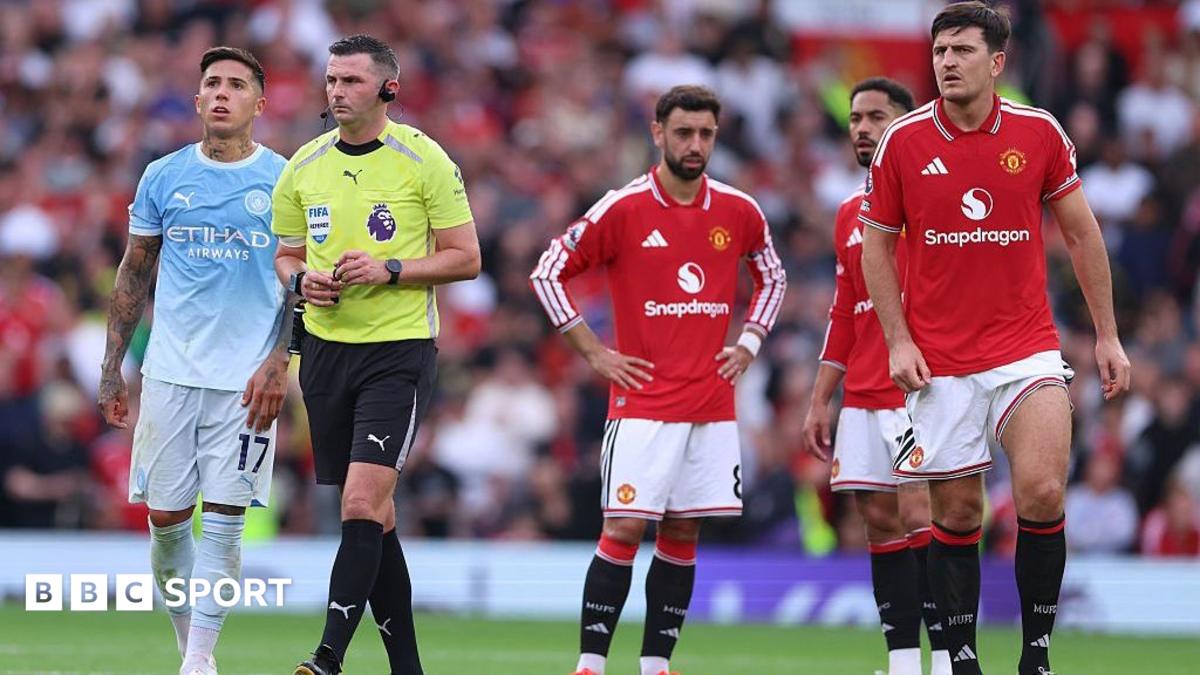
A critical breakdown in Video Assistant Referee (VAR) protocol has emerged following the review of a Manchester City goal, with officials accused of skipping essential assessment steps in favor of speed. The incident, involving VAR John Donohue and Assistant VAR (AVAR) Lee Antrobus, has drawn scrutiny over procedural errors that occurred before the final decision was reached.
Premature Transition to Offside Technology
The most serious error in the process came before Donohue attempted to rush through the attacking phase review. Donohue instructed the replay operator to stop the video on the first replay — the moment Josko Gvardiol touched the ball to cross into the penalty area — and immediately moved to the semi-automated offside technology.
This approach bypassed a fundamental requirement: the VAR team should have assessed the full sequence of play, from the delivery of the cross to Erling Haaland’s header. A complete review would have provided awareness of Enzo Fernandez’s position and potential impact inside the penalty area.
Narrow Focus Undermined Comprehensive Review
By failing to evaluate the events inside the penalty area during the initial phase, the officials deferred that analysis until later. At that point, the sole focus for Donohue and Antrobus became whether Fernandez had touched the ball — a touch that would have created a new phase of play and placed Haaland in an offside position.
While Donohue has absorbed much of the public criticism, Antrobus’s role — or lack thereof — was arguably just as influential. The AVAR’s entire contribution to the review consisted of uttering “no, yeah” regarding the potential touch by Fernandez. This remark came just one second before Donohue declared, “final decision is goal, check complete.”
AVAR Role and Checks and Balances
The AVAR is responsible for providing checks and balances to ensure the VAR has not missed any critical elements. In this instance, that safeguard fell short. The failure raises questions about whether external factors influenced Antrobus’s judgment.
Previous Lengthy Delay May Have Played a Role
This season has seen only one notably lengthy VAR delay, occurring during the Brentford versus Sunderland fixture. In that match, a Dan Ballard goal was disallowed for a subjective offside against Kevin Danso — a review that exceeded four minutes. Antrobus served as the AVAR for that game as well, and the extended delay attracted significant media criticism.
While it cannot be confirmed, the psychological impact of that prior scrutiny may have weighed on Antrobus during Sunday’s review. Ironically, in the Brentford match, Antrobus played a crucial role in guiding VAR Tim Wood to the correct offside decision against Danso.
Support VAR Did Not Intervene
An additional layer of oversight exists in the form of the support VAR, positioned in the operations room adjacent to the match hub at Stockley Park, with authority to intervene on protocol matters. Despite awareness of the unfolding review, no action was taken.
The situation remained salvageable during the window between the goal being scored and the subsequent kick-off — a period in which protocol allows for corrective intervention.