Key Highlights
- José Mourinho attended the inaugural Spanish Grand Prix at the Madring circuit, located less than four kilometres from Real Madrid’s training ground, following a 4-1 La Liga victory over Rayo Vallecano.
- The veteran coach argued football must learn from Formula 1’s approach to high-pressure environments, specifically citing drivers’ ability to engage with media and fans before “fighting for their lives” in the car.
- Mourinho dismissed immediate prospects of becoming an F1 team principal but confirmed a close relationship with F1 CEO Stefano Domenicali and drivers like Max Verstappen, expressing a preference for attending qualifying and free practice sessions.
Mourinho Experiences the Inaugural Madrid Grand Prix at Madring
From Bernabéu Victory to the F1 Paddock
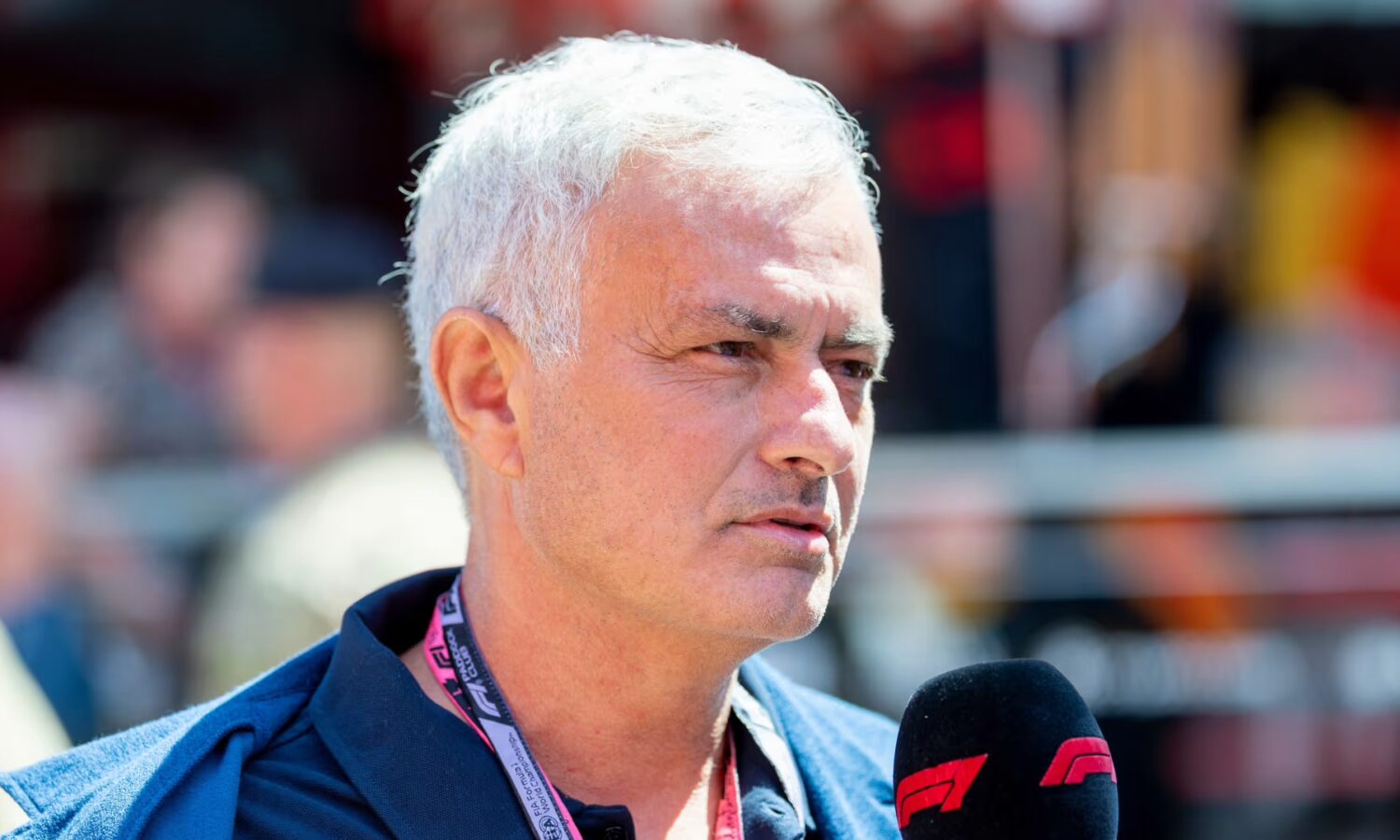
Two sporting worlds collided at the Madring circuit last weekend as legendary football manager José Mourinho visited Formula 1’s newest venue for the inaugural Spanish Grand Prix in Madrid. The hybrid street-permanent facility, constructed around the IFEMA Exhibition Centre, sits mere kilometres from Real Madrid’s Valdebebas training complex where Mourinho currently works. His arrival came just 12 hours after overseeing a commanding 4-1 La Liga win over Rayo Vallecano at the Santiago Bernabéu—a match that saw Kylian Mbappé and Jude Bellingham propel Los Blancos level on points with FC Barcelona at the summit of the table. For the Portuguese tactician, a long-time F1 enthusiast who has attended events including the 2024 British Grand Prix, the Madring debut carried unique personal significance.
“I’ve enjoyed it [F1] for a while, and I’ve been to a few races, but of course this is the first one [at the Madring],” Mourinho told F1.com. “Because I work just around the corner, every day that I was coming to work or leaving work, I was following it, the building [process], and the more we were approaching this day, [there was] more emotion for everybody.”
Pressure, Preparation, and Lessons from the Grid
Drawing on a managerial career spanning Benfica, Porto, Chelsea, Inter Milan, Real Madrid, Manchester United, and Roma—yielding over 25 major trophies including two UEFA Champions League titles—Mourinho offered a nuanced comparison between the psychological demands of elite football and Formula 1. While acknowledging the shared intensity of top-level competition, he identified a critical divergence in how athletes manage the moments preceding peak performance.
“You know, it’s huge pressure for both,” he says thoughtfully. “When you have sports at the highest level, we are always speaking about huge pressure. But I feel that they [F1] are one step ahead of us in terms of the way they approach the big moments. [In football] we close each other [off], I believe, too much, also because of tradition.“
He elaborated on the contrasting pre-event rituals, highlighting the accessibility mandated in the F1 paddock. “These guys [the drivers], [there’s] huge pressure, but before that [time in the car], they are together, they meet people, they do a little bit of PR, they do a little bit of media. I think we have to learn with them, the way they can be relaxed, and half an hour later they can be in the car fighting for their lives, because they take risks.”
The Hypothetical Team Principal Role and Paddock Relationships
When pressed on the hypothetical scenario of transitioning from the technical area to the pit wall as an F1 team boss, Mourinho responded with characteristic candor. “I have no idea!” Mourinho responds, with his eyes widening at the prospect. “I just have to learn. I learn with [F1 President and CEO] Stefano Domenicali; I ask him lots of questions. I tried to learn with all of them [the people I meet], and I like very much to come [to watch F1].”
He clarified that his matchday commitments prevented a Saturday paddock visit, but outlined his preferred mode of engagement for future events. “It was not possible [on Saturday], because I had a match day, but I like to come for the Qualifyings, I like to come for the training sessions [Free Practices], because then clearly you can be closer, and you can interact more. Today is their day, and it’s the day I like to respect their privacy.”
Mourinho’s paddock currency remains high, bolstered by longstanding friendships with key figures including Domenicali and four-time World Champion Max Verstappen, who received his 2025 British Grand Prix pole position award from the coach at Silverstone. “I know almost all of them, and everybody [has been] so nice to me over so many years,” Mourinho continues. “Now we’re coming to some new people, to some new generations, but I always had great respect from them. Because, as a family, we are so close to Stefano, it is of course a great way to be invited – we invited ourselves! – and to have always the reception that we have.”
Why This Matters
The arrival of the Spanish Grand Prix at the Madring circuit represents a strategic expansion for Formula 1 into the Spanish capital, leveraging the massive global footprint of Real Madrid and the broader Madrid metropolitan area. Mourinho’s presence underscores the growing crossover appeal between elite football and motorsport, a trend accelerated by Netflix’s Drive to Survive and the increasing movement of athletes and owners across both ecosystems. His specific commentary on pressure management and “open” versus “closed” cultures offers a rare, high-level tactical perspective from a serial winner in football applying lessons from a different high-performance domain. With a 10-year contract securing Madrid’s place on the calendar until at least 2035, the Madring venue is poised to become a permanent fixture for sporting VIPs, further blurring the lines between the football and motorsport establishments.
Frequently Asked Questions
- Why was José Mourinho at the Spanish Grand Prix in Madrid?
- Mourinho attended the inaugural Spanish Grand Prix at the Madring circuit as a long-time Formula 1 fan. The venue is located less than four kilometres from Real Madrid’s training ground where he works, allowing him to follow the circuit’s construction process daily.
- What did Mourinho say about the difference between pressure in football and F1?
- Mourinho stated that while both sports operate under “huge pressure,” F1 is “one step ahead” in handling big moments. He noted that footballers “close each other off” too much due to tradition, whereas F1 drivers engage with media, PR, and fans before getting in the car, allowing them to be relaxed before facing life-threatening risks.
- Did Mourinho meet any F1 drivers or executives during the weekend?
- Yes, Mourinho met with F1 President and CEO Stefano Domenicali—whom he considers a close family friend—and four-time World Champion Max Verstappen. He presented Verstappen with the pole position award at the 2025 British Grand Prix and maintains friendships with many current and former drivers.