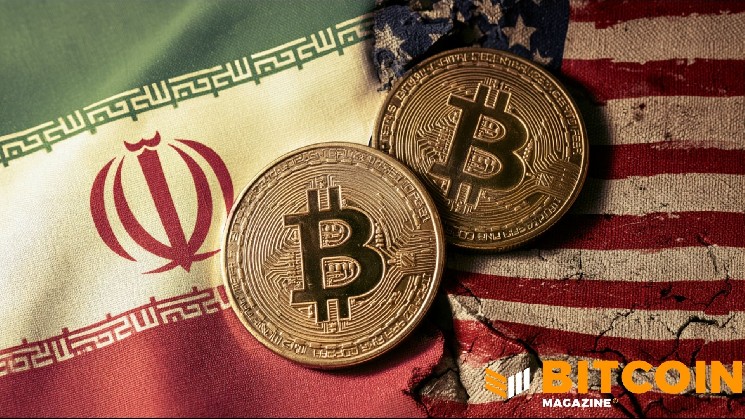
Bitcoin fell on Tuesday as escalating U.S.-Iran tensions pushed investors into risk-off mode, sending the largest cryptocurrency down more than 2% to $77,363.
Bitcoin had initially shrugged off President Donald Trump’s threats against Iran and the first strikes. The cryptocurrency had reached nearly $81,282 on Friday before retreating.
U.S.-Iran attacks drive bitcoin lower
President Trump said the U.S. attacks followed Iran’s attempted placement of mines in the Strait of Hormuz and an attack on an American military base in Jordan. U.S. Central Command also said Iran had attacked commercial ships.
Today at 12 p.m. ET, U.S. forces began striking Islamic Revolutionary Guard Corps (IRGC) targets in Iran. The strikes follow recent attempted attacks by the IRGC against commercial shipping in the Strait of Hormuz and against American service members deployed to the region.
— U.S. Central Command (@CENTCOM) September 1, 2026
“The strikes follow recent attempted attacks by the Islamic Revolutionary Guard Corps against commercial shipping in the Strait of Hormuz and against American service members deployed to the region,” the post read.
Iran responded with a “decisive operation” against U.S. military bases, according to Iranian media. Oil prices surged following the news.
Geopolitical tensions weigh on bitcoin
Bitcoin has remained sensitive to geopolitical tensions this year, particularly after Iran and Israel attacked Iran. The cryptocurrency has typically faced downward pressure when war-related news emerges, although it has later rallied when Trump raised hopes of a ceasefire.
Although bitcoin’s price has been relatively muted in recent months, the cryptocurrency has experienced larger swings since mid-August.
Bitcoin’s immediate response to higher oil prices is typically negative. More expensive energy can increase inflation, while persistent inflation may lead the U.S. central bank to delay interest-rate cuts, restricting the liquidity bitcoin needs to build momentum.
Federal Reserve Chair Kevin Warsh said in his first major speech as head of the central bank last week that inflation in the world’s largest economy had not fallen enough.
Traders are no longer pricing in an interest-rate cut this year and instead expect a rate hike. Bitcoin has historically performed well in low-interest-rate environments.
Liquidity support helped bitcoin rally in August
Despite the latest decline, bitcoin recorded one of its strongest runs in August after the U.S. Treasury said it would at least double the size of its liquidity-support buyback operations in response to rising borrowing costs.
The announcement weakened the dollar, while non-yielding assets such as bitcoin and gold benefited.
This post Bitcoin Slides as US-Iran Tensions Escalate first appeared on Bitcoin Magazine and is written by Mathew Di Salvo.