Aave V4 Umbrella Proposal Introduces Bad-Debt Backstop for Core Lending Markets
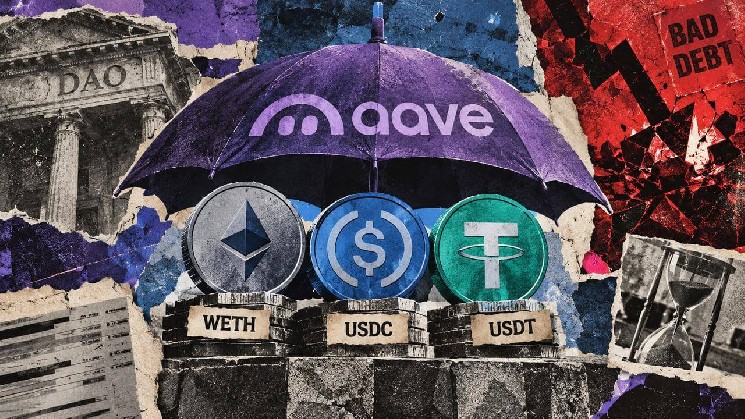
Aave V4 lenders supplying wrapped Ether (WETH), USDC, or USDT to the protocol’s Core liquidity Hub on Ethereum would gain a bad-debt backstop under a September 11 proposal from governance delegate TokenLogic. The “Umbrella” framework designates the Aave DAO as the first line of defense against losses, followed by volunteer underwriters, with initial coverage restricted to those three lending markets.
Proposed Underwriting Targets and Scope
The proposed underwriting targets are set at 800 ETH for Core WETH, 400,000 USDC for Core USDC, and 400,000 USDT for Core USDT. TokenLogic sized these amounts to cover six to eight weeks of expected loan growth. The figures represent targets for a proposed configuration, not capital already committed to protecting lenders.
For suppliers, the coverage boundary is the specific reserve, or asset pool, receiving their deposit. Coverage for Core USDC would not extend to USDC supplied to another Hub, even though the token is identical. Capital allocated to one Hub asset cannot clear another reserve’s deficit.
How Losses Would Be Absorbed
Bad debt arises when liquidation exhausts a borrower’s collateral but leaves debt unpaid. Under the proposed framework, the Aave DAO would absorb an initial layer through “deficit offsets” of 33 ETH for Core WETH, 15,000 USDC for Core USDC, and 15,000 USDT for Core USDT.
Umbrella underwriters could then lose their committed capital to cover deficits beyond that layer. Their funds would continue earning supply yield until used, with coverage implemented by burning supplied Hub shares. Additional rewards compensate participants for accepting that loss risk.
Coverage Eligibility Extends to Spoke-Borrowed Assets
Eligibility for that coverage would include all borrowing from each protected reserve. That includes loans originated through Spokes, the components where debt is created, whose collateral sits in other Hubs. Those credit lines still expose the Core reserve supplying the borrowed asset.
Underwriter Exit Terms Include Cooldown and Withdrawal Window
Underwriters would face a structured exit process. Each proposed market specifies a 20-day cooldown followed by a two-day withdrawal window. Aave’s withdrawal guidance states that participants who miss the window must activate another cooldown and wait a further 20 days.
Starting that exit process does not remove risk exposure. Aave’s Umbrella documentation notes that staked assets remain exposed to slashing during cooldown while continuing to earn rewards. The extra yield therefore comes with both potential capital loss and restricted access to funds.
Initial Plan Excludes USDG, frxUSD, and Other Hubs
TokenLogic does not recommend initial general-purpose coverage for USDG or frxUSD. The delegate cites uncertainty over incentive-sensitive lending activity and the ability to attract underwriters who transfer risk away from existing suppliers. For frxUSD, it highlights a concentrated, issuer-linked supplier base.
The assessment also leaves other Hubs’ reserves outside the initial plan, for varying reasons including limited incremental protection and narrow supplier bases. These exclusions do not mean the loans lack collateral or that losses are imminent.
Monitoring and Reassessment Timeline
TokenLogic proposes monitoring conditions after activation and reassessing the framework after three months, with excluded markets reconsidered as lending activity matures and supplier bases diversify.