Key Highlights
- TikTok creator @lily.girltea sparked a viral conversation on September 16, 2026, asking viewers whether relationships can truly recover after infidelity, drawing over 118,000 likes and 2,200 comments within five days.
- Commenters shared deeply personal accounts spanning a spectrum of outcomes—from enduring emotional trauma years later to successful reconciliation contingent on total behavioral change and forgiveness.
- The discussion highlighted that rebuilding trust often requires concrete actions like digital transparency, lifestyle changes, and acceptance of a fundamentally altered relationship dynamic rather than a return to “fairy tale” normalcy.
Viral Question Sparks Thousands of Personal Stories
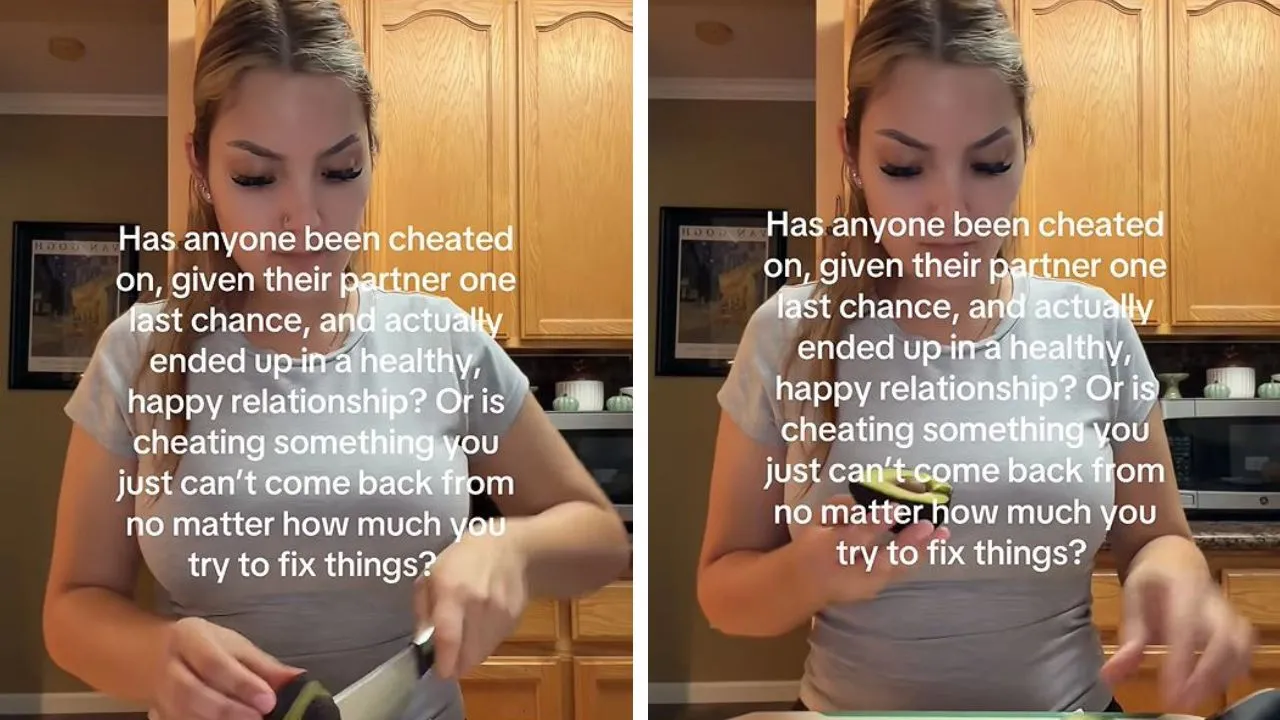
A silent TikTok video posted by creator @lily.girltea on September 16, 2026, has become a focal point for a raw, crowdsourced examination of infidelity and reconciliation. Filmed in her kitchen while preparing food, the video features no spoken dialogue. Instead, on-screen text poses a direct question to the audience: Has anyone been cheated on, given their partner one last chance, and actually ended up in a healthy, happy relationship? Or is cheating something you just can’t come back from no matter how much you try to fix things?
Set to the track “FOUND” by Zach Webb, the post rapidly accumulated more than 118,000 likes and 2,200 comments, transforming the comment section into a de facto support forum and debate hall.
The Spectrum of Healing: From ‘Something Died’ to Complete Forgiveness
The responses reveal no consensus, only a complex taxonomy of lived experience. One commenter encapsulated the lingering shadow of betrayal even after a partner reforms, writing, I stayed, he changed and has been so good to me, but something in me died. Not sure how to explain it, its been 3 years and I’m still hurting it comes in waves.
This sentiment—that the relationship survives but the person is permanently altered—was countered by accounts of total resolution. Another user testified to a complete turnaround: Yes! 4 years ago, I literally never think about it because he COMPLETELY changed all behaviors and has become a better partner and person. You have to fully forgive & they need to change.
The Case for Never Returning
For some, the cognitive toll of betrayal renders reconciliation impossible. A particularly vivid comment articulated the inescapability of the memory across life’s milestones: The one thing that will never make me go back to someone who’s cheated on me is I’ve heard from numerous women that you don’t stop thinking about it. You think about it when he gets down on one knee, you think about it when you’re at your wedding, you think about it when you decide to try for your first born, you think about it when you’re giving birth, you think about it when you hold ur first child.
This perspective frames infidelity not as a discrete event to be resolved, but as a permanent fracture in the narrative of a shared life.
Practical Steps Toward Rebuilding Trust
Amid the philosophical debate, several commenters offered concrete blueprints for the “work” required to repair a bond. One woman detailed the specific conditions that facilitated her reconciliation after her partner cheated a year and a half into their relationship: He gave me location full access to his phone, he actively stopped drinking and CHANGED. he also allowed me to lash out and go through the ups and downs of getting through a betrayal.
She noted the couple separated for three months before reuniting, concluding, 3 years later we are in an amazing place.
Her account underscores a recurring theme: recovery demands radical transparency, the cessation of contributing behaviors (like substance use), and the offending partner’s willingness to absorb the emotional volatility of the betrayed partner.
Cultural Touchstones and the ‘New Normal’
The discourse frequently borrowed from pop culture to articulate the shift in relationship dynamics. One commenter invoked the sitcom Friends to describe the loss of relational innocence, writing that there is no fairy tale left, even the realistic ones,
and that repairing a relationship afterward becomes a choice and work
rather than something that ever feels effortless again. Another offered a forward-looking framing focused on narrative control: You can never rewrite history but you can make it a very small fraction of your narrative when you put the work into making the rest of your life very different.
Why This Matters
The viral traction of @lily.girltea‘s post reflects a broader cultural shift toward processing relationship trauma in public digital spaces. Unlike traditional advice columns mediated by experts, TikTok’s algorithm surfaces peer-to-peer testimony, allowing users to benchmark their experiences against a vast, unfiltered dataset of outcomes. The conversation illustrates that “surviving cheating” is not a binary outcome but a negotiated, daily practice. For mental health professionals and relationship researchers, the thread offers a rich, real-time qualitative archive of how individuals navigate the aftermath of betrayal—highlighting the critical role of behavioral consistency, digital transparency, and the bereavement of the relationship’s “first version.” As the Daily Dot noted, the personal experiences shared in the comments were not independently verified, underscoring the platform’s role as a space for testimony rather than evidentiary record.
Frequently Asked Questions
- What prompted the viral discussion on TikTok?
- On September 16, 2026, creator @lily.girltea posted a video showing her cooking while on-screen text asked viewers if a relationship can become healthy and happy after a partner is given a second chance following infidelity, or if cheating is an insurmountable breach.
- What were the main perspectives shared in the comments?
- Commenters presented a wide range of outcomes: some described lasting emotional pain (“something in me died”) despite a partner’s improvement; others reported full reconciliation achieved through the cheater’s total behavioral change and the betrayed partner’s forgiveness; and some argued the intrusion of the memory into future life milestones makes returning impossible.
- What concrete steps did commenters identify as necessary for reconciliation?
- Successful reconciliation stories cited specific actions: the offending partner providing full phone/location access, stopping contributing behaviors (e.g., drinking), allowing the betrayed partner to express anger without defensiveness, and accepting a temporary separation. The consensus was that the relationship does not return to “effortless” but becomes a continuous, conscious choice.