Key Highlights
- TikTok creator Ryan Stannard (@ryan_stannard4) argues restaurant workers can achieve financial success through hustle, shift pickup, and saving habits, recommending workers build a $10,000 safety net.
- The video sparked polarized debate, with commenters citing low base wages, toxic management, slow seasons, and federal minimum wage disparities as structural barriers to Stannard’s advice.
- The Daily Dot could not independently verify Stannard’s earnings claims; the discourse reflects broader tensions around tipped labor economics and workplace conditions in the U.S. restaurant industry.
TikTok Creator Sparks Debate With Claim That Restaurant Workers Have ‘No Excuse to Be Broke’
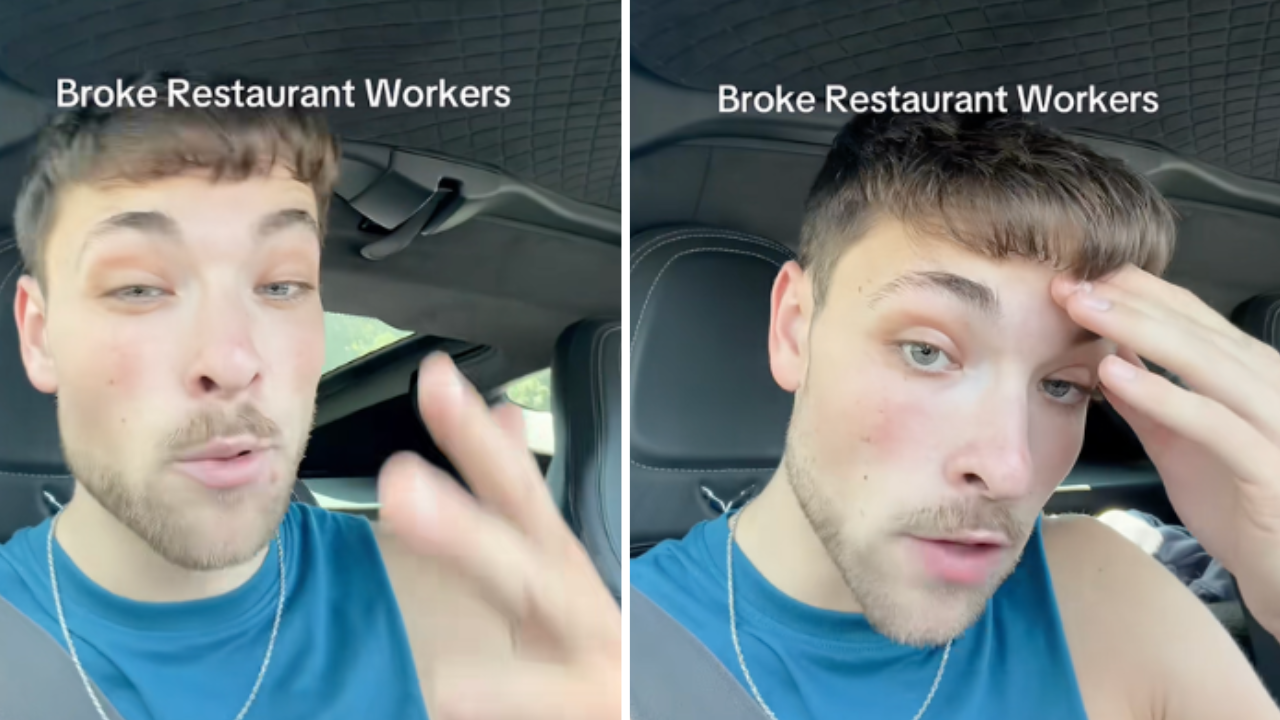
TikTok content creator Ryan Stannard, who posts under the handle @ryan_stannard4, published a video reflecting on his experience in the restaurant industry and asserting that financial struggle among hospitality workers is largely a matter of personal accountability. The video, which had garnered 12,000 likes and 151 comments at the time of reporting, outlines a series of behavioral changes Stannard believes can transform a restaurant job into a lucrative career.
Stannard’s Framework: Shift Pickup, Tip Maximization, and a $10,000 Target
In the video, Stannard lists several strategies he says enabled his own success. He encourages workers to pick up colleagues’ shifts, work harder to increase tip earnings, and adopt a mindset of financial discipline. “Little steps in the right direction are still steps. Set a goal, hit the goal, raise the goal.” he wrote in the video’s caption. Stannard explicitly states he would rather clean restaurant bathrooms than struggle to pay bills, framing undesirable tasks as a necessary trade-off for income stability. He recommends that workers “hustling” until they accumulate $10,000 in their bank accounts, a threshold he says provides a critical financial safety net and peace of mind.
Commenters Challenge Structural Realities of Tipped Labor
The response on TikTok was sharply divided. A significant portion of commenters pushed back against Stannard’s characterization, arguing that his experience does not reflect the structural realities faced by many hospitality employees. One commenter wrote, “Except my manager expects me to clean the toilets for my regular wage every shift and will still complain about paying me if it takes time to do,” highlighting unpaid or underpaid side work. Another pointed to geographic and role-based wage disparities: “UNLESS you work at a slow restaurant/its slow season or if you’re a host on federal minimum wage.”
Others emphasized the difficulty of securing high-volume positions in the current economy. “Most people struggle to even find a position in the industry that ACTUALLY either pay well, or is a spot busy enough to make them money,” one user wrote. The discussion touched on the federal tipped minimum wage of $2.13 per hour, which persists in numerous states, and the volatility of tip income during seasonal downturns or in lower-traffic establishments.

Support for Savings Discipline Amid Skepticism on Universality
Not all feedback was critical. Several commenters validated the core savings principle while contesting the universality of Stannard’s operational advice. “Might be the best advice he’s given. Although no ones paying their servers to clean toilets. That’s just wherever he worked. but the saving part is spot on. I saved up 11k in one year and I didn’t have to pick up doubles or give up all my weekends,” one user commented. Another offered a complementary perspective on professional conduct: “It is genuinely so easy to be one of the better servers at any restaurant. Don’t come into work under the influence whatsoever, trade cuts to close, don’t stand around and talk on shift, make your complete focus your tables and the money you make and you will see how easy it is to rise through the ranks.”
Why This Matters: The Tipped Wage Debate in Context
The viral exchange encapsulates a long-standing policy and cultural debate in the United States over the subminimum wage for tipped workers. Under the Fair Labor Standards Act, employers may pay tipped employees as little as $2.13 per hour federally, provided tips bring total compensation to the standard minimum wage; if they do not, the employer is legally required to make up the difference. However, enforcement is inconsistent, and wage theft investigations by the Department of Labor frequently cite restaurant violations. The discourse also reflects post-pandemic labor market shifts: while some urban fine-dining servers report record earnings, many casual-dining and rural workers face reduced hours, tip pooling dilution, and rising living costs that outpace gratuity income. Stannard’s $10,000 benchmark aligns with common personal-finance guidance for an emergency fund, yet the feasibility of reaching it varies dramatically by concept, region, and schedule control.
Frequently Asked Questions
- Who is Ryan Stannard and what platform did he use?
- Ryan Stannard is a TikTok creator who posts under the username @ryan_stannard4. He shared a video discussing his perspective on earning potential and financial habits for restaurant workers.
- What specific financial goal does Stannard recommend for restaurant workers?
- Stannard advises workers to “hustle” until they have $10,000 in their bank accounts, which he says will help them feel more financially secure.
- Why did some TikTok users disagree with Stannard’s advice?
- Commenters cited structural barriers including the federal tipped minimum wage of $2.13 per hour, slow seasons, low-traffic restaurants, unpaid side work such as cleaning bathrooms at base pay, and difficulty securing high-earning positions in the current economy.