Key Highlights
- Williams introduces its long-awaited major FW48 upgrade package at the Azerbaijan Grand Prix after a difficult 2026 season marked by weight issues and missed development milestones.
- Drivers Carlos Sainz and Alex Albon caution that the upgrade may not close the gap to the midfield, as rival teams have accelerated their development pace beyond initial projections.
- Team Principal James Vowles frames the Baku package as a critical validation of improved processes and simulation tools ahead of the 2027 FW50 project, while acknowledging no guarantees against future missteps.
Williams Pins Hopes on Baku Upgrade After Difficult 2026 Campaign
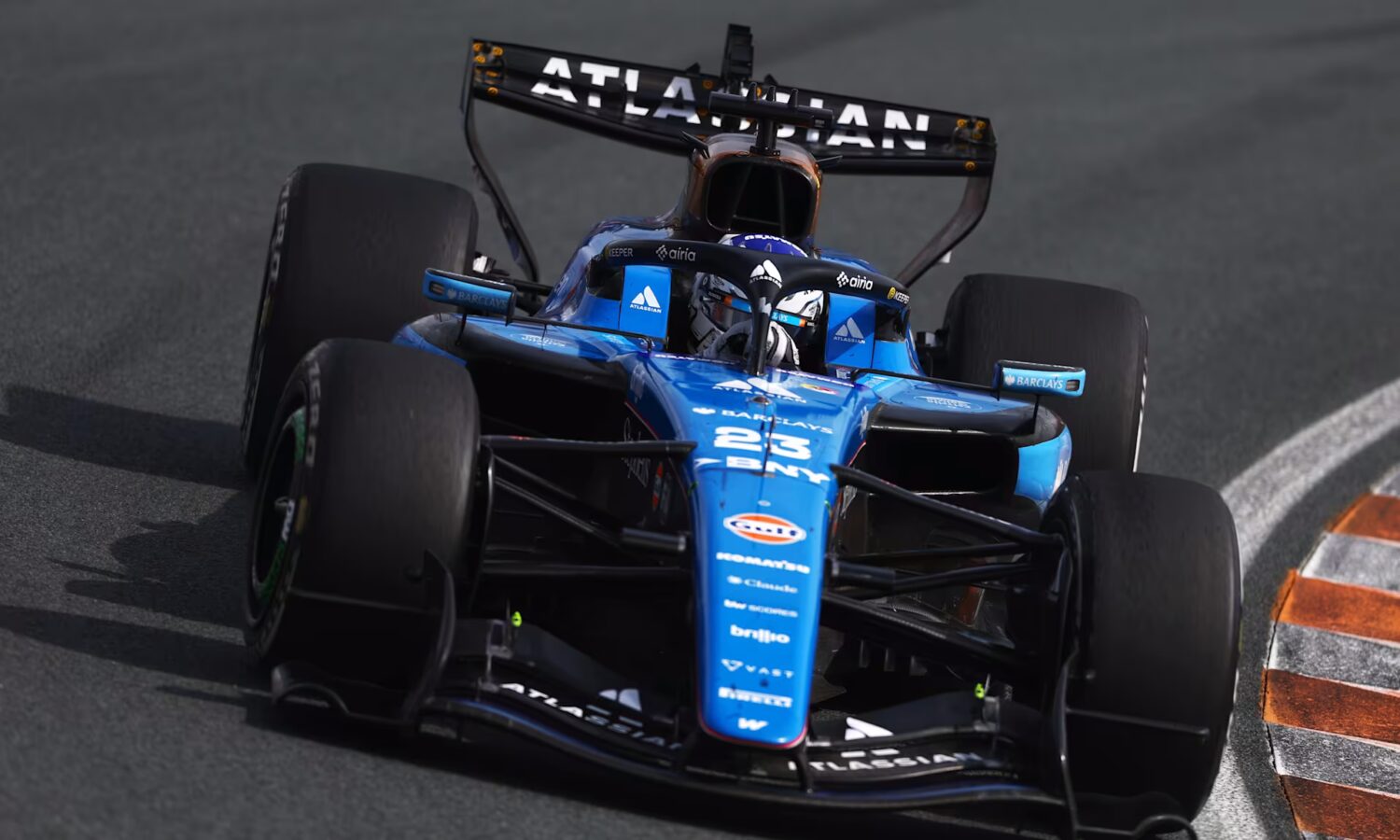
The Azerbaijan Grand Prix represents a pivotal weekend for Williams Racing as the team finally debuts the major upgrade package for its FW48 challenger. The 2026 season has proven painful for drivers Carlos Sainz and Alex Albon, particularly given the promise shown during the previous campaign. Delays forced the squad to miss the Barcelona Shakedown, and when the car eventually hit the track it was significantly overweight and suffered from inherent aerodynamic issues. Like Aston Martin, Williams elected to concentrate resources on a substantial mid-season package, though smaller updates such as a revised front wing for Silverstone and an ongoing weight-reduction programme have been introduced in the interim.
Midfield Development Race Outpaces Williams’ Progress
The results underscore the scale of the challenge. Early in the year the drivers secured five points finishes, with Albon’s eighth place in the high-attrition Monaco Grand Prix the high watermark. Since then, however, the team has failed to score a single point, regularly finishing in the P15–P17 range. Improved reliability across the field has played a part, but the primary factor is that rivals have developed at a faster rate while Williams has largely stood still. Albon articulated the shifting landscape after a difficult race in Madrid: I think what’s been interesting this year is most of the midfield teams, they always bring one or two upgrades a year. That’s kind of how it’s gone. This year, even the midfield teams are bringing three or four upgrades a year, and the size of upgrades are huge as well. So if you think of us in a normal year, Baku would have put us back in contention. But we have to be honest with ourselves, the speed of the development race this year is huge – and yeah, we’ve fallen back.
When the Baku package was signed off months ago, the projected gains looked promising. Yet as midfield competitors have improved, the goalposts have moved. The FW48 will be faster, but the relative gain may not produce the dramatic grid surge originally envisioned. Albon added a sobering assessment of the current deficit: We’re finishing realistically 50 seconds behind the midfield at the minute in a race. So we’re losing a second a lap, more or less, in the race, and this has to be a pretty big upgrade to do it. Let’s see. We know it’s going to be a good step. Is it going to be the full step? I’m hopeful for it, but I don’t think it will be. Unfortunately, we said it last year, but the focus is on next year as well. And we realise we’re too far back at the moment to have a couple of upgrades for this year. We need to focus on next year.
Sainz and Albon Manage Expectations for Immediate Gains
Sainz, who qualified second and finished third in Azerbaijan last year — a reminder of Williams’ competitiveness at certain venues — strikes a similarly cautious tone. At his home race he stated: I think that upgrade is going to definitely help us to get ourselves closer to potentially fighting for some points. But realistically speaking, that’s nowhere near where we wanted to be this year, nowhere near what we promised. So, it’s still not enough, and it’s still not where we want to be. It’s an upgrade that will help a bit the motivation of the team and just to look into the weekend with something to look forward to, maybe to potentially get a point or two when we were like we were at the beginning of the year. But it’s nowhere near where we want to be, and I think our biggest hope is putting all the eggs in next year’s basket.
Sainz’s point about motivation is salient. Even if the Baku package does not propel the team into Q3 contention, delivering the performance gains calculated months ago would demonstrate that the development processes are functioning correctly — a crucial confidence builder for the design team working on the 2027 FW50.
Vowles Highlights Process Improvements and Simulation Gaps
The weekend is equally critical for Team Principal James Vowles, the architect of Williams’ long-term revival who recently secured contract extensions from both Sainz and Albon. Vowles has pointed to changes in methodology, the recruitment of key personnel such as Chief Optimisation and Planning Officer Piers Thynne, and upgraded simulation infrastructure as reasons to believe the team will avoid repeating the mistakes that hampered the 2026 car’s genesis. Speaking at Zandvoort, he explained: You’re making a thousand decisions in the winter. You don’t need many of them to be wrong before you start putting yourself into the wrong path. And that’ll be the difference between a few tenths, but a few tenths these days is the between winning a championship or not. You go to the level of what are the big building blocks you’re putting in place? Which is a combination of people, which is different to what we had before. A combination of strength in the team that was different to what we had before. And for us, we had a lack last year at the beginning of ’25 of simulation technology. That actually only came online in November last year. The car was already pretty much done by that point in time. So what we were doing was using educated guessing, and we got some of it wrong. If you look at our rear ride height, we developed at the wrong rear ride height, as did Aston, for that matter, and corrected it. That doesn’t seem like a huge amount. But you’re aerodynamically developing in completely the wrong space, and it’s not driven by anything more than simulation telling you that’s a good direction for whatever characteristic you’re after, and it goes wrong. That error can still be made across any winter, because you’re in a theoretical space against a maximal space.
Baku Package as Validation for 2027 FW50 Direction
If the Baku upgrade performs as predicted, it will signal that Williams’ revised workflows and toolsets are yielding results. However, Vowles offers no guarantees that the 2027 development cycle will be flawless: Not for a second am I going to promise anyone, because there’s no championship team that would. What you’re more trying to do is show that there’s enough depth that didn’t exist previously in the ways of working systems, tools, processes, and people that allow you to catch as many of those as possible.
Why This Matters
The Azerbaijan Grand Prix serves as a litmus test for Williams’ technical reorganization under James Vowles. The team’s struggles in 2026 — overweight car, delayed upgrades, simulation shortfalls — mirror challenges faced by several midfield outfits, but the accelerated development pace across the grid has exposed those deficiencies more ruthlessly. The ability to deliver a correlated upgrade that matches wind-tunnel and CFD predictions is fundamental to the credibility of the FW50 project, which aims to return Williams to championship contention. Furthermore, the public expectation management by both Sainz and Albon reflects a mature driver–team alignment, essential for maintaining morale during a transition year. The recruitment of figures like Piers Thynne and the belated arrival of advanced simulation tools highlight the infrastructure gap Williams is racing to close before the 2027 regulation cycle.
Frequently Asked Questions
What specific upgrades is Williams bringing to the Azerbaijan Grand Prix?
The article refers to a “major upgrade package” for the FW48, described as the long-awaited mid-season development that the team focused on after missing the Barcelona Shakedown. Earlier smaller updates included a revised front wing at Silverstone and an ongoing weight-reduction programme.
Why are Sainz and Albon downplaying the immediate impact of the Baku upgrade?
Both drivers note that rival midfield teams have introduced three or four substantial upgrades this year — more than the typical one or two — moving the performance target significantly since the Baku package was defined. Albon estimates Williams is currently losing roughly one second per race lap to the midfield, so even a “good step” may not be enough to reach the points-paying positions consistently.
How does this weekend affect Williams’ 2027 FW50 programme?
A successful correlation of the Baku upgrade would validate the new processes, simulation tools, and personnel (including Chief Optimisation and Planning Officer Piers Thynne) that Team Principal James Vowles has put in place. This validation is critical for confidence in the FW50 development, though Vowles stresses that no team can guarantee a mistake-free winter.