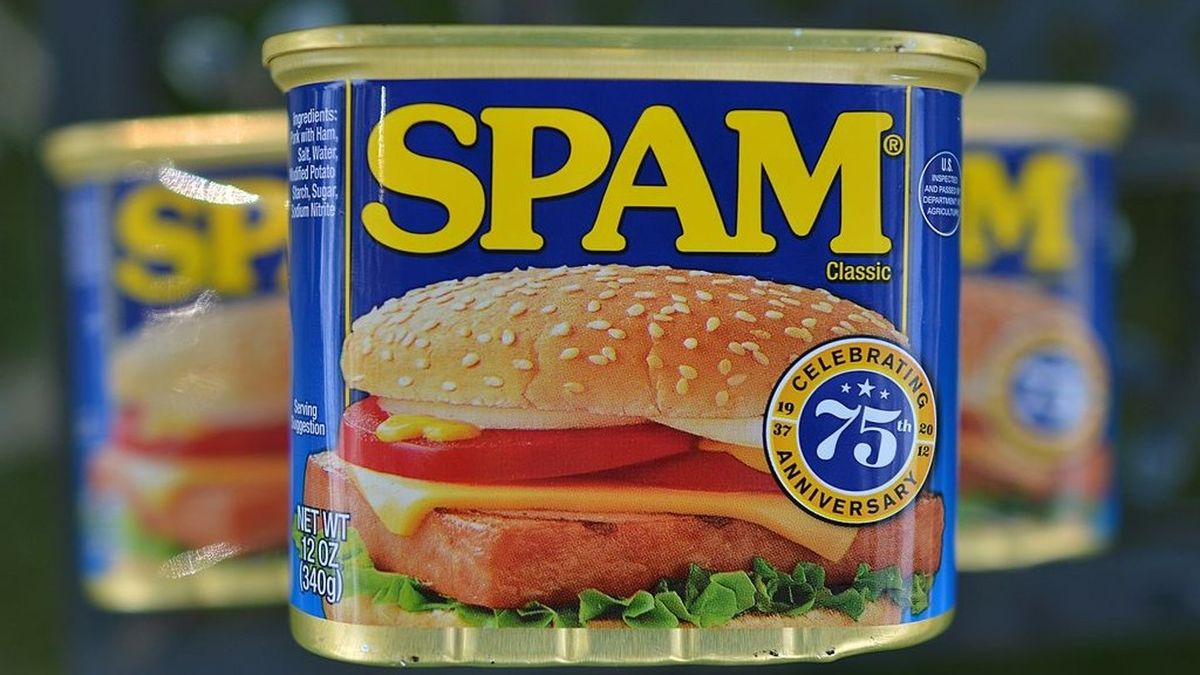
You likely have a can of SPAM tucked away in the back of your pantry. The iconic tinned meat product, created by Hormel Foods, first hit shelves in 1937 and saw its popularity surge during the Second World War as a staple in soldiers’ rations. Decades later, it remains a beloved ingredient for dishes like spam fritters. As of 2026, Hormel reports selling more than nine billion cans worldwide.
While the brand name is now synonymous with unwanted emails, the true origin of the word “SPAM” remains a topic of curiosity. For years, many assumed it was an acronym. Popular guesses on forums like Reddit have included “Shoulder Pork and Meat,” “Spare Parts of Animal Meat,” and “Salted Pork Aggregated Meat.”
The Name Is a Portmanteau, Not an Acronym
In reality, the name is a portmanteau—a linguistic blend of two words, similar to “brunch” (breakfast + lunch), “glamping,” “spork,” or “hangry.” The winning name was submitted by Ken Daigneau, whose brother was a Hormel Foods vice president, during a naming competition. Daigneau won $100 (approximately £75) for the suggestion.
Hormel Keeps the Official Meaning a Mystery
Despite the widespread belief that SPAM stands for “spiced ham,” the company has never officially confirmed the etymology. In a brand statement, Hormel addressed the speculation with humor:
“There are some questions that continually plague man over time.”
“Questions like ‘Is there intelligent life beyond Earth?’ And ‘What is the meaning of the SPAM brand name?’ Unfortunately, we can provide answers to neither.”
“The significance of the SPAM brand name has long been a subject of speculation. One popular belief says it’s derived from the words ‘spiced ham.'”
“The real answer is known by only a small circle of former Hormel Foods executives. And probably Nostradamus,” they joked.
What Is Actually in a Can of SPAM Classic?
While the name’s origin remains officially undisclosed, the ingredient list is no secret. The brand statement continues:
“Ah, the age-old question; what is the meat in that special can of SPAM Classic?”
“Many myths abound, but the answer is actually quite simple,” the statement adds. “Six simple ingredients – pork with ham, salt, water, potato starch, sugar and sodium nitrite.”
The most popular theory persists that the name blends “spiced” and “ham,” but unless a “Living Nostradamus” or a former executive speaks up, the definitive answer stays locked in the company vault.