Former F-16 Pilot Heather Penney Recalls 9/11 Suicide Mission to Defend Washington
WASHINGTON — The September 11, 2001 attacks unleashed fear and terror across the United States, but they also inspired extraordinary acts of courage. Among them was a potential suicide mission undertaken by a young fighter pilot determined to protect the nation’s capital.
Scrambling Without Weapons
On that morning, then-26-year-old Heather Penney was working in her office when she realized America was under attack. “The world had changed and we knew we needed to get airborne,” she recalled.
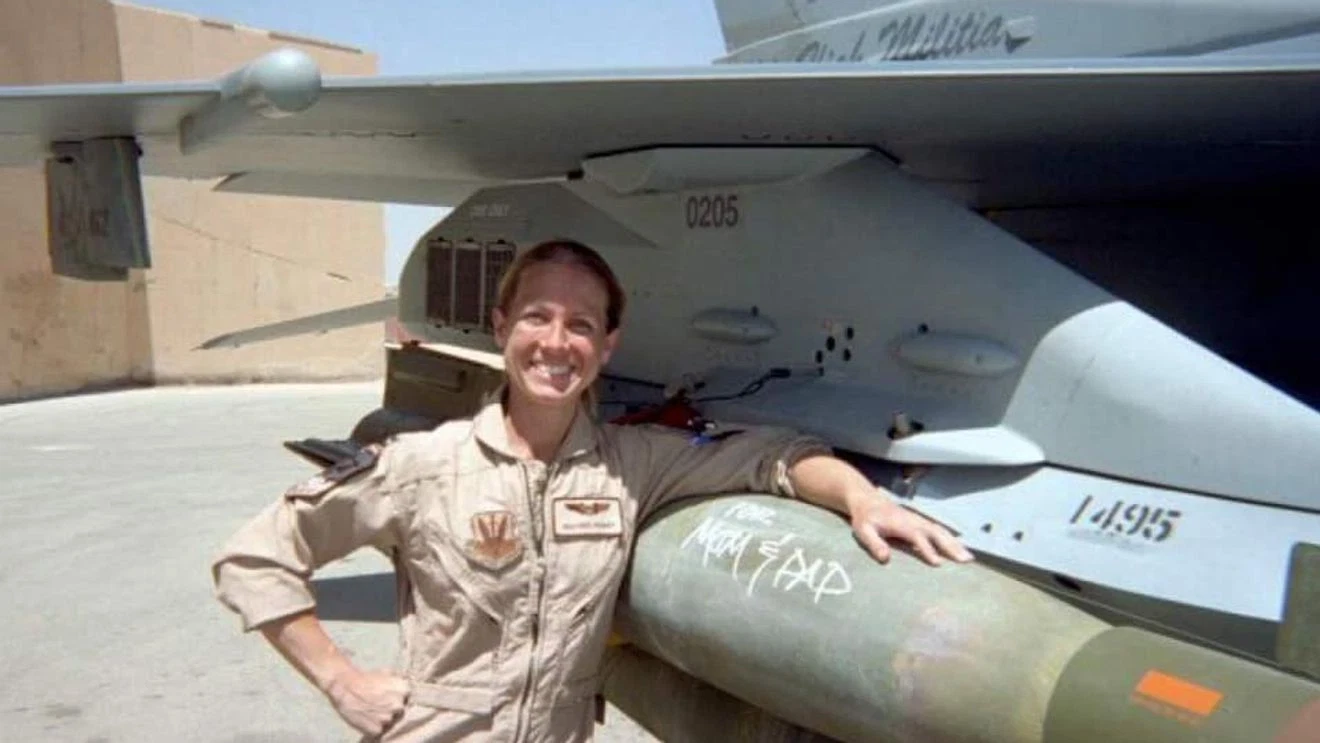
Penney, now a retired Air Force Major, was then a First Lieutenant and an F-16 fighter pilot for the D.C. Air National Guard. After watching hijacked airliners strike the World Trade Center towers, she and her fellow airmen knew Washington, D.C., was a prime target. Yet they had to await presidential authorization—time they did not have.
“It was shortly after the Pentagon was hit that we finally got a call from the Secret Service telling us to get airborne,” Penney said. “I cannot begin to describe how angry and frustrated I think we probably all felt because we knew we needed to protect.”
In the years following the Soviet Union’s collapse, most U.S. alert units had been shut down. Consequently, no jets stood ready with weapons loaded. Penney and her flight lead, then-Colonel Marc Sasseville, scrambled to their F-16s empty-handed.
“When we took off we needed to go search for an airliner that was likely coming low over the Potomac and that we would do what was necessary to protect and defend,” she recalled.
A Plan to Ram the Cockpit and Tail
With no missiles, the pilots devised a desperate plan. “We did not have missiles,” Penney said. “[Sasseville] would ram his jet into the nose of the aircraft, and I would ram mine into the tail.”
In the fog of war, initial reports indicated three aircraft were unaccounted for. “Had [Sasseville] and I been successful, it would have been a suicide mission. And you’re willing to do it,” Penney stated. She was never afraid. “When it was clear what the mission would be, I realized that if the universe put me in this place, then that was my purpose.”
Landing Before Learning the Truth
Airborne for roughly three hours, Penney did not know the flight number or details of United Airlines Flight 93. Only after landing did she learn how close Washington came to disaster.
“By the time [Sasseville] and I were given the order to launch, we would have been too late. Flight 93 crashed maybe half an hour, 20 minutes before we launched. We would never have been able to stop them. We didn’t know that at the time.”
One of the pilots who later flew up to assist over D.C. is now the Chairman of the Joint Chiefs of Staff, General Dan Caine. Later that day, Penney and Sasseville escorted Air Force One back to Washington so President George W. Bush could address the nation from the White House.
Crediting the True Heroes
Today, Penney directs recognition toward the passengers and crew of Flight 93. “What [Sasseville] and I were willing to do is what the passengers on Flight 93 actually did and I believe anyone would have been willing to.”
Looking back more than two decades later, she urges Americans to reflect on the potential heroism within every citizen. “It’s also to remember how we came together as a nation,” she said. “That we remember the best of who we can be and that living that legacy is the best way that we can honor those we lost on 9/11.”