Hyperliquid Labs is reportedly nearing an agreement with Payward, the parent company of Kraken, that could give U.S. traders access to crypto perpetual futures linked to Hyperliquid markets for the first time.
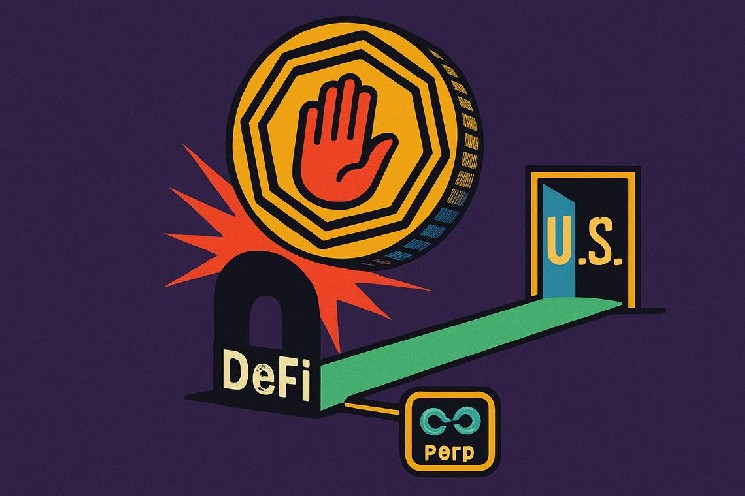
Under the proposed arrangement, Payward’s regulated subsidiary Bitnomial would serve as the U.S. gateway. If regulators approve the structure, it would create an unusual link between a decentralized exchange and the closely supervised American derivatives market.
Key Takeaways
- Hyperliquid Labs and Payward are in advanced talks to offer crypto perpetual futures to U.S. traders through Bitnomial.
- Payward has presented a proposed structure to the Commodity Futures Trading Commission, but formal approval has not been granted.
- Former SEC counsel Ashley Ebersole estimates the approval process could take 10 to 12 months and may involve both the SEC and CFTC.
- Hyperliquid’s decentralized exchange processes more than $4 billion in daily volume but currently excludes U.S. customers.
- The $HYPE token is trading near $84, up more than 85% over the past year after reaching an all-time high above $86.
How the Proposed Hyperliquid U.S. Access Plan Would Work
The proposed structure would give registered U.S. customers regulated exposure to a selection of Hyperliquid’s derivatives markets without allowing them to connect directly to the decentralized exchange.
Crypto perpetual futures track an asset’s price without a fixed expiration date. The products have become increasingly popular on offshore and decentralized platforms, while U.S. regulations have kept much of that activity inaccessible to domestic traders.
According to Bloomberg, Bitnomial would list a limited selection of crypto perpetual futures linked to markets operating on Hyperliquid’s decentralized exchange and its underlying Layer 1 blockchain. U.S. customers would trade regulated products that mirror those markets, with Bitnomial positioned between the traders and Hyperliquid’s decentralized infrastructure.
Bitnomial’s Role as a Regulated U.S. Venue
Bitnomial already operates in the U.S. derivatives sector. Payward acquired the company earlier this year for up to $550 million, gaining a CFTC-licensed platform that includes exchange, clearing and brokerage functions.
That existing regulatory infrastructure is central to the proposed deal. Establishing a compliant crypto perpetual futures venue from the ground up would likely take substantially longer than using an already licensed platform.
Why Regulatory Approval Could Take Nearly a Year
The agreement has not been finalized. Payward has presented the proposed structure to the CFTC, but regulators have not issued approval.
Ashley Ebersole, a former senior SEC counsel who is now co-founder and chief legal officer at real-world asset platform tx., said both the SEC and CFTC may need to assess the arrangement before U.S. traders can access the products.
Regulators may need to develop revised interpretive rules covering custody and routing standards. These rules would govern how trades and assets move between decentralized infrastructure and a regulated U.S. venue.
Ebersole estimated that the review could take at least 10 to 12 months, “assuming things went quickly.” The timeline reflects the unusual nature of connecting a decentralized exchange to a regulated derivatives market.
Regulators have previously raised concerns about decentralized and permissionless platforms, including potential market manipulation, anti-money-laundering weaknesses and sanctions enforcement. Those issues could complicate approval when a decentralized exchange is involved, even indirectly.
What Hyperliquid’s U.S. Exclusion Means
Hyperliquid’s decentralized exchange currently handles more than $4 billion in daily trading volume but blocks U.S. users entirely. The proposed arrangement is designed to close that access gap without allowing American customers to use Hyperliquid’s platform directly.
Instead, Bitnomial would provide a regulated wrapper for the products and oversee compliance. U.S. traders would interact with Bitnomial rather than directly accessing Hyperliquid’s decentralized exchange.
$HYPE Token Gains as U.S. Perpetual Futures Market Expands
Investors have responded to the broader developments around Hyperliquid and U.S. crypto derivatives. The $HYPE token was trading near $84 at the latest check, up more than 85% over the past year after recently reaching an all-time high above $86.
The proposed deal comes amid signs of a wider regulatory shift toward onshore crypto perpetual futures. In May, the CFTC cleared KalshiEX and Coinbase to list crypto perpetual futures. In June, the agency opened a request for comment on crude oil perpetual contracts and 24/7 trading.
President Donald Trump has also publicly referenced Hyperliquid, saying that CFTC Chair Michael Selig was pursuing efforts to establish the platform in the United States “with complete regulatory adherence and legal fashion.”
Separately, the Hyperliquid Policy Center has urged the SEC and CFTC to coordinate their treatment of perpetual contracts. The group argues that clearer rules could bring more trading volume onshore instead of sending it to offshore venues.
A Kraken spokesperson declined to comment on the talks.
Why the Proposed Deal Matters
If Hyperliquid reaches the U.S. market through an acquired, licensed subsidiary, the arrangement could become a model for other platforms with large offshore or decentralized trading operations.
It would also test how regulators apply custody and trade-routing rules to decentralized infrastructure while maintaining the investor protections those rules are intended to provide.
For now, the arrangement remains a proposal under regulatory review rather than a product available to U.S. traders.
Frequently Asked Questions
What are crypto perpetual futures?
Crypto perpetual futures are derivatives that track an underlying asset without a fixed expiration date. Traders can maintain positions indefinitely as long as they meet applicable margin requirements.
Why is regulatory approval important for crypto perpetual futures in the U.S.?
U.S. regulatory approval is important because crypto perpetual futures face oversight intended to address risks such as market manipulation and money laundering. Products linked to decentralized exchanges may face additional scrutiny.
Which regulators may be involved?
The Commodity Futures Trading Commission and the Securities and Exchange Commission may both need to participate in developing the interpretive rules required for the proposed structure.
How would U.S. customers access Hyperliquid-linked perpetual futures?
U.S. customers would access the products through Bitnomial, Payward’s CFTC-licensed subsidiary, rather than connecting directly to Hyperliquid’s decentralized platform.