Why Women May Hold the Edge in Ultra-Endurance Running
Science is still catching up to the phenomenon of women excelling in ultra-endurance events, but athletes and experts point to a powerful combination of physiology, psychology, and community.
The Science Is Still Evolving
Andrew Jones, a professor of applied physiology who played a key role in Eliud Kipchoge’s sub-two-hour marathon challenge in 2019, cautions that the research base for ultra-distances remains thin. “There isn’t as much hard evidence as there would be for shorter distances, which have been studied for a long time in quite some detail,” he says, describing the science in this area as “behind.”
Dr Richard Burden, co-lead of female athlete health and performance at the UK Sports Institute, shares that view. “At the moment we are speculating … there are definitely some physiological adaptations that you see more in women than men that are favourable for ultra-type events. But those need to be better established and more studies would need to be done.”
Mental Resilience Defines the Ultra Distance
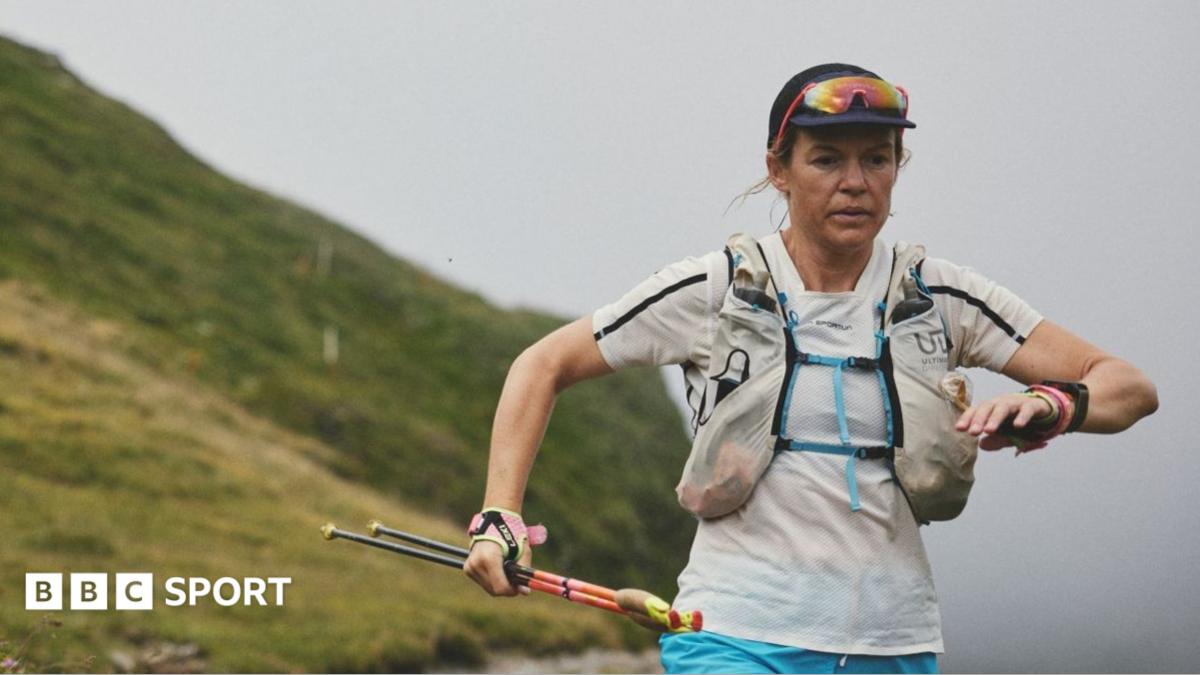
Beyond physiology, the realities of multi-day events—sleep deprivation, extreme terrain, unpredictable conditions—make the finish line as much a mental destination as a physical one. New Zealand runner Sophie Woods, who set a record on the Via Alpina, believes this is where women hold a distinct advantage.
“It’s not necessarily about being the fastest person at the start,” she says. “It is about preparation, it is about mental strength and being able to continue to persevere when things go wrong.”
During her record-breaking run, Woods faced wildfires that forced a longer, more dangerous route and swarms of horseflies. “I was so tired and there were so many of them and I wanted to have a complete meltdown and just cry, but I couldn’t because if I stopped moving, they started biting me,” she says. “I think women are really good at adapting and continuing and just knowing that once we start something, you’ve just got to keep moving until you get to the finish.”
Community and Camaraderie as Competitive Fuel
Norwegian runner Yngvild Kaspersen, who last month became the first woman to win the prestigious Ultra-Trail Mont Blanc CCC race in the Alps twice, credits her victory to the “mental game” she practices in training. Balancing life as a GP with professional running, she also highlights a unique cultural strength.
“We’re competitors but we’re also motivating each other, inspiring each other, pushing each other to do better in the races,” she says. “If you see the podiums for the women this year [at UTMB], how close we are and how we’re running together out there – that’s very special and I’m very proud to be a part of that community and that group of women.”
Hormonal Fluctuation as Endurance Training
Sports dietitian Renee McGregor, who specializes in athlete nutrition and hormonal health and is an ultra-runner herself, argues that female resilience is forged long before race day. “The moment women step into puberty, we are dealing with a fluctuating hormonal system,” she says. “We never ever give ourselves credit for that, it’s just an accepted part of being female. But actually, it is an endurance in itself and I think that’s probably where a big part of our resilience comes from.”
McGregor points to research suggesting female runners display more disciplined, even pacing strategies than men in distance races, maximizing what she terms the female “brain bank.” “I don’t think women go into these races without a lot of thought and contingency planning,” McGregor adds.
She connects that strategic approach to lived experience. “For example, if you’ve been through a pregnancy and you’ve dealt with nausea, if you’ve had a baby and dealt with the lack of sleep or if you’ve gone through fertility treatment, you have to go through so much discomfort, but you know you can get through it. And I think it’s that knowledge of ‘I can get through this, I can find a solution’.”