Key Highlights
- McLaren dominated Formula 1 from 1988 to 1991, winning four consecutive Constructors’ and Drivers’ Championships with engine partner Honda.
- The partnership ended abruptly when Honda withdrew from F1 at the close of the 1992 season due to financial pressures.
- Honda’s departure triggered a period of instability and performance struggles for McLaren throughout the mid-1990s.
The Golden Era: McLaren-Honda Dominance (1988–1991)
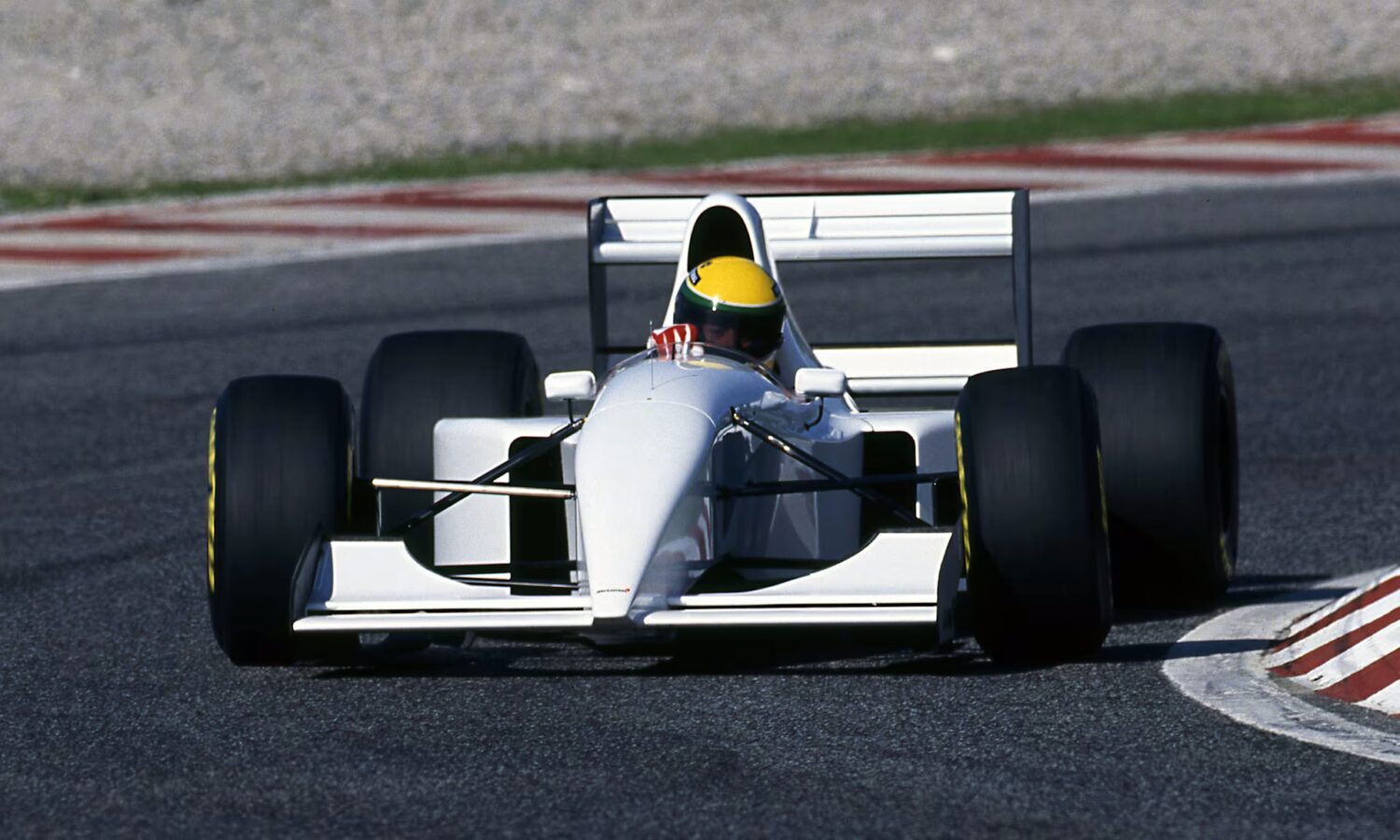
During the late 1980s and early 1990s, McLaren authored one of the most dominant chapters in Formula 1 history. Between 1988 and 1991, the Woking-based squad secured four successive Constructors’ Championships and four straight Drivers’ Championships, a feat of consistency and excellence rarely matched in the sport. Central to this supremacy was the technical alliance with Japanese engine manufacturer Honda, whose power units—paired with McLaren chassis designed by the likes of Gordon Murray and later Neil Oatley—proved virtually unbeatable. Legendary drivers Ayrton Senna and Alain Prost, and later Gerhard Berger, piloted the MP4/4, MP4/5, MP4/5B, and MP4/6 to a combined 44 race victories over those four seasons, establishing a benchmark for engine-chassis integration.
Sudden Shift: Honda’s Withdrawal at the End of 1992
That period of stability and success turned into a spell of change and misfiring performance over the next few years. Amid growing financial pressures and a shifting corporate strategy, Honda made the decision to pull the plug on their Formula 1 operations at the end of the 1992 season. The announcement caught the paddock off guard; Honda had powered McLaren to the previous four titles and was still competitive, with Senna securing three wins in the 1992 campaign driving the MP4/7A. The Japanese manufacturer cited the need to redirect resources toward core automotive operations during a prolonged economic downturn in Japan, leaving McLaren without a works engine supply for the first time in nearly a decade.
The Aftermath: Scrambling for Power and Competitiveness
Honda’s exit forced McLaren into a frantic search for a new engine partner ahead of the 1993 season. The team eventually secured a customer supply of Ford HB V8 units, badged as Cosworth, which lacked the development support and raw power of the works Honda V10s and V12s. While Senna extracted remarkable results—including five victories—in the 1993 MP4/8, the writing was on the wall: McLaren had lost its factory backing and the deep integration that had defined its golden era. Subsequent partnerships with Peugeot (1994) and a return to Mercedes (1995 onward) would eventually restore winning ways, but the immediate aftermath of 1992 marked the end of McLaren’s most statistically dominant epoch and the beginning of a transitional wilderness.
Why This Matters
The dissolution of the McLaren-Honda alliance in 1992 serves as a pivotal case study in Formula 1’s reliance on manufacturer commitment. It illustrates how quickly a championship-winning structure can unravel when economic externalities—such as Japan’s “Lost Decade”—force OEMs to reprioritize spending. For McLaren, the loss triggered a multi-year rebuild that only concluded with the Mercedes works partnership, which delivered two more Drivers’ titles for Mika Häkkinen in 1998 and 1999. The episode also foreshadowed the volatile nature of engine supplier relationships that continues to shape the grid today, from Red Bull’s Renault and Honda cycles to Aston Martin’s forthcoming Honda return in 2026.
Frequently Asked Questions
How many championships did McLaren win with Honda between 1988 and 1991?
McLaren won four consecutive Constructors’ Championships and four consecutive Drivers’ Championships during the 1988–1991 period with Honda power.
Why did Honda leave Formula 1 at the end of 1992?
Honda withdrew due to financial pressures and a need to redirect resources toward core automotive operations during a prolonged economic downturn in Japan.
What engine did McLaren use after Honda left in 1992?
For the 1993 season, McLaren used customer Ford HB V8 engines badged as Cosworth, before switching to Peugeot in 1994 and then beginning a long-term works partnership with Mercedes in 1995.