Key Highlights
- The 2026 Formula 1 season enters a decisive phase with the first of three consecutive triple-headers beginning at the Azerbaijan Grand Prix in Baku, where Kimi Antonelli leads the Drivers’ Championship for Mercedes.
- Isack Hadjar may return to the Red Bull seat after missing three rounds with a wrist injury, though the team insists they will not rush his recovery ahead of a grueling three-race stretch.
- Williams debut a long-planned upgrade package in Baku aiming to climb from ninth in the Constructors’ standings, while Formula 2 hosts a pivotal double-header with the title fight finely balanced among four drivers.
Triple-Header Gauntlet Begins in Baku as Championship Momentum Builds
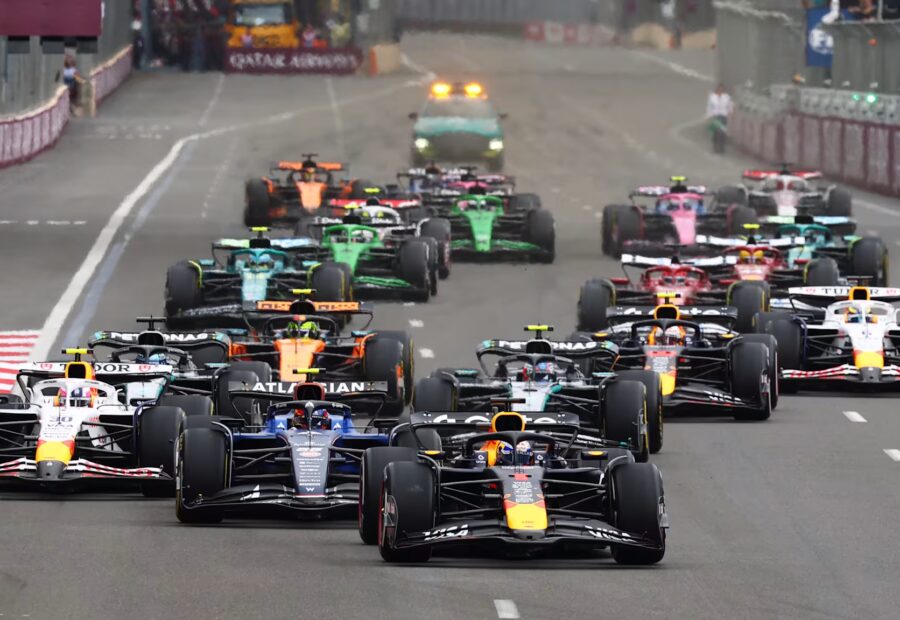
The 2026 Formula 1 season shifts into its most demanding phase this weekend as the Azerbaijan Grand Prix launches the first of three consecutive triple-headers. With nine races compressed into eleven weeks, the schedule offers little margin for error and amplifies the significance of every development — on track and off. Kimi Antonelli arrives at the Baku City Circuit leading the Drivers’ Championship after winning the previous two rounds, giving Mercedes a psychological edge even as the team acknowledges its early-season performance advantage has eroded. The Italian rookie’s consistency has made him the benchmark, but the unique demands of Baku’s street layout — where barrier-kissing precision meets a 2.2-kilometre straight that invites late-braking overtakes — could reshuffle the competitive order.
Hadjar Recovery Monitored Closely as Red Bull Prioritize Long-Term Health
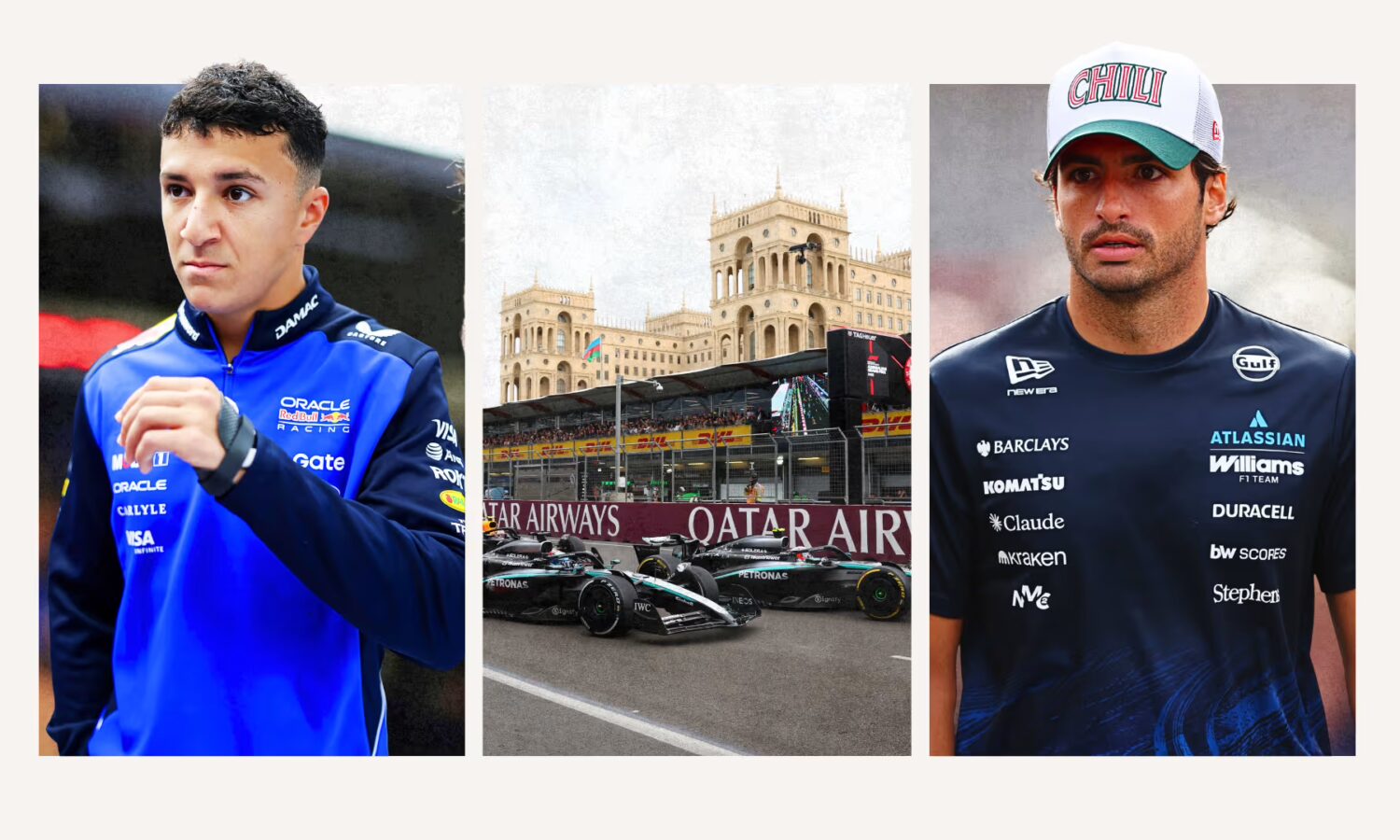
Isack Hadjar has not raced for Red Bull since sustaining a wrist injury during the summer shutdown, forcing him to miss the Zandvoort, Monza, and Madrid rounds. Liam Lawson has deputised at the senior team, with Yuki Tsunoda moving up to VCARB in a chain reaction that has reshaped Red Bull’s driver deployments. A two-week gap since Madrid has increased optimism regarding Hadjar’s potential return in Azerbaijan, but the team has been unequivocal: he will only resume driving once medical clearance confirms full recovery. Given that Baku begins a triple-header — followed by races in Singapore and Austin — any premature return risks aggravating the injury during a stretch with minimal recovery windows. Team officials have indicated an update is expected in the coming days, making Hadjar’s status one of the most closely watched storylines heading into the weekend.
Williams Unveil Critical Upgrade Package Amid Constructors’ Battle
Williams arrive in Baku with a substantial upgrade package telegraphed months in advance, a rare instance of a team publicly committing to a development timeline. The Grove-based squad sits ninth in the Constructors’ Championship, six points behind Audi and ten adrift of seventh-placed Haas. The 2026 season was internally targeted as a return to midfield competitiveness, but results have fallen short of expectations. Technical Director Pat Fry’s development group has focused the Baku package on aerodynamic efficiency and mechanical grip — areas where the FW48 has struggled relative to rivals. Beyond immediate points gains, the upgrade serves as a validation of Williams’ development trajectory; a clear step forward would confirm the team’s engineering direction is sound ahead of the 2027 regulation cycle.
Mercedes Manage Upgrade Cadence While Defending Championship Lead
Mercedes have been transparent about their constrained upgrade cadence this season, a consequence of prioritising the launch specification that dominated the opening rounds. While that early advantage has diminished, the team remains firmly in the championship hunt — Antonelli’s back-to-back victories underscore the W15’s underlying potential. Mercedes confirmed last week that new components will debut at the following round in Malaysia, meaning Baku represents another weekend where the Silver Arrows must extract maximum performance from their current package. McLaren, Ferrari, and Red Bull have all introduced updates more frequently, applying relentless development pressure. How Mercedes manage this defensive phase — balancing resource allocation between current and future cars — will be a defining strategic narrative of the triple-header period.
Driver Market Stagnates Despite Impending Contract Deadlines
While the on-track calendar accelerates, the 2027 driver market has scarcely moved since the Zandvoort announcements, which included Max Verstappen’s contract extension and the retention of both Williams drivers. Haas remain the most conspicuous open seat, having evaluated Ryo Hirakawa, Rafael Camara, Leonardo Fornaroli, and Jack Doohan across a month of testing. No decision is imminent. Fernando Alonso’s future continues to dominate paddock speculation; the double World Champion is widely expected to remain with Aston Martin, yet his home race in Madrid passed without an announcement. Racing Bulls also represent a potential flashpoint, though their current line-up appears stable. The lack of movement is unusual for this stage of the season and suggests teams are awaiting clarity on 2027 power unit regulations or key driver decisions before committing.
Saturday Race and Revised Schedule Mark Baku’s Tenth Anniversary
This year marks a decade since Formula 1’s first visit to Azerbaijan in 2016, and the milestone edition arrives with a scheduling anomaly: the Grand Prix will be contested on Saturday, 26 September, rather than the traditional Sunday. The shift avoids a clash with Azerbaijan’s Remembrance Day on 27 September, compressing the entire weekend by 24 hours. Media obligations move to Wednesday, practice to Thursday, qualifying to Friday, and the race to Saturday. The format change compresses preparation time for teams and broadcasters alike, while the circuit itself remains unchanged — a 6.003-kilometre street layout that combines a hyper-technical castle section with the longest flat-out section on the calendar. Overtaking into Turn 1 is frequent, and races have historically been decided in the final metres of the final lap. The Saturday slot adds novelty to an already unpredictable venue.
Formula 2 Title Fight Reaches Crescendo with Double-Header Format
Support category action amplifies the weekend’s stakes as Formula 2 adopts a double-header format mirroring Formula 3’s season finale at the Madring. Two qualifying sessions on Thursday set the grids for a Friday morning Sprint Race and a Friday afternoon Feature Race preceding Formula 1 qualifying. A second Feature Race on Saturday leads into the Grand Prix. The championship battle is exceptionally tight: Red Bull junior Nikola Tsolov leads Ferrari academy driver Rafael Camara by just seven points. Alpine-backed Gabriele Mini sits 24 points behind Tsolov — within a single race victory — while team-mate Alex Dunne remains a mathematical contender at 38 points adrift. Baku’s history of chaotic, safety-car-influenced races makes it a potential title decider; the double-header format doubles the scoring opportunities and the risk.
Why This Matters
The Azerbaijan Grand Prix sits at a rare convergence of sporting, technical, and commercial inflection points. For the Drivers’ Championship, the triple-header sequence will test consistency and resilience over a compressed timeframe where a single mechanical failure or driving error carries disproportionate weight. Antonelli’s lead is slender in real terms; the circuits to come — Baku, Singapore, Austin — demand vastly different car characteristics, favouring no single team philosophy. For constructors, Williams’ upgrade represents a litmus test for midfield ambition: success could trigger a development arms race among Audi, Haas, and Alpine, while failure may force a strategic pivot toward 2027. The driver market’s inertia is equally significant; with fewer than ten races remaining, teams without confirmed 2027 line-ups risk losing preferred candidates to rival series or academy promotions. Finally, the Saturday race format — while a one-off — offers Formula 1 data on condensed weekend structures, a concept under study for future calendar compression. Baku, then, is not merely the next race; it is a stress test for the sport’s competitive, technical, and operational frameworks.
Frequently Asked Questions
- Why is the Azerbaijan Grand Prix taking place on a Saturday?
- The race has been moved forward by 24 hours to avoid a clash with Azerbaijan’s Remembrance Day on 27 September. The entire weekend schedule shifts accordingly: media day on Wednesday, practice Thursday, qualifying Friday, and the Grand Prix on Saturday.
- Will Isack Hadjar race for Red Bull in Baku?
- Hadjar has missed the last three rounds with a wrist injury. A two-week break since Madrid increases the likelihood of his return, but Red Bull have stated he will only drive once fully cleared medically. An update is expected before the weekend.
- How close is the Formula 2 championship battle heading into Baku?
- Nikola Tsolov leads Rafael Camara by seven points. Gabriele Mini is 24 points behind the leader, and Alex Dunne trails by 38 points. With a double-header format offering two Feature Races, the title fight could swing dramatically this weekend.