Air Jordan 41 Continues Michael Jordan’s Sneaker Legacy 23 Years After His Final NBA Game
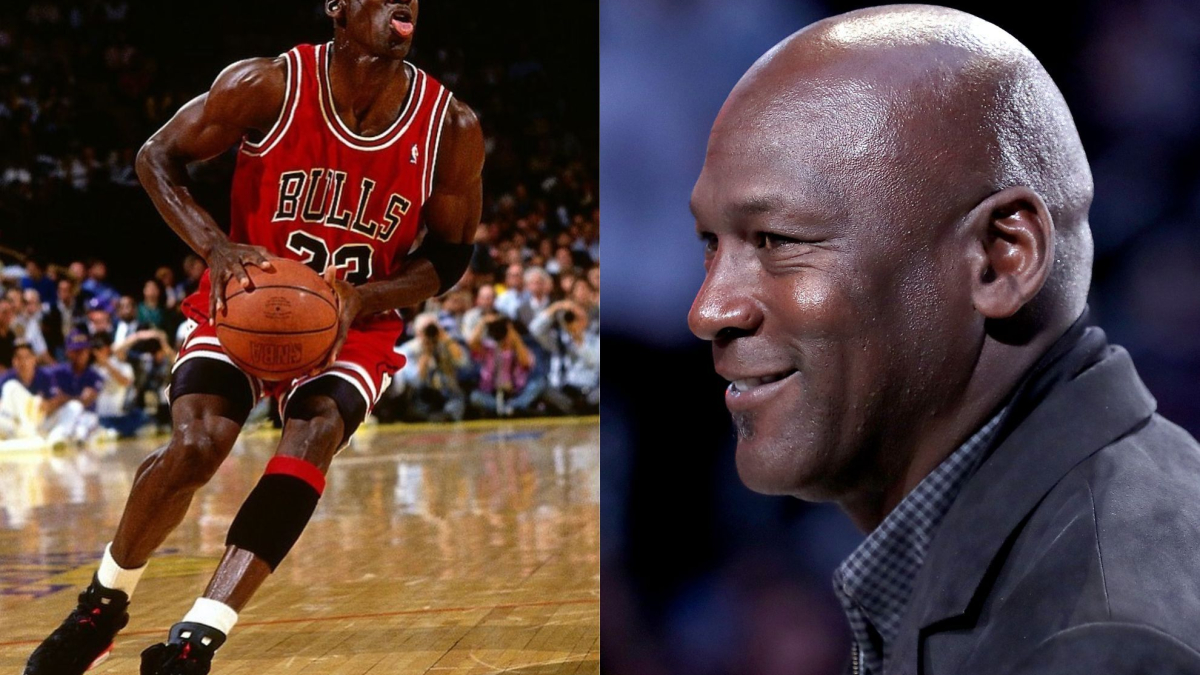
Michael Jordan has always been defined by numbers: six championships, five MVP awards, 10 scoring titles and, above all, the number 23. The jersey number became so closely associated with Jordan that generations of children wanted to wear it simply because he had worn it first.
On April 16, 2003, Jordan played his final NBA game. He was 40 years old and wearing a Washington Wizards uniform rather than Chicago Bulls red when Philadelphia intentionally fouled him late in the game, allowing him to score the final two points of his career from the free-throw line. The crowd rose to applaud him before Jordan eventually headed toward the locker room. Basketball’s No. 23 was finally finished.
Twenty-three years later, another number has arrived in a coincidence that feels almost too fitting for Jordan. Jordan Brand has officially unveiled the Air Jordan 41, the 41st chapter in a sneaker story that began when Jordan was a 21-year-old rookie and Nike made an enormous gamble on a young guard from North Carolina.
The number 41 does not represent Jordan’s age, championship total or another jersey number. It is simply the 41st numbered Air Jordan. Reaching that milestone nevertheless says something remarkable: the shoes continued long after the player stopped playing.
The Air Jordan story began with a shoe that was never expected to become iconic
Before there could be an Air Jordan 41, there had to be an Air Jordan 1.
Jordan’s relationship with Nike began during his rookie season in 1984, while the first Air Jordan arrived commercially in 1985. The black-and-red story surrounding those early shoes became part of sneaker mythology. The NBA objected to footwear that violated its uniform rules, and Nike transformed the controversy into marketing gold.
The famous claim that Jordan was fined $5,000 every time he wore the Air Jordan 1 in an NBA game is not entirely accurate. Nike now acknowledges that the shoe at the center of the original dispute was a black-and-red Nike Air Ship worn during the 1984 preseason. The legend, however, helped establish the Air Jordan as a rebellious product before sneaker culture even had a name.
Air Jordan 41 technology and design
The new Air Jordan 41 features:
- Full-length Zoom Strobel
- Full-length ZoomX midsole
Then something much bigger happened. People did not only want to watch Michael Jordan. They wanted to wear Michael Jordan.
The Air Jordan 3 arrived in 1988 with Tinker Hatfield’s design, elephant print and the Jumpman imagery that would eventually become recognizable far beyond basketball. The Air Jordan 4 became permanently associated with “The Shot” over Craig Ehlo during the 1989 playoffs.
The Air Jordan 11 became one of the defining shoes of Jordan’s return from baseball and later gained another life through Space Jam. The black-and-red Air Jordan 12 became inseparable from the legendary 1997 “Flu Game,” while the Air Jordan 13 accompanied Jordan during his final championship run, later chronicled in The Last Dance.
Some Michael Jordan sneakers are worth more than houses
Perhaps the clearest evidence of what Jordan created is the amount collectors are now willing to pay for shoes he actually wore.
A pair of Air Jordan 13s worn by Jordan during Game 2 of the 1998 NBA Finals sold for $2.2 million in 2023. An even more extraordinary sale followed in 2024, when the “Dynasty Collection” sold for $8 million. The collection consisted of six individual sneakers Jordan wore during the championship-clinching games of all six Bulls title runs. They were not six complete pairs, but six individual shoes.
There have been even stranger Jordan sneaker relics. A pair of Air Jordan 1s connected to a 1985 exhibition game in Italy was sold with a piece of shattered backboard glass reportedly still embedded in the sole, a souvenir from the night Jordan dunked hard enough to break the glass.
Another pair associated with the 1985 game in which Jordan fractured his left foot sold for more than $400,000. Shoes once designed to be destroyed on a basketball court eventually became artifacts treated like paintings.
The transformation has made Jordan extraordinarily wealthy, but the scale of the business may be more impressive than any estimate of his personal royalties. Nike reported $7.034 billion in Jordan Brand revenue during fiscal 2026 alone.
Forty years after the first Air Jordan, the brand is not a nostalgic side business surviving on old photographs. It remains a multibillion-dollar global company.
Michael Jordan still influences the Air Jordan line at 63
That may be the most surprising part of the Air Jordan 41. Jordan is not merely an old photograph used to sell the shoe. At 63, he was among the athletes whose feedback informed its development.
Jordan Brand describes the AJ41 as lighter and more responsive. The design uses a first-of-its-kind 3D nano mesh upper, full-length ZoomX foam, Zoom Strobel cushioning and additional Air Zoom technology. The first colorways are inspired by gemstones, with each intended to represent qualities such as strength, courage, passion and creativity.
The first version is appropriately called “Ruby.” It arrives in the red that has followed Jordan through so much of his life, and Nike has priced it at $205. Look closely and there is another small reminder of the man behind the shoe: the official color description includes “Infrared 23.” Forty-one shoes later, 23 is still there.
Jordan himself has not disappeared from competition. He co-owns 23XI Racing, whose name combines his 23 with Denny Hamlin’s 11. Just days before the AJ41 unveiling, Jordan visited the team’s Airspeed headquarters to speak with its drivers and personnel ahead of NASCAR’s postseason.
Meanwhile, another chapter of his brief return to NBA television appears to be closing. A report on August 27 said Jordan is not expected to return to NBC’s NBA coverage after one season as a special contributor. Even at 63, his relationship with competition seems difficult to leave behind completely.
That may be why the Air Jordan 41 feels different when viewed as part of the entire story.
A young Michael Jordan once put on the first shoes carrying his name without knowing whether there would ever be a second pair, much less a 41st model. He played his final NBA game on April 16, 2003, leaving the court with 32,292 career points, six championships and a No. 23 that was already immortal.
Now, 23 years later, the player is long retired, but the footsteps have not stopped.
Michael Jordan wore No. 23. His shoes have now reached No. 41. Between those two numbers lies one of the rarest achievements in sports: a career that ended, and a legacy that refused to.