Kayak fishing is one of the most exposed forms of the sport. Without an engine, a large vessel, or much protection from the surrounding environment, anglers experience nature at close range. That connection is part of the appeal—but it also creates serious risks.
A recent viral video captured those dangers when a great white shark struck a fishing kayak, throwing the angler into the ocean during a dramatic encounter. The fisherman escaped unharmed, but the footage shows how quickly conditions can change in waters inhabited by powerful marine predators.
Great white shark strikes fishing kayak
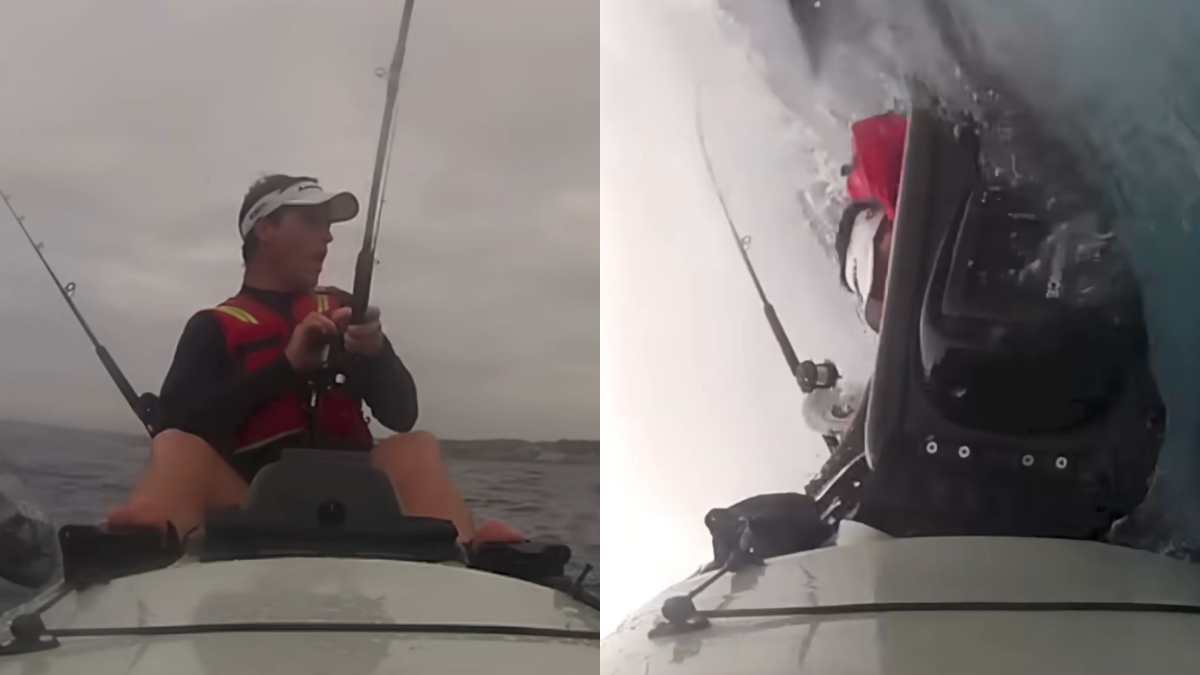
The incident began as a routine offshore fishing trip. The kayaker had cameras mounted on his vessel and was actively fishing when he hooked a fish. As he reeled in the catch, he noticed that a large shark was following it toward the kayak.
The predator appeared to track the struggling fish directly toward the vessel. As the shark closed in, the fisherman reacted to the developing danger. Moments later, the massive animal surged forward and slammed into the rear of the kayak.
The impact overturned the kayak and sent the angler into the water. For several tense moments, he was in the ocean with the great white shark that had just capsized his vessel.
Despite the sudden danger, the fisherman remained composed. He quickly righted the kayak and climbed back aboard before the situation escalated. The video ends with the angler shaken but safe after surviving an encounter that offshore fishermen hope never to experience.
The risks of kayak fishing
Kayak fishing has grown significantly in popularity across the United States over the past decade. The sport gives anglers access to waters that larger boats may not reach while offering an unusually close connection to the natural environment.
That access comes with significant tradeoffs. Kayak anglers are more exposed than people aboard larger vessels to changing weather, waves, currents, and wildlife. Whether they are navigating rough seas, fighting large game fish, or encountering marine predators, they have a much smaller margin for error. Those risks are especially pronounced in open-ocean environments.
Offshore anglers may face powerful species ranging from giant halibut off Alaska’s coast to marlin capable of towing kayaks for miles. Shark encounters remain among the most unnerving possibilities.
Despite the frightening footage, marine experts emphasize that great white sharks do not actively hunt humans. Great whites are apex predators that can grow beyond 20 feet long and weigh more than 4,000 pounds. Their primary prey includes seals, sea lions, and other marine mammals.
Using highly developed senses, great white sharks can detect vibrations, movement, and electrical signals in the water. Those abilities make them exceptionally effective hunters—and help explain why a hooked fish near a kayak can quickly turn an ordinary fishing trip into a life-threatening situation.
Source: www.marca.com