

- WEF report positions IOTA-TWIN as a key infrastructure for digital trade documents and supply chains.
- According to Salima, TWIN is described as a “level playing field” and “virtual watch tower”; IOTA is not mentioned by name in the report.
A new report from the World Economic Forum (WEF), developed jointly with the government of the United Arab Emirates, highlights the IOTA-based TWIN (Trade Worldwide Information Network) as a strategic element for the digitization and coordination of global supply chains.
WEF has reformed IOTA-TWIN

X user Salima (@Salimasbegum) made the new one WEF-Report “The TradeTech Paradox: Connectivity Amid Fragmentation” (January 2026) and emphasizes the political nature of the document. “This is not a crypto white paper. It is global trade policy,” she writes. In the introduction to the report, the foreword was signed by WEF President Børge Brende, the UAE Minister of State for Foreign Trade Thani bin Ahmed Al Zeyoudi and Ahmed Jasim Al Zaabi (Chairman of ADGM).
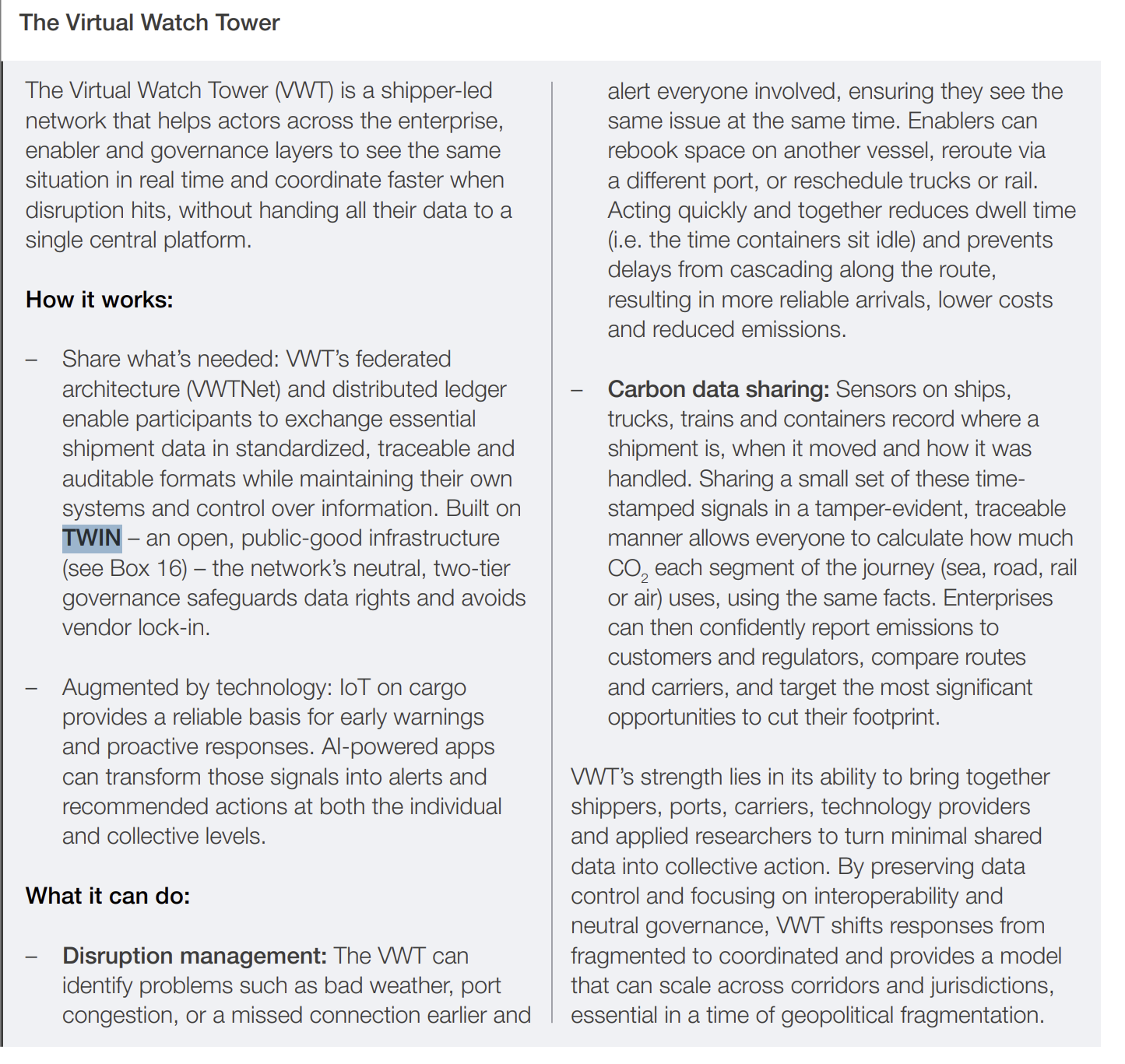
The 38-page document is about how digital trade structures can support global trade of the future. TWIN is an open infrastructure that is intended to securely digitize essential trade documents. The technology provides a rules-based basis on which different states and systems can compete according to the same standards.
Salima writes via X:
“At the center of the document is TWIN = Trade Worldwide Information Network. They present it as an open infrastructure to securely digitize essential trade documents using blockchain – and literally as a ‘level playing field’ so that countries worldwide can compete under the same rules.”

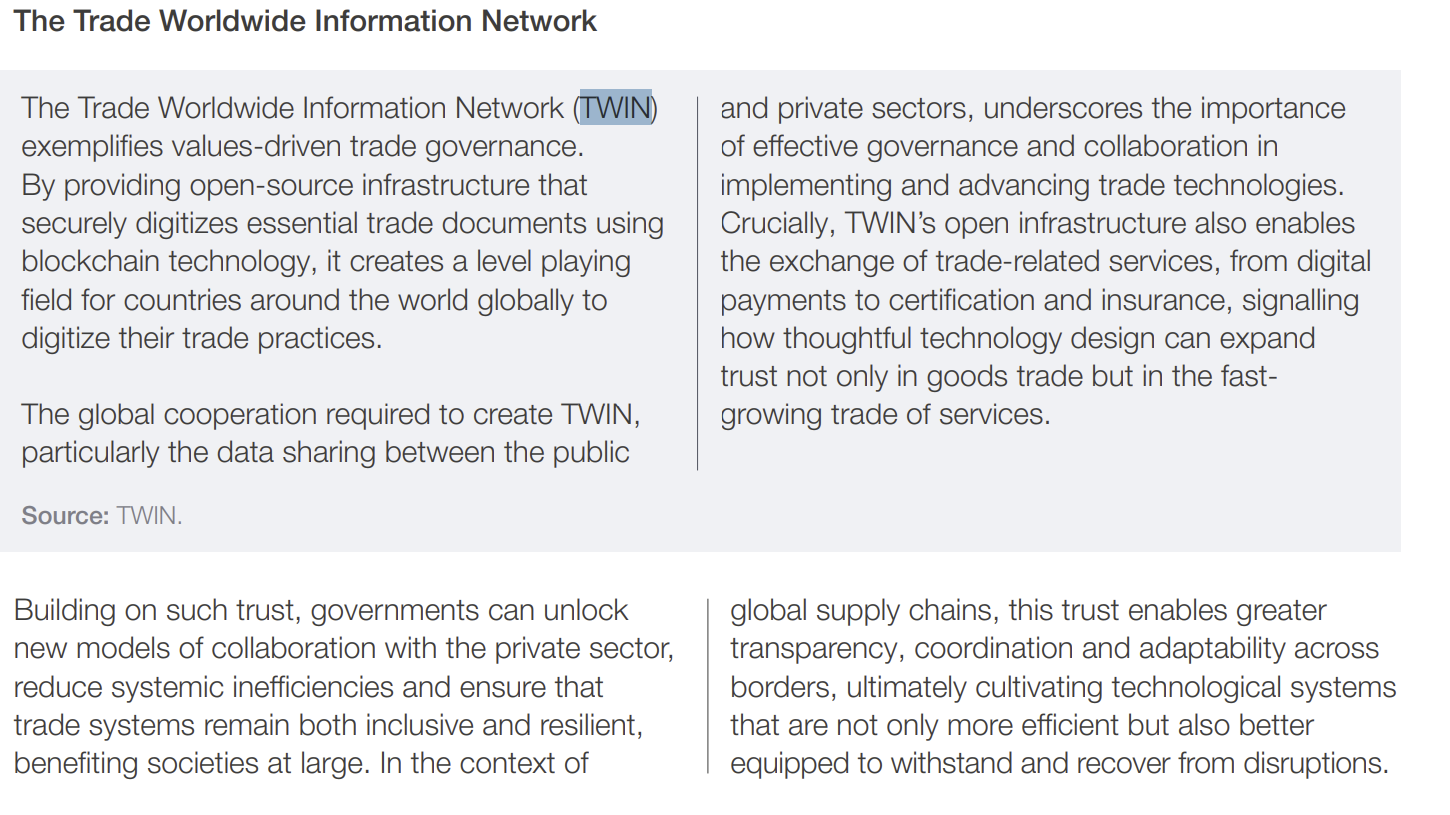
In addition, Salima highlights another element: the so-called “Virtual Watch Towers”, which are based on TWIN. She describes this component as a mechanism that allows trading participants to coordinate without having to subordinate themselves to a single power center or dominant platform – and without revealing more data than necessary.
“The Virtual Watch Tower, built on TWIN, is presented as the trustless foundation global commerce needs to coordinate without depending on a single center of power,” writes Salima. “Only the minimum necessary data is shared, in verifiable and traceable formats.”
Case studies: From Maersk to Bangladesh
The post also identifies several regions and projects that the report highlights as examples of emerging “TradeTech” structures, including Maersk (digital layers for tariffs, compliance and emissions), the Shanghai Lingang Pilot Zone, a UAE-India digital corridor, the Bhomra Land Port in Bangladesh and the SCZone in Egypt.
At the same time, Salima emphasizes a crucial limitation: “The document does not specify which infrastructures are specifically used in individual cases. However, they are all embedded in the same strategic framework in which TWIN is defined as a future level of trust and a ‘level playing field’ in world trade.”
It is also important to note that IOTA is not mentioned by name in the WEF report; however, TWIN is mentioned five times. However, the WEF already had one in July 2025 Article published in which it stated that TWIN could save up to 25% of the costs of global trade.
At the same time, authors Frank Matsaert (Global Head of Trade and Infrastructure, Tony Blair Institute) and Tim Stekkinger (Head of Digital Trade and Trade Technology, World Economic Forum) clarified that “TWIN is the result of a unique TradeTech collaboration between the Tony Blair Institute, TradeMark Africa, the IOTA Foundation, the Chartered Institute of Export & International Trade, the Global Alliance for Trade Facilitation and the World Economic Forum.”




No Comments