

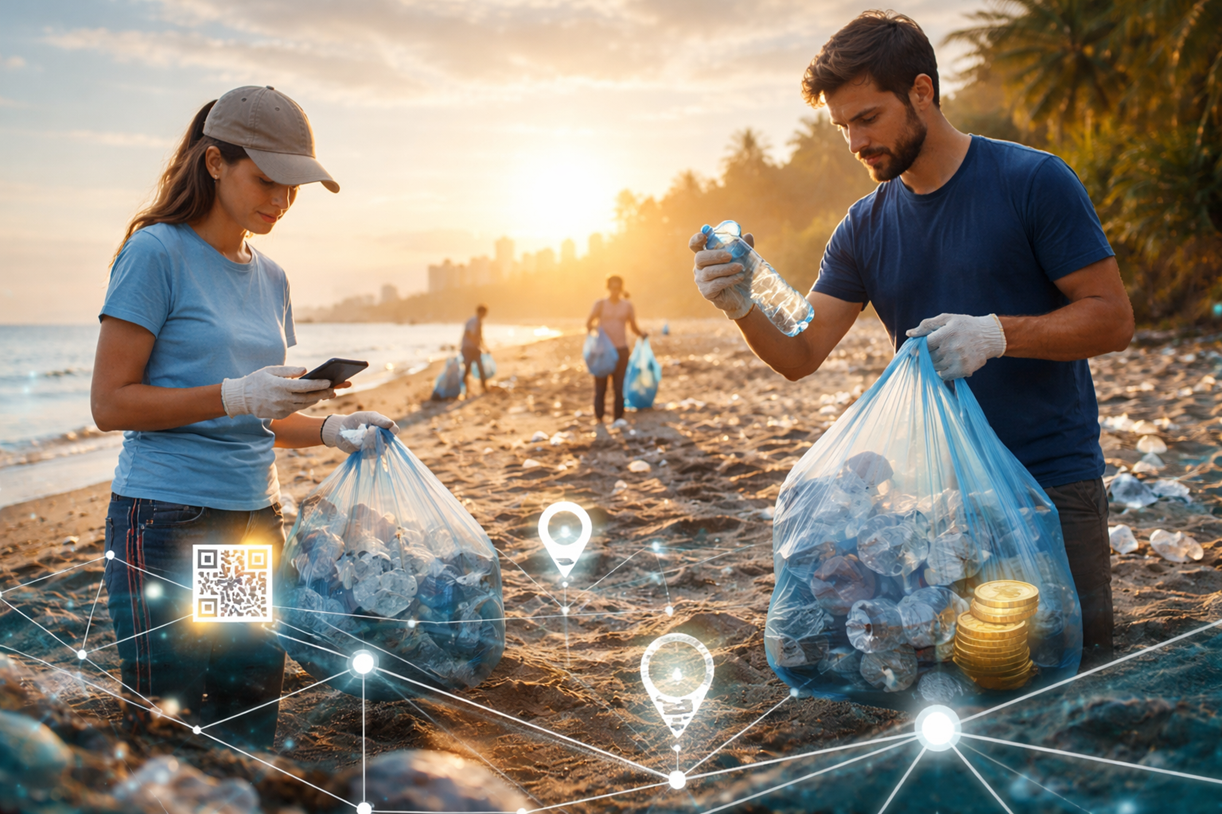
- VeChain and 4ocean rely on incentive-based apps to make sustainable behavior measurable.
- Cleanup activities are verified using AI and blockchain and rewarded transparently.
In a new interview, VeChain CEO Sunny Lu classifies the partnership with 4ocean not as a classic “blockchain-meets-sustainability” project, but as an attempt to address a structural problem with measurable incentives. Removing plastic from the oceans is necessary, but not sufficient.

What is crucial is to change behavior permanently, and this is exactly where Lu sees the starting point for VeChain.
“The biggest challenge is not just the plastic waste that already exists,” Lu said CNF reported. “It’s also about how we reduce consumption overall.”
Lu refers to a joint cleanup operation in Miami, which UFC President Dana White also took part in. The VeChain CEO cited the campaign as an example of reach and impact: “We thought Dana would stop by, take a photo, answer a few questions and leave. In fact, he worked for an hour.” Each participant collected 20 to 25 pounds of trash. “It shows what kind of influence you have to really get even people with a wide reach to take action.”
This direct effort has a lasting effect, says Lu: “Once you see how a beautiful place is full of plastic, paper and waste, then it changes something. People develop an awareness and say to themselves: I don’t want to be part of this problem.”

This is exactly where VeChain comes in with incentive-based applications. “What we’re building uses apps to motivate people to take positive actions,” Lu explains. “When you look back and see what you have specifically achieved in the last few weeks, motivation arises.” The collaboration with 4ocean is therefore obvious: “We come from the technology perspective, you from the practical problem solving. They complement each other.”
The role of VeChain
Lu specifically mentions the Cleanify app, which has already been used in joint campaigns. “Cleanify makes daily cleanup activities visible and rewarding,” he says. Users document their actions with photos, which are then verified. “The AI checks the images, supplemented by location data such as GPS. Rewards are then paid out.”
The approach should deliberately be low-threshold. Lu describes a private example: “My daughter uses a similar app when she walks her dog. She documents it and gets a small reward. It’s simple – but effective.”
For Lu, this is where the real benefit of blockchain technology lies: “This is real utility. People not only become users, but also develop their own ideas on how to improve applications. Competition is expressly desired, this is how better products are created.”
It is important that the system does not only work for crypto-savvy users. “With social login and custody solutions, people don’t have to worry about wallets or technical details. They can log in with Google or Apple and get started right away.”
Schulze also sees blockchain integration as a central lever: “Transparency is crucial, and consumers are increasingly demanding it. Together we can reach a new level and make visible the impact that individual actions can have.”
The entry point for those interested is deliberately kept simple. “You go to vebetter.com,” says Lu. “There are currently 42 applications there. You choose one and can try it out immediately.”
The partnership between VeChain and 4ocean was officially announced in May, as CNF reported, and aims to combine real-world environmental work with blockchain-based verification and incentive infrastructure. Specifically, it’s about making 4ocean’s cleanup activities – such as beach, canal or ocean cleaning – digitally traceable and rewarding them via VeChain’s app ecosystem.
Users can document real clean-up operations, which are then technically checked, while brands and partners can for the first time transparently understand where, when and to what extent environmental work was actually carried out.




No Comments