

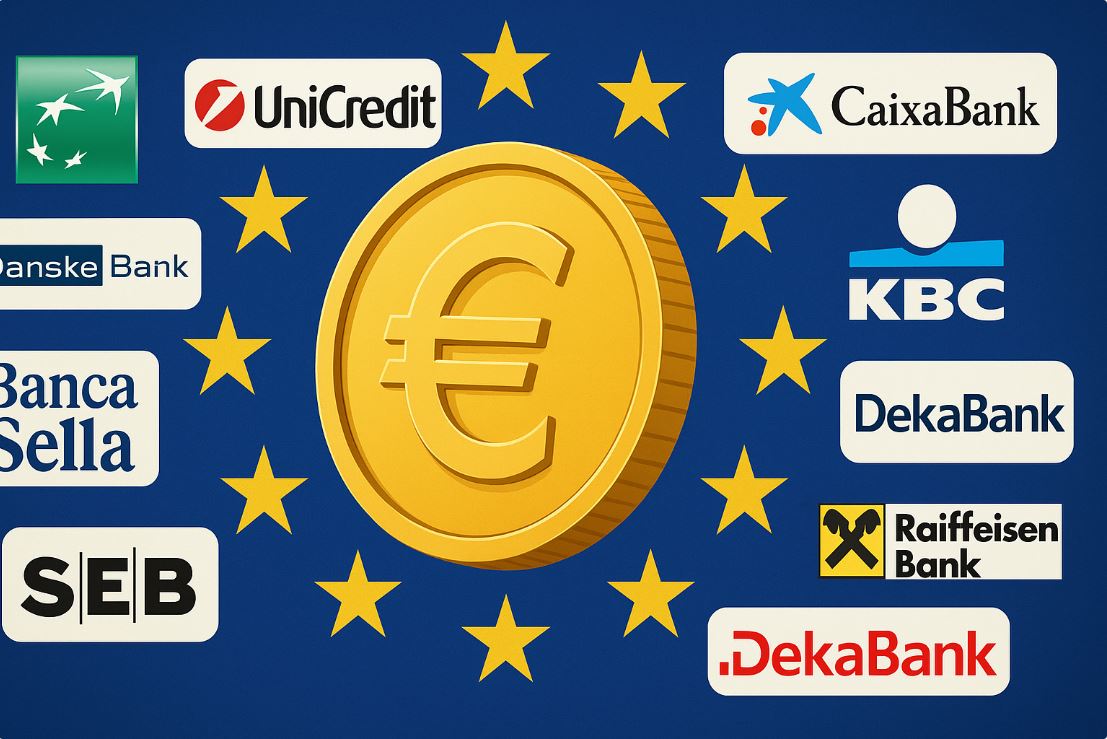
- In a statement on Tuesday, France’s BNP Paribas said it would join nine other EU banks in issuing a euro stablecoin.
- These are the banks UniCredit, CaixaBank, Danske Bank, KBC, Sella Bank, SEB, DekaBank and the Raiffeisen Bank International.
A company founded by ten EU banks called Qivalis based in Amsterdam wants to launch a stablecoin that complies with the EU framework for markets for crypto assets (MiCA).

Qivalis CEO Jan-Oliver Sell explained:
“A native Euro stablecoin is not just about convenience, but about monetary autonomy in the digital age. It offers European businesses and consumers new ways to interact with on-chain payments and digital asset markets in their own currency.”
The move toward a major euro-pegged stablecoin comes as U.S. regulators move to implement a law to create a framework for stablecoins in the United States. The bill, called the GENIUS Act, was signed by President Donald Trump in July.

In connection with the EU banking consortium’s plan, the governor of the Dutch central bank, Olaf Sleijpen, warned of the potential risks to monetary policy posed by the growth of the stablecoin market.
 The EZB in Frankfurt
The European Central Bank had published a report in November saying that the risks associated with stablecoins were likely limited, but “rapid growth requires close monitoring.”
According to ECB adviser Jürgen Schaafhe, euro-denominated stablecoins had a market capitalization of less than 350 million euros, or about $407 million, when the report was published. That’s less than one percent of the global market in July this year.
Tether drops out of EU stablecoin race
Stablecoin issuer Tether completed the withdrawal of its euro-pegged coin EURt on November 25, about a year after it announced it would withdraw support.
Tether had said at the time that the decision was due to the EU’s MiCA regulations, with CEO Paolo Ardoino claiming that these posed risks for stablecoins.






No Comments