

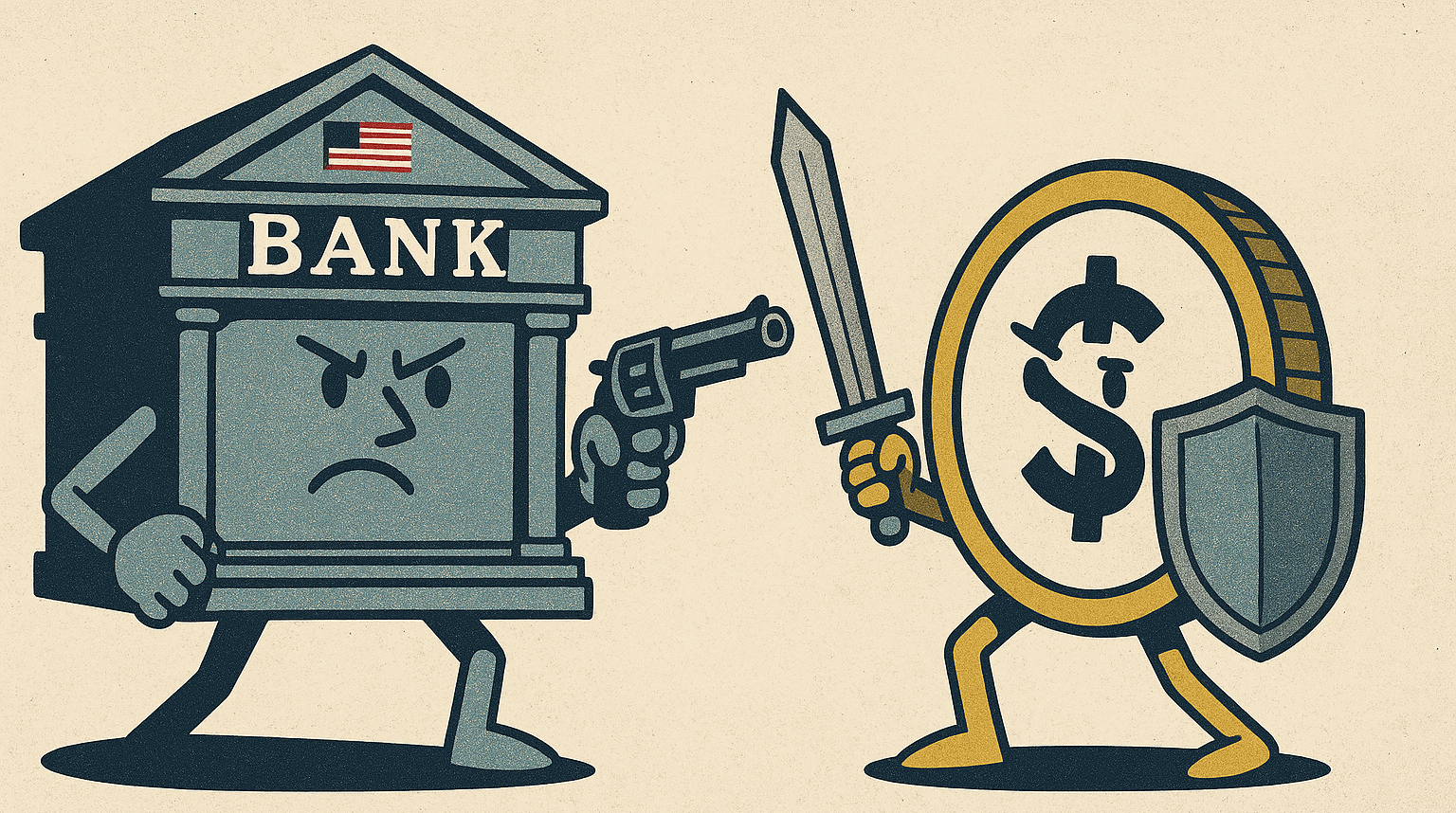
- The Wall Street banking lobby has taken its war against stablecoins all the way to the White House. She wants to enforce a total ban on stablecoin interest rates.
- The conflict is triggered by the stablecoin issuers’ intention to pay interest to their customers, which the banks see as a threat to their existence.
The debate has become a power struggle that goes far beyond technical regulatory details and increasingly touches on the basic structure of the US financial system.

Banks argue that Stablecoin interest would lead to massive capital outflows from the traditional banking system. You’re talking about several trillion dollars that could move into tokenized dollar products.
The crypto industry counters that the banks primarily want to protect their margins and endanger the innovative strength of the US market. The financial policy situation was further destabilized when Coinbase withdrew its support for the planned US crypto legislative package, thereby shaking up negotiations in Congress.
At the same time, the industry’s political influence is growing: crypto protagonists have raised record sums, and the Trump administration is signaling openness towards the crypto industry.
Deadlock in Congress – and the question of compromise

It is currently unclear whether the stablecoin lobby can still reach a viable deal. Republican lawmakers are trying to mediate between banking interests and the crypto industry, but the fronts are hardening. Banks want a complete ban on interest rates and stricter barriers to access to Fed infrastructure. The crypto industry, on the other hand, demands regulatory clarity that does not fundamentally restrict its business models. The likelihood of a short-term compromise decreases the longer internal tensions within the industry persist.
Can the conflict spread to the eurozone?
It is unlikely that the US conflict will spill over directly into the eurozone, but indirect effects are realistic. With MiCAR, the EU has a well-developed regulatory regime that strictly limits interest rate models for stablecoins and binds issuers more closely to traditional financial rules.
Nevertheless, EU banks are watching the US debate closely, as a liberal US market could provide stronger competition to EU institutions. If US regulation allows stablecoin interest rates, it could reignite the discussion about the competitiveness of European financial markets.
Conversely, a US interest rate ban would strengthen the position of the EU crypto industry, but would also limit the attractiveness of European stablecoin projects. The conflict itself is not directly imported – but its economic and political consequences are.


No Comments