
Ripple starts business operations in Great Britain – and has its foot in the door to the EU

- Ripple has the Electronic Money Institution License (EMI) in the UK and the Cryptoasset Registration from the Financial Conduct Authority FCA – and thus the legal basis for starting business operations.
- The FCA is considered one of the most demanding regulatory authorities in the world. Therefore, these licenses have a signaling effect for possible applications for corresponding approvals in the EU.
The EMI license gives Ripple permission to issue electronic money and offer regulated payment services. This puts the company in the same league as established FinTechs such as Revolut or Wise, but with a focus on blockchain-based infrastructure.

The license commits Ripple to high standards of capital adequacy, risk management and compliance. At the same time, it creates the basis for offering cross-border payment services via Ripple Payments directly in the British market and for acquiring institutional customers. They can rely on a regulated, technologically modern alternative in international payment transactions.
The second approval, Cryptoasset Registration, confirms that Ripple complies with UK anti-money laundering and counter-terrorism financing requirements. This is a requirement for all companies wanting to offer crypto services in the UK.
Duties and opportunities
The two new FCA licenses give Ripple a significant boost in its reputation with EU supervisory authorities, as the British financial regulator is considered particularly strict and has high requirements for compliance, governance and money laundering prevention.

This puts Ripple in a very good starting position to enter into discussions with EU regulatory authorities and strengthens the starting position for later MiCA licensing, which will become mandatory in the EU in 2026.
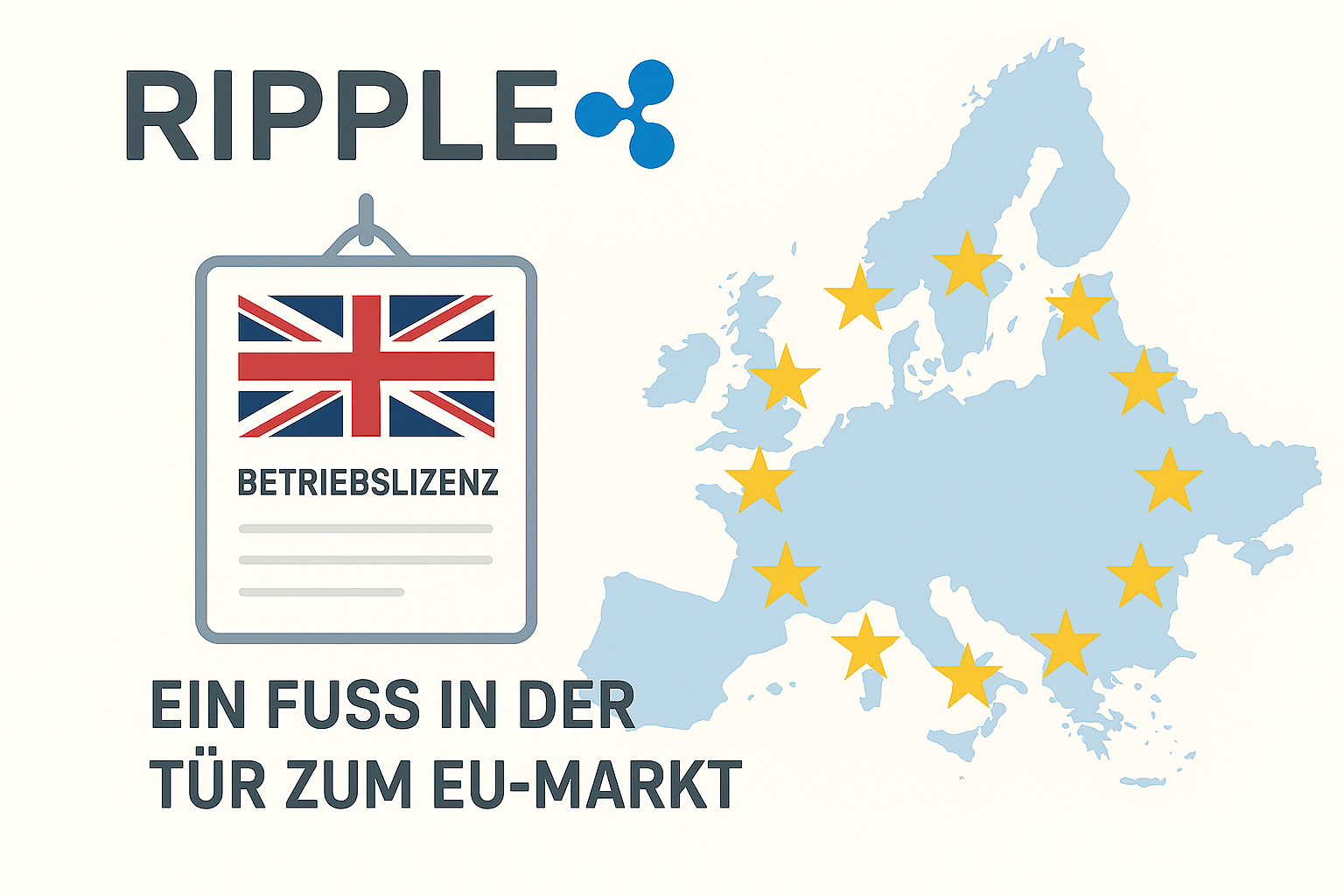
Of course, the British licenses do not replace EU approval, but they show that Ripple already meets many of the requirements that the EU requires in its MiCAR. At the same time, Ripple is becoming more attractive to EU banks and payment service providers, who prefer to work with partners who are authorized in regulated markets and can demonstrate robust AML processes.
In addition, Ripple can already gain indirect access to EU customers through British financial institutions that themselves have EU licenses, which enables preparatory operational expansion even without an EU license.



No Comments