
Poland’s President blocks implementation of the EU MiCA regulation again


- Poland’s President Karol Nawrocki has once again vetoed the implementation of the EU crypto regulation “Markets in Crypto Assets”.
- The presidential office confirmed that Nawrocki had not signed the bill and described it as “virtually identical” to the draft rejected in December.
Nawrocki signed eight other laws on the same day, refused however, the approval of the MiCAR. His reasoning: A bad law remains bad even if it is passed a hundred times.
Overregulation without freedom of innovation?
Nawrocki considers the Polish implementation of MiCAR to be overly controlling, too complicated and anti-innovation. He argues that the law opens the door to censorship and leaves no room for technological development.
The government should develop a new, simpler law that promotes secure framework conditions, tax clarity and real support for innovation. The president’s office signaled its willingness to work on a new version immediately. The question of why 26 other EU members can implement the law without any problems was not heard from the presidential office.
Regulatory vacuum endangers crypto industry
With the renewed veto, Poland remains without national MiCA implementation – a situation that is becoming increasingly problematic. The financial supervisory authority KNF points out that no responsible authority has yet been named for MiCA supervision.

At the same time, the EU transition period is approaching: from July 1, 2026, all EU member states must be fully MiCA compliant. This creates a significant risk for Polish crypto exchanges.
While providers with a MiCA license from other EU countries – such as Coinbase with a Luxembourg license – can operate in Poland without any problems, Polish crypto companies lack the option of national licensing.
Some are already preparing alternative forms of legal organization in order to avoid being forced out of the market.
Conflict instead of cooperation
The veto exacerbates the paradoxical ongoing Polish conflict between the president and the government in Warsaw, because the MiCAR issue is not the only point of contention.
While the experts are pushing for MiCAR to be implemented on time, Nawrocki is acting as a defender of economic freedom and technological openness – against them and his own government.
Although industry representatives welcome the rejection of over-regulation, they warn of the consequences of a regulatory vacuum.
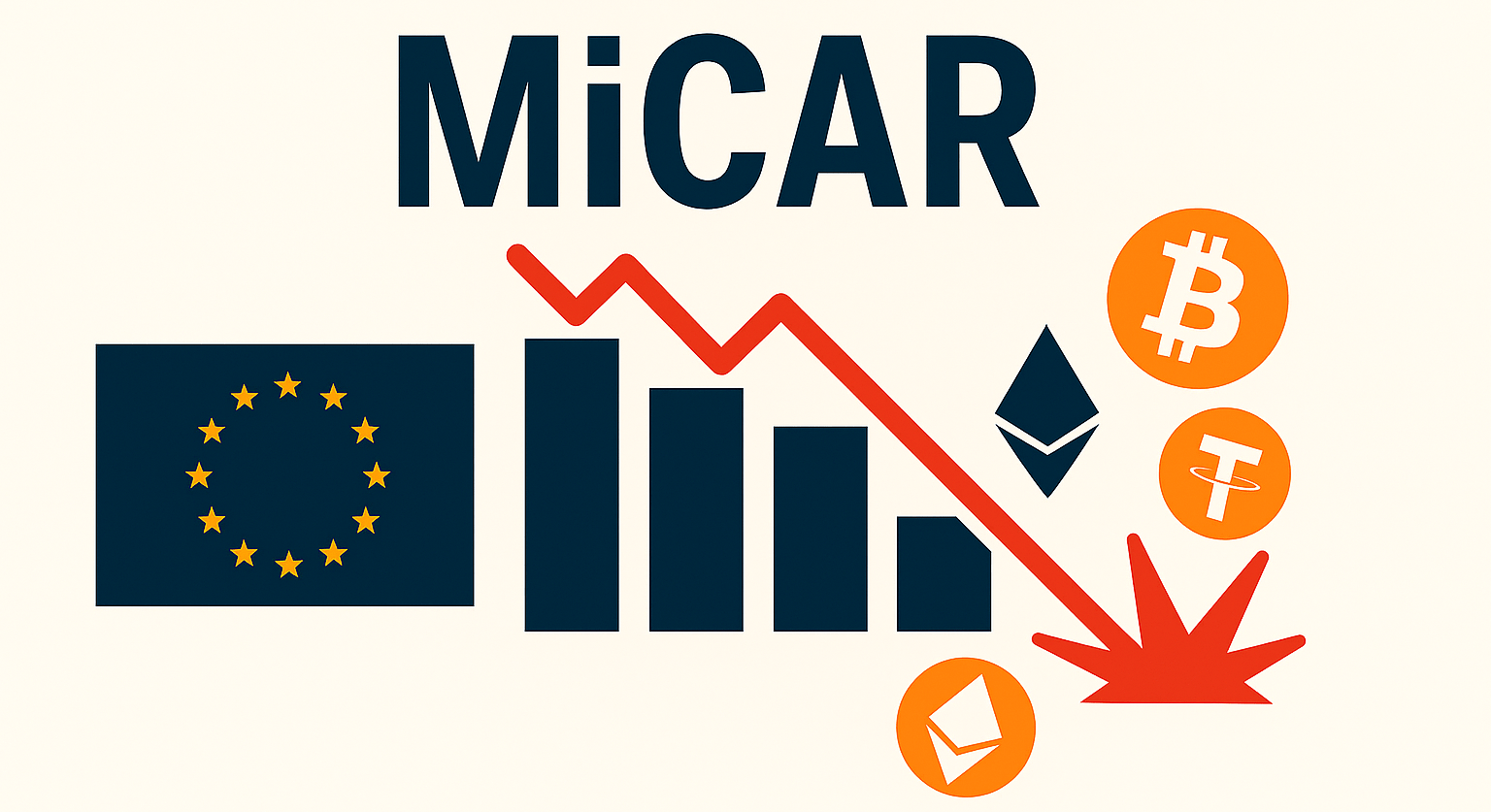
Without an early compromise, Poland is likely to torpedo the EU’s uniform MiCA regulation – with potentially devastating consequences for Poland as a location, competitiveness and the future of the domestic crypto industry.



No Comments