
Openbank and DekaBank are reaching out to Bitcoin customers: Europe’s major banks are launching a crypto offensive

- The EU crypto market is changing. With Openbank and DekaBank, two major European banks are opening up competition for private crypto customers.
- They take advantage of the new, clear regulation by MiCAR and respond to the growing customer demand for Bitcoin and cryptocurrencies.
Both institutions are also reacting to the growing competition in the securities business of the future, in which they do not want to lose out.
Open bank

Openbank, the digital bank of the Spanish Santander Group, already offers crypto trading for German private customers. Customers can buy Bitcoin, Etherum and other established assets directly in online banking, without external exchanges and external wallets.
The bank points to a significant increase in crypto usage in its core markets and sees Germany as a logical expansion. This step is made possible primarily by MiCA, the new EU legal framework, which for the first time sets out clear rules for custody, transparency and risk management.
At Openbank, the crypto service is part of a broader strategy: classic banking services, digital assets and AI-supported investment tools should come from a single source.
DekaBank
DekaBank, the savings banks’ securities house, is also opening its crypto offering to private customers. Deka already has a crypto custody license from BaFin and has previously served institutional customers. From 2026, savings bank customers will also have access to digital assets – 50 million existing customers, so to speak.
Deka does not see cryptocurrencies as another isolated banking product, but rather as an entry into the coming token economy, in which funds, bonds and certificates will increasingly be issued digitally and processed in real time.
Clear regulation thanks to MiCA
It is no coincidence that both banks are taking action now. MiCA has ended years of regulatory uncertainty and is creating a uniform EU framework for the first time. At the same time, it is clear that many investors want to use crypto, but at their bank, not at crypto exchanges.
For banks, this represents both an opportunity and a risk: they must offer their customers modern forms of investment and at the same time secure their role in the securities business of the future. In addition, there is competition, including from DZ-Bank, Deutsche Bank and international competitors such as JPMorgan.
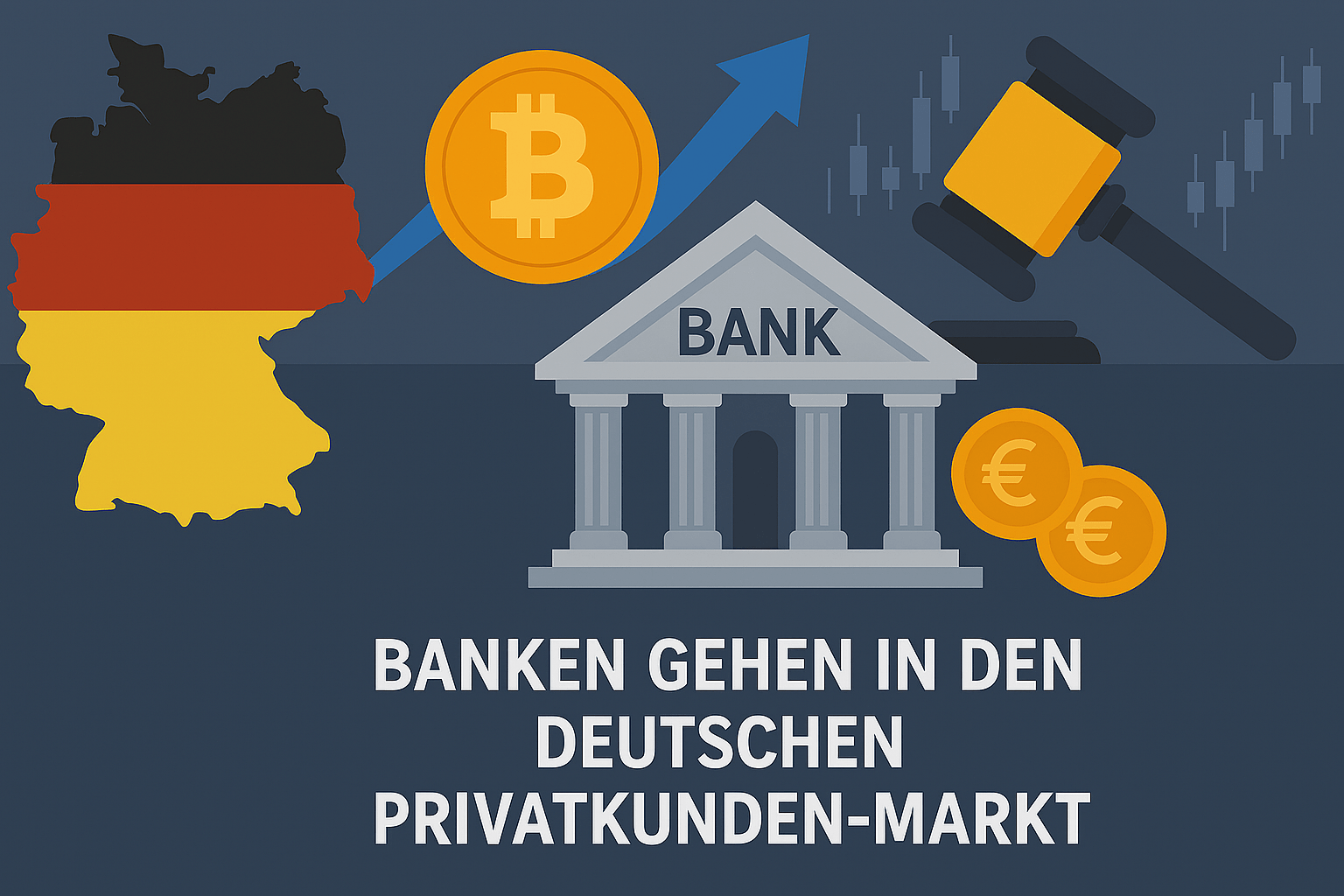
For German private customers, the entry of Openbank and DekaBank means one thing above all: crypto will become a regulated standard product. Trading takes place in a familiar banking environment, with BaFin supervision, MiCA rules and standard banking security standards.
Access is easy because no external exchanges, wallets or additional identity checks are required. In the long term, this opens the way to a tokenized financial world in which digital securities, real-time processing and automated processes are part of everyday life.
Nevertheless, the banks are acting cautiously. Both Openbank and the savings banks emphasize that cryptocurrencies are highly speculative and are not actively promoted.
But the direction is clear: Germany is developing into one of the first large regulated crypto markets for consumer banks.


No Comments