

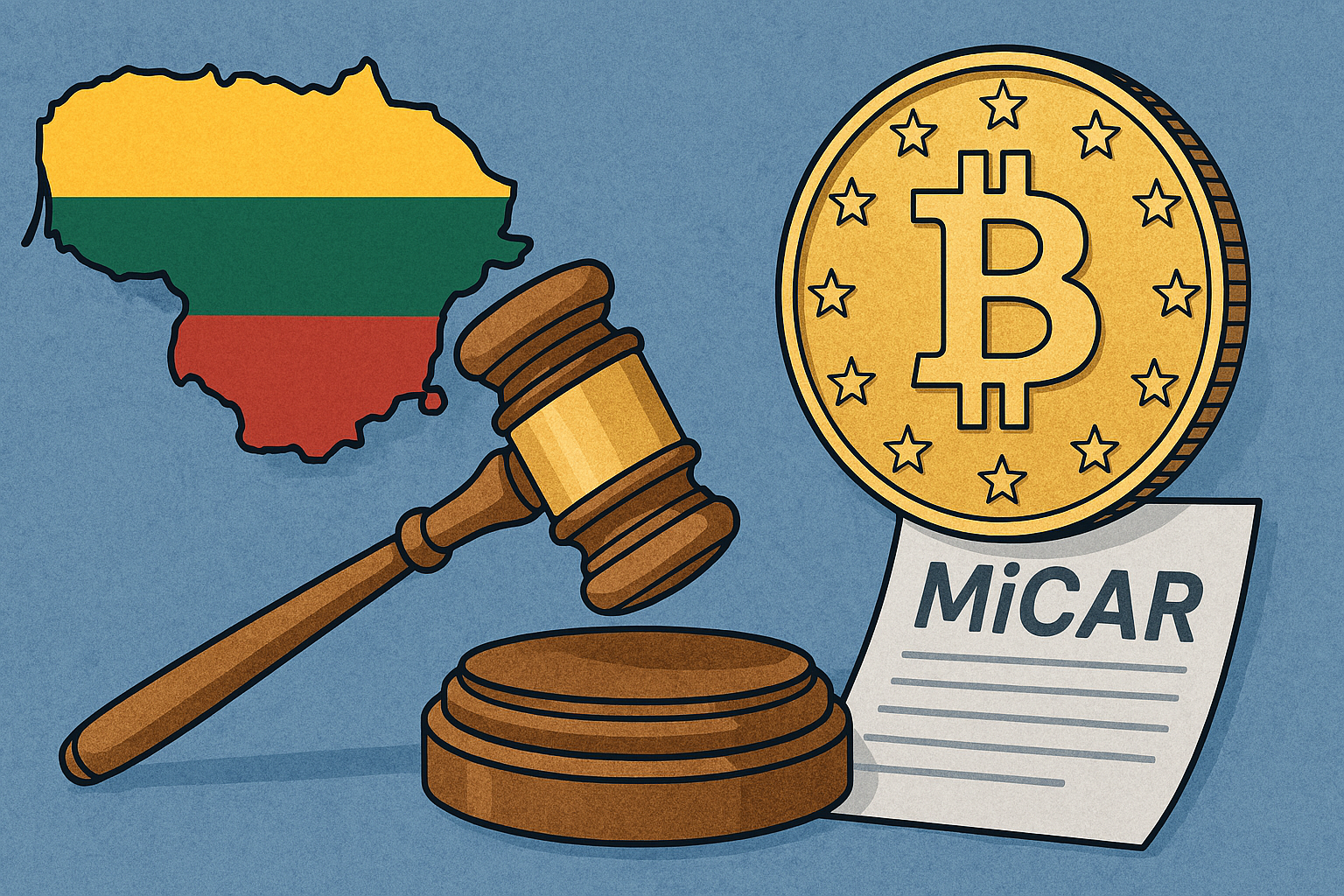
- According to EU requirements, the transition period for the introduction of the EU MiCA regulation does not end until July 2026.
- Not so in Lithuania: There it ends on December 31, 2025 with the start of the new year – and the small Baltic state has good reasons for this.
Lithuania is a preferred EU location for crypto companies, even questionable ones. There are a lot of letterbox companies there that have benefited from the previously relaxed registration practices. This should end now, immediately.

The Lithuanian Central Bank made it clear that unlicensed providers will face fines, website bans, forced closures and even criminal prosecution. The responsible managers of the companies face imprisonment of up to four years.
The measures should not only be enforced against active platforms, but also against any company that continues to operate a website and maintain customer accounts without being able to show a MiCA license.
The reason is plausible: over 370 crypto companies are registered, but only around 120 have real operational business. Less than ten percent have so far even applied for the MiCA license.

This means that hundreds of companies will disappear from the market in 2026 – either voluntarily by going out of business or through foreclosure. Lithuania is therefore a MiCAR hardliner, aggressively presenting itself as a strictly regulating “MiCA gateway state” of the EU.
The rowdies should go
Dubious actors should disappear, and we want to become all the more attractive to renowned institutional providers.
From mid-2026, all crypto service providers in the EU must be fully MiCA compliant. National transition periods, which could last up to 18 months, are expiring. Meanwhile, the EU stock market regulator ESMA has set up a central MiCA register.
It makes licenses, white papers and violating providers public because everyone can see them. This creates a transparent market overview based on uniform criteria.
Regulation becomes a location advantage
For the DACH region this means: banks, regulated FinTechs and institutional custodians are becoming more important and EU passporting is becoming a decisive competitive advantage.
This creates a counter-model to offshore jurisdictions in the Baltics, which advances EU MiCA regulation.
In any case, there is a global regulation trend. The UAE is now cracking down on unlicensed crypto services including self-custody wallets; and even in the US and Asia, regulators are increasing their requirements.
Regulation is becoming a global competitive advantage for an industry that has seen its days of the Wild West behind it.





No Comments