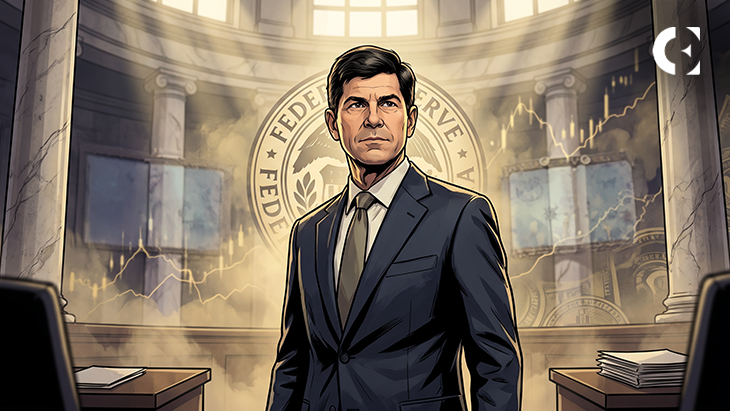
Federal Reserve Chair Kevin Warsh used his first Jackson Hole speech to outline his approach to monetary policy, inflation control, economic conditions, financial markets and the growing role of artificial intelligence in the economy.
Markets reacted quickly, with investors adjusting expectations for the Federal Reserve’s next policy decisions. Treasury yields moved higher as traders increased bets that the central bank could keep interest rates elevated or consider additional increases if inflation fails to improve further.
🇺🇸 Kevin Warsh just delivered his first ever Jackson Hole speech as Fed Chair, and the tone was hawkish1. Inflation data doesn’t show meaningful improvement, 2% target remains firm and fixed2. Fed has more work to do unless underlying inflation moves toward target with speed…
— Bull Theory (@BullTheoryio) August 28, 2026
The post from Bull Theory on X described Warsh’s speech as hawkish and highlighted his comments on inflation, economic activity, artificial intelligence investment and monetary policy. The discussion reflected market attention on Warsh’s first major public address as Fed chair.
Warsh’s message centered on the need for clearer evidence that inflation is moving steadily toward the Federal Reserve’s 2% goal before policymakers change direction.
Inflation Remains the Federal Reserve’s Main Focus
Warsh said recent inflation data has not improved enough for the Federal Reserve to become comfortable with current price trends. He reiterated that the central bank’s 2% inflation target remains unchanged.
The Fed chair said policymakers must continue monitoring underlying inflation measures. He added that more work would be necessary if inflation does not move toward the target at a faster pace.
Investors viewed the remarks as a signal that the Federal Reserve is not ready to shift toward easier monetary policy. Market participants had been watching Jackson Hole for indications that the Fed might become more supportive of interest-rate cuts.
Instead, Warsh maintained a firm position on inflation control. His comments increased attention on upcoming economic releases, including inflation reports and employment data.
Short-term Treasury markets reflected the change in expectations. The two-year Treasury yield, which is particularly sensitive to expectations for Federal Reserve policy, moved higher after the speech.
Strong US Economy Gives the Fed More Policy Space
Warsh also discussed the condition of the US economy. He said consumer spending remained healthy and business investment continued to expand.
The Fed chair pointed to strong economic activity as evidence that higher interest rates have not caused a major slowdown. He also noted that unemployment remains low.
Warsh said business investment had increased at a strong pace, with spending on artificial intelligence infrastructure contributing to recent growth. He said companies are investing heavily in new technology, although the timing of productivity gains remains uncertain.
The comments gave investors another factor to consider when assessing future monetary policy. Strong economic activity could allow the Federal Reserve to maintain tighter financial conditions for longer if inflation remains above target.
Markets had been watching whether economic weakness would force the central bank to consider faster rate cuts. Warsh’s remarks provided a different signal by emphasizing continued economic strength.
Treasury Yields Rise as Markets Reprice Interest Rates
The initial market response centered on interest-rate expectations. Treasury yields rose after Warsh indicated that additional measures may be needed if inflation does not improve.
The increase in short-term yields showed that traders were changing their expectations for upcoming Federal Reserve meetings and factoring in a greater risk of tighter policy.
The US dollar also attracted attention after the speech as markets assessed the prospect of higher interest rates. A stronger interest-rate outlook can increase demand for dollar-denominated assets.
Equity markets were mixed as investors evaluated the effect of higher borrowing costs on companies. Technology stocks remained in focus because of their role in artificial intelligence investment and their future earnings outlook.
Warsh did not provide specific guidance on the next rate decision. Instead, he indicated that future action would depend on economic data.
The approach marked a shift away from detailed forward guidance. Warsh has previously supported a Federal Reserve that communicates less about future decisions and places greater emphasis on incoming economic information.
Artificial Intelligence Investment Enters the Fed’s Policy Discussion
Artificial intelligence was another major topic in Warsh’s Jackson Hole address. The Fed chair discussed how AI investment could influence productivity and economic growth.
Warsh said companies are spending heavily on AI-related infrastructure. However, he questioned how quickly those investments would translate into broader productivity gains.
The discussion showed that the Federal Reserve is monitoring technology trends as part of its economic assessment. AI development could affect employment, business investment and future growth rates.
The comments gave financial markets another theme to consider alongside inflation and interest rates. As the Fed maintains a cautious policy stance, investors are watching whether AI investment can help increase corporate profits and productivity.
Warsh’s priorities became clearer in his first Jackson Hole speech: keeping inflation on a steady path, relying on economic data and avoiding hasty decisions on monetary policy.
Traders turned to rate futures and the Treasury market’s higher yields to assess short-term expectations and monitor the Federal Reserve’s next moves.
Upcoming inflation and employment data, along with comments from other Fed officials, will shape the market’s next response.