


- Japan’s current overhaul of its crypto regulation is a revolution. The government is moving it completely into the legislation of the traditional financial system.
- Taxes are falling dramatically and non-compliant providers are consistently excluded from the market.
This creates a new situation for the DACH region, which creates both regulatory pressure and opens up new opportunities for institutional providers. The development in Tokyo is changing the international market structure and has a direct impact on the EU.
Japan is integrating crypto into the classic tax system

With the decision to place cryptocurrencies under the Financial Instruments and Exchange Act in the future, Japan is finally saying goodbye to the idea of a parallel crypto regime. Bitcoin, Ethereum and other 103 crypto assets are classified as financial products, subject to strict disclosure requirements, insider trading legislation and consistent market standards.
In parallel, the government is introducing a flat rate tax of 20% on profits from qualifying crypto assets and allowing losses to be carried forward for three years. These measures create regulatory clarity that is unparalleled anywhere in the world.
While the MiCAR establishes a horizontal framework in the EU, Japan relies on vertical integration into existing capital market structures. For international investors, this creates an environment that is more predictable in terms of both tax and regulatory aspects than in many Western markets.
New opportunities for DACH companies

The DACH region is watching all this closely: the Japanese decision to give banks direct access to digital assets could signal to European regulators that they also need to bring about greater integration in order to remain globally competitive. At the same time, a strategic opportunity arises for companies from Germany, Austria and Switzerland:
As Japan aligns its own rules with MiCAR and CARF, regulatory barriers to entry are decreasing. BaFin, FMA and FINMA-regulated providers can register more easily and benefit from the fact that Japan consistently excludes unregulated offshore exchanges. While Bybit and other platforms have to leave the market, regulated DACH companies gain credibility and potentially market share.
Global capital flows and ETF dynamics will change
The expected shift in global capital flows is particularly relevant for the DACH region. Japanese institutions are among the largest holders of international securities. If even a fraction of this liquidity flows into crypto ETFs, it will influence price developments on European trading venues and increase demand for products from issuers such as 21Shares and the ETC Group.
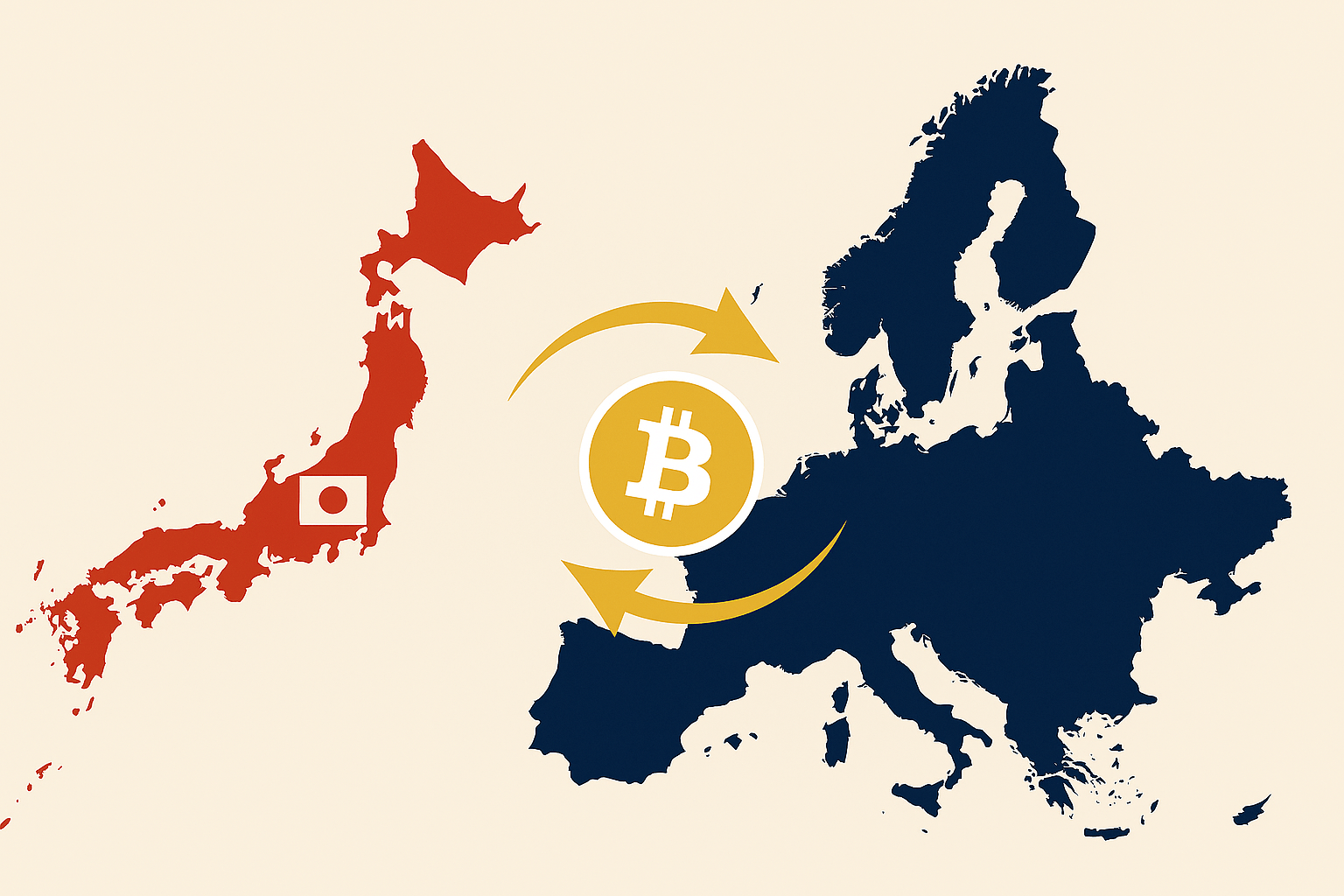
At the same time, Japanese stablecoin models that rely heavily on banks could accelerate the European debate about a MiCA-compliant Euro stablecoin. The combination of effective regulation, tax attractiveness and institutional openness makes Japan a global driving force whose decisions have an impact far beyond its own national borders.



No Comments