
- With DAC8 in the EU, the Tax Transparency Act in Germany and the Swiss CARF, the tax monitoring network in the DACH region is becoming tighter.
- Crypto transactions are recorded systematically and across borders in all three countries. This ends the limited tax visibility for both providers and customers.
The beginning of 2026 marks a turning point for the DACH region. Crypto assets will be fully integrated into the financial architecture from a regulatory and tax perspective. Anonymity and the parallel economy are over.
Now comes institutional fit, transparency and technical resilience. For providers, an environment is emerging in which compliance becomes a key competitive factor, and for customers, tax visibility becomes the norm.
Deutschland
The new Crypto Transparency Act has been in effect since January 1st, requiring crypto service providers to report all transaction and customer data to the Federal Central Tax Office.

For the first time, the authorities have a complete insight into stocks, profits and transfers. The basic tax logic remains unchanged, but enforcement will be much more consistent.
Market observers speak of a paradigm shift that is particularly putting pressure on providers with weak compliance infrastructure.
Austria
Austria also follows the EU regime, but remains with its own tax model. The flat-rate taxation of crypto earnings remains, while DAC8 primarily strengthens the database on which the tax administration can act.
For investors, this means that the probability of undiscovered returns also decreases significantly in Austria.
Switzerland
Although Switzerland is outside the EU, it is closed beyond it Crypto‑Asset Reporting Framework CARF and the expanded automatic exchange of information to the global transparency network. Swiss stock exchanges and brokers will also have to prepare transaction data for international exchange in the future.
This means that Switzerland is finally losing its reputation as a tax haven for crypto assets. To put it more clearly: In Switzerland too, the long-term party for notorious tax evaders is over.
In future, FINMA will treat CARF compliance as an integral part of its supervisory practice.
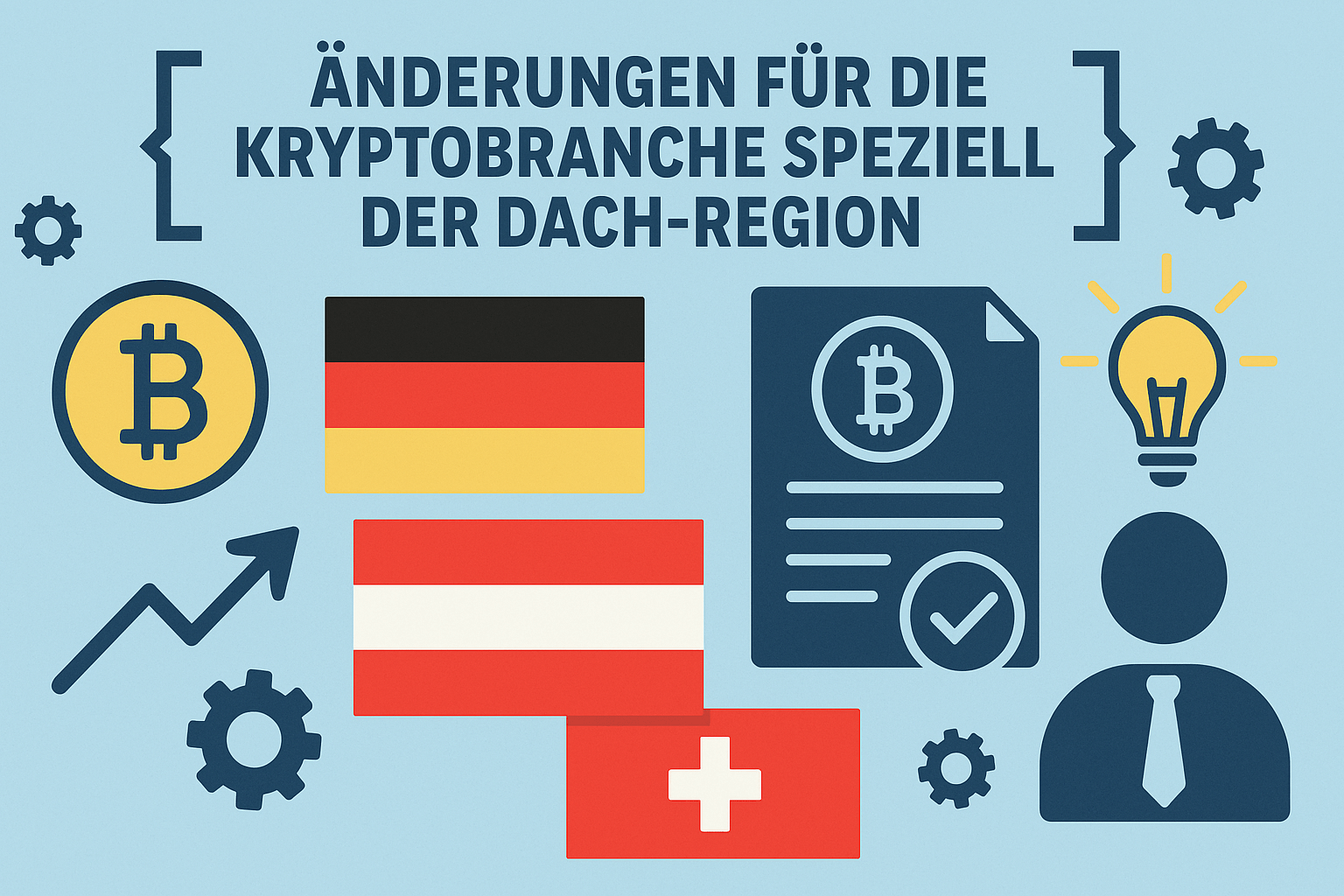
But in parallel with the partial special routes of the three DACH countries, they are becoming more stringent DORA and NIS2 the requirements for the operational resilience of crypto service providers in the EU.
Across the EU, providers must demonstrably control their IT security, risk management and dependencies on third parties. Germany and Austria are increasing the pressure on governance, cybersecurity and crisis management processes.


