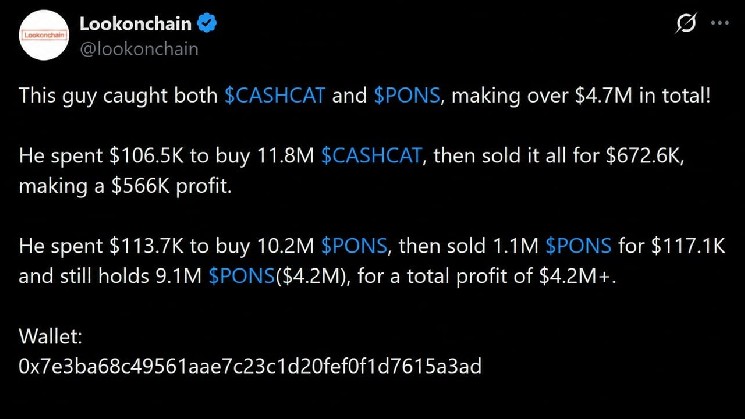
Onchain trackers identified address ‘0x7e3ba’ as the trader behind two consecutive winning trades involving Robinhood Chain tokens.
The first trade was completed in full. The wallet invested $106.5K in 11.8 million $CASHCAT tokens and sold the entire position for $672.6K, generating a $566K profit.
The second trade is still unfolding. The wallet spent $113.7K on 10.2 million $PONS tokens, later selling 1.1 million for $117.1K. It still holds 9.1 million $PONS tokens worth approximately $4.2 million at current prices.
Together, the trades have put the wallet’s total profit above $4.7 million, although most of those gains remain unrealized. The scale of the returns has made the trade a prominent example of the speculative activity taking place across Robinhood Chain.
Robinhood Chain’s Memecoin Surge
Both tokens launched through Robinhood Chain, an Ethereum layer-2 network built using Arbitrum’s technology. Since its launch in July, the network has become a venue for some of the year’s sharpest memecoin price movements.
$CASHCAT was the first major breakout. As Bitcoin.com News reported, the token gained more than 1,400% in a single 24-hour period during July and rose by more than 5,500% over the course of a week.
$PONS later followed a similar trajectory. The platform token for Pons, a token creation and issuance service built on Robinhood Chain, collects fees in WETH. Those fees are used to repurchase and burn $PONS tokens.
On August 30 alone, Pons generated more than $930,000 in application revenue, accounting for roughly 35% of the total revenue earned by Robinhood Chain’s entire ecosystem that day.
Thin Liquidity Creates Risks
When Bitcoin.com News profiled $CASHCAT’s rise in July, the token had a market valuation of $150 million but only $6.6 million in actual liquidity. A wave of coordinated selling could therefore push the price far below the levels implied by individual holders’ paper gains.
Robinhood Chain’s memecoin economy shows no clear sign of slowing. Wallets posting outsized returns can attract further capital as traders search for the next rapidly rising token.
Whether this trader sells the remaining $PONS position at current levels or holds it for a further rally may depend on how long the token continues generating the fee revenue supporting demand.
Source: cryptonews.net