Fed Governor Michael Barr backs rate hike if inflation remains elevated
Federal Reserve Governor Michael Barr has supported a decisive interest rate increase if inflation fails to ease, as Polymarket traders raise the probability of at least one Fed rate hike before the end of 2026 to 72%.
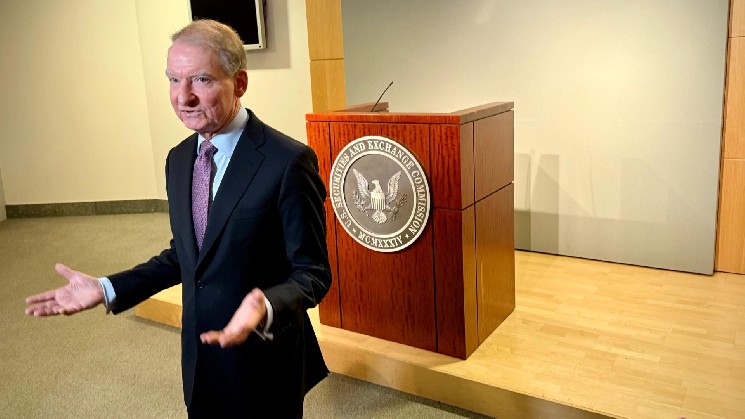
In prepared remarks dated Sept. 1, the Federal Reserve said inflation remained too high after more than five years above the central bank’s 2% target. Policymakers must now determine whether current interest rates are restrictive enough to bring price growth under control.
Speaking at the Second Chance Lending Forum in Washington, Barr said the Fed had time to review incoming economic data before the Sept. 15–16 Federal Open Market Committee meeting. His position depends on whether upcoming reports show that inflation is clearly moving back toward the central bank’s 2% goal.
“If trends in the data give me some confidence that inflation is moderating on a path to 2 percent, then I think we can take a bit more time to assess our policy stance,” Barr said.
If the data fail to provide that confidence, Barr said the central bank should respond without delay.
“However, if inflation appears not to be moderating sufficiently, then I think we should act decisively to raise rates,” he added.
According to Barr, inflation dropped from a peak of more than 7% in 2022 to slightly above 2% in 2024. Progress stalled in 2025 as tariffs, conflict in the Middle East and spending linked to the rapid expansion of artificial intelligence created fresh price pressures.
Barr also highlighted persistent inflation in core non-housing services. The category covers services other than housing and excludes some areas most affected by temporary price changes. He warned that inflation remaining above target for an extended period could allow price pressures to spread across more sectors of the economy.
The latest Personal Consumption Expenditures data showed annual headline inflation at 3.7%, while core PCE inflation reached 3.3%. The PCE price index is the Fed’s preferred inflation gauge, making its trajectory central to the interest rate debate.
Fed officials signal greater pressure before September meeting
Barr’s remarks add another voting member to the group of Fed officials willing to consider higher borrowing costs. As a member of the Federal Reserve Board, he votes at every FOMC meeting.
Fed Chair Kevin Warsh delivered a similar message during his Aug. 28 Jackson Hole address, saying policymakers needed confidence that inflation was moving toward the 2% objective “clearly and at sufficient speed.”
“We must be confident that underlying inflation is moving to our objective, clearly and at sufficient speed. Otherwise, we have work to do,” Warsh said.
As previously covered by crypto.news, Warsh described the 2% PCE inflation goal as a “firm, fixed target.” He also said that 54% of the 199 goods and services in the PCE basket had recorded price increases above 3% during the previous 12 months.
The Federal Open Market Committee kept its target rate at 3.50%–3.75% during its July 28–29 meeting. Most members supported waiting for more information, while Minneapolis Fed President Neel Kashkari, Cleveland Fed President Beth Hammack and Dallas Fed President Lorie Logan favored an immediate quarter-point increase.
Earlier in August, Kashkari said it was time to begin gradually raising rates as inflation remained above target and the U.S. economy continued to withstand current borrowing costs. The split at the July meeting left the September decision dependent on inflation, employment and developments affecting energy prices.
Barr described the U.S. economy as solid, supported in part by investment in artificial intelligence. Consumer spending has remained resilient, while the labor market has stayed stable and unemployment relatively low, according to his prepared remarks.
Polymarket traders raise Fed rate hike probability to 72%
Polymarket traders now assign a 72% probability to at least one Federal Reserve rate increase before the end of 2026, according to prediction-market figures cited in the supplied report. The probability stood at 68% after Warsh’s Jackson Hole speech and at 64% in early August.
Source: Polymarket
A separate Polymarket contract puts the probability of a 25-basis-point rate increase at the September meeting at approximately 57%. Prediction-market probabilities change as traders open and close positions and do not represent a commitment from the Federal Reserve.
Market expectations have risen quickly in recent weeks. In early August, Polymarket traders assigned a 46% chance to a September quarter-point increase, while the probability of at least one hike during 2026 stood at 64%.
CME-based estimates also placed the probability of a September increase at about 57% after Warsh’s speech, according to an Aug. 31 Bitfinex report. The figure had been 39.9% on Aug. 21, while the two-year U.S. Treasury yield later climbed to around 4.31%.
A quarter-point rate increase would lift the Fed’s target range to 3.75%–4.00%. Policymakers could also keep rates unchanged in September and consider an increase at one of the remaining meetings in October or December.
For U.S. crypto investors, higher interest rates could affect Treasury yields, the dollar and demand for assets that do not generate fixed income. BTSE Chief Operating Officer Jeff Mei said in an Aug. 31 report that higher rates could reduce liquidity available to Bitcoin and other cryptocurrencies.
Bitcoin traded near $78,700 when the report was published after falling from above $81,000 to a low of $76,857 following Warsh’s address. U.S. spot Bitcoin exchange-traded funds still recorded $924.5 million in net inflows during the week, although investors withdrew $201.9 million on Aug. 28.
Oil prices and U.S. economic data could influence Fed decision
Energy prices have created another inflation risk as fighting between the United States and Iran threatens oil shipments near the Strait of Hormuz. Brent crude rose above $90 on Aug. 31, while West Texas Intermediate also advanced as traders assessed the possibility of supply disruptions.
Bitcoin remained close to $78,000 during the initial market reaction, even as oil prices increased and equity futures declined. The oil-related market pressure followed U.S. strikes on Iranian rocket launchers and warnings from Iran that it would respond.
Barr identified the conflict in the Middle East as one of the shocks that pushed inflation away from its previous path. Tariffs have also raised goods prices, while the AI construction boom has increased demand for equipment, electricity and other resources, according to his prepared remarks.
Before deciding on interest rates, Fed officials will receive several U.S. economic reports that could shift market expectations. The August employment report is scheduled for Sept. 4, with investors expected to examine payroll growth, unemployment and wage data.
Consumer Price Index and Producer Price Index figures are also due before the Sept. 15–16 meeting. Barr said evidence that inflation is moving toward 2% would give officials more time to assess policy, while insufficient progress would support decisive action to raise rates.