
Key Highlights
- CrossBorder Capital CEO Michael Howell argues a potential Fed rate hike could be stimulative for Bitcoin, not contractionary, due to increased government interest payments flowing to the private sector.
- Howell emphasizes global liquidity and balance sheet capacity—not policy rates—as the true driver of asset prices, noting 80% of capital market transactions now fund debt refinancing rather than new investment.
- The analyst predicts a 25 basis point hike could strengthen long-term bonds, lower yields, and reduce volatility, with Bitcoin and gold positioned to benefit from ongoing “monetary inflation” driven by short-term Treasury issuance.
Why Higher Rates May Not Hurt Bitcoin This Time
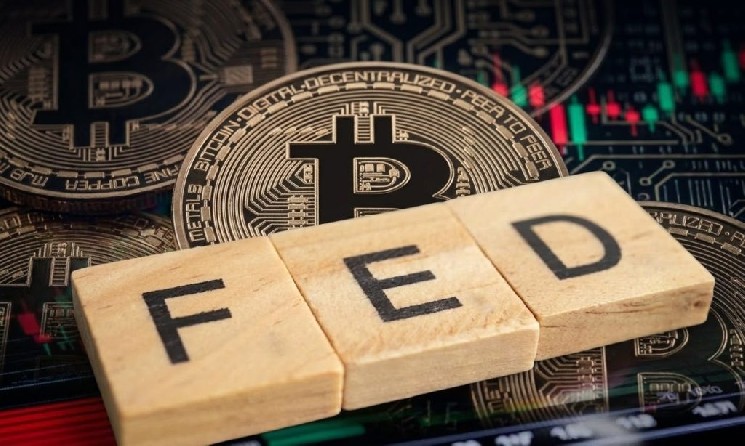
Conventional wisdom holds that Federal Reserve interest rate hikes are unequivocally negative for risk assets like Bitcoin. Michael Howell, CEO of CrossBorder Capital and a widely followed analyst of global liquidity dynamics, challenges that assumption. In a detailed analysis, Howell argues that the modern financial architecture has shifted so fundamentally that a rate increase could actually inject cash into the private sector, creating a tailwind for cryptocurrencies and precious metals rather than a headwind.
The Liquidity Framework Supplanting Rate Policy
Howell’s thesis rests on a structural transformation in global capital markets. He calculates that approximately 80 percent of primary market transactions now serve to refinance existing debt rather than fund new productive investment. In this environment, the critical variable for financial stability is not the level of the policy rate but the availability of balance sheet capacity and liquidity that allows institutions to continue rolling over obligations. “If you raise interest rates in the U.S., you’re essentially giving more cash to the private sector. This isn’t a contraction, it’s a stimulus,” Howell stated, describing a mechanical fiscal transfer where higher coupon payments on expanding public debt flow directly to bondholders.
This dynamic, he argues, means the U.S. government’s status as a massive net debtor has inverted the traditional transmission mechanism. When the Fed raises rates, the Treasury pays more interest, which functions as a fiscal injection. Howell contends a 25 basis point increase at the next meeting could align with short-term market expectations, strengthen long-duration bonds, push yields lower, and dampen volatility across fixed income markets—outcomes that would ease financial conditions rather than tighten them.
Monetary Inflation and the Short-Term Debt Pivot
Central to Howell’s outlook is the Treasury’s increasing reliance on short-term bills to finance the deficit. This shift expands commercial bank balance sheets and broad money supply, a process he describes as “monetary inflation.” In this regime, assets with fixed or limited supply—gold, silver, Bitcoin, and Ethereum—tend to outperform. Historical precedent from the 2008 global financial crisis and the COVID-19 period supports the pattern: when debt rollover stress forces central banks to expand liquidity, these assets record sharp price appreciation.

Howell emphasizes that the United States’ elevated public debt trajectory compels policymakers to maintain ample liquidity and favor short-term borrowing. Consequently, he expects liquidity conditions to remain supportive even if the Fed moves rates higher. The recent rally in both Bitcoin and gold, he suggests, may reflect markets beginning to price this new paradigm where the policy rate is a secondary concern to the pace of balance sheet expansion.
Why This Matters
The analysis reframes the macroeconomic playbook for digital asset investors. For over a decade, the “Fed put” narrative has conditioned markets to expect easier policy as the primary catalyst for crypto rallies. Howell’s work suggests the catalyst may instead be fiscal-driven liquidity growth that persists regardless of the federal funds rate. If correct, the correlation between Bitcoin and global liquidity metrics—rather than interest rate expectations—becomes the superior signaling tool. This also implies that traditional recession indicators tied to yield curve inversion may misfire in a system where the curve is managed through bill issuance and central bank backstops. Investors and analysts should monitor Treasury refunding announcements, repo market functioning, and broad money aggregates with at least the same rigor applied to FOMC dot plots.
Frequently Asked Questions
- Does Michael Howell believe the Fed will raise rates at its next meeting?
- The source does not state Howell’s prediction on whether the Fed will hike. He analyzes the potential consequences if a 25 basis point increase occurs, arguing it could be bullish for liquidity-sensitive assets.
- What specific assets does Howell identify as beneficiaries of monetary inflation?
- Howell explicitly names Bitcoin, Ethereum, gold, and silver as assets highly sensitive to global liquidity expansion and likely to benefit from the current fiscal and monetary structure.
- How does the 80% debt refinancing figure change the impact of rate hikes?
- When most capital market activity services existing debt, the system’s stability depends on rollover capacity and liquidity, not borrowing costs. Higher rates then transfer income to bondholders (stimulus) rather than choking off new investment (contraction).


