

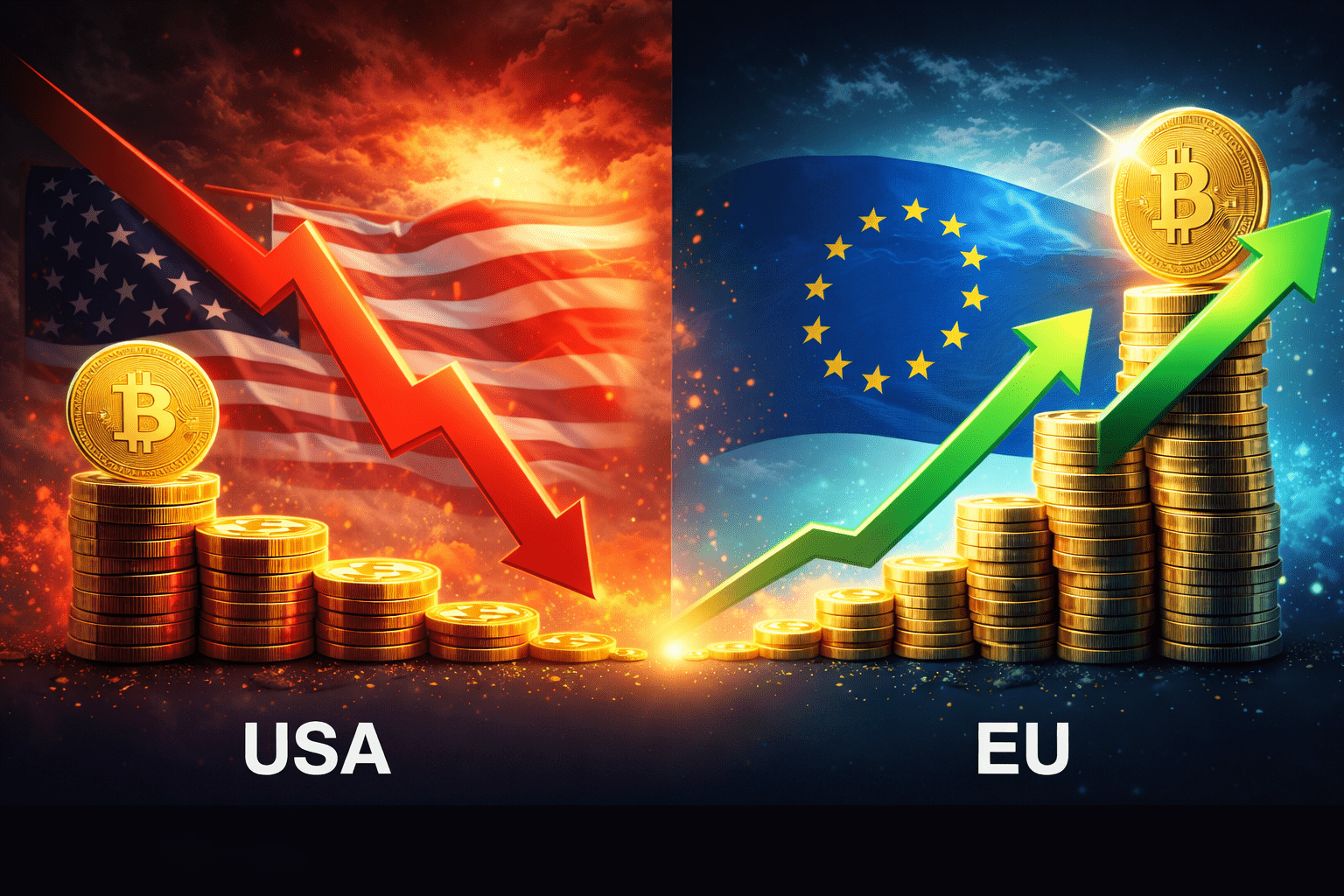
- While US crypto ETPs are shrinking rapidly, their European counterparts in Switzerland and Germany are attracting institutional capital like moths to a flame.
- This could lead to a general market shift, not only because of the success of MiCAR, but also because of the completely unpredictable US government.
The EU clearly benefits from its legal certainty through clear regulation thanks to MiCAR. While the US continues to struggle with uncertainties surrounding staking, custody and product approvals, Europe offers a consistent framework for issuers and investors.

This legal certainty acts like a magnet for institutional investors, who increasingly prefer physically secured products. Switzerland in particular benefits from its reputation as a stable financial center with a high level of transparency and strict custody standards.
Germany, on the other hand, scores with the high liquidity on Xetra and the growing interest of German banks in crypto ETPs.
Innovative products provide new impetus
Another reason for the strong inflows into the EU lies in the product innovation of European providers. Companies like 21Shares and Valor were early bets on themes like staking ETPs, which integrate returns directly into net asset value.

These products offer institutional investors access to returns that are almost unattainable in the United States.
In particular, demand for Solana and multi-asset ETPs is increasing, while Ethereum products have come under pressure due to debates over staking regulation. The combination of innovation and clear – apparently accepted – regulation gives Europe a clear competitive advantage.
Capital is moving to Europe
The most recent weeks show a clear movement of capital: While US ETPs are recording outflows, European products are reporting double-digit millions of net inflows. This is not a reaction to short-term market conditions, but rather an expression of a strategic shift.
Investors are looking for markets with lower political risks, more stable conditions and broader product diversity. Europe currently meets these criteria better than any other major economic region.
DACH region as a new institutional hotspot
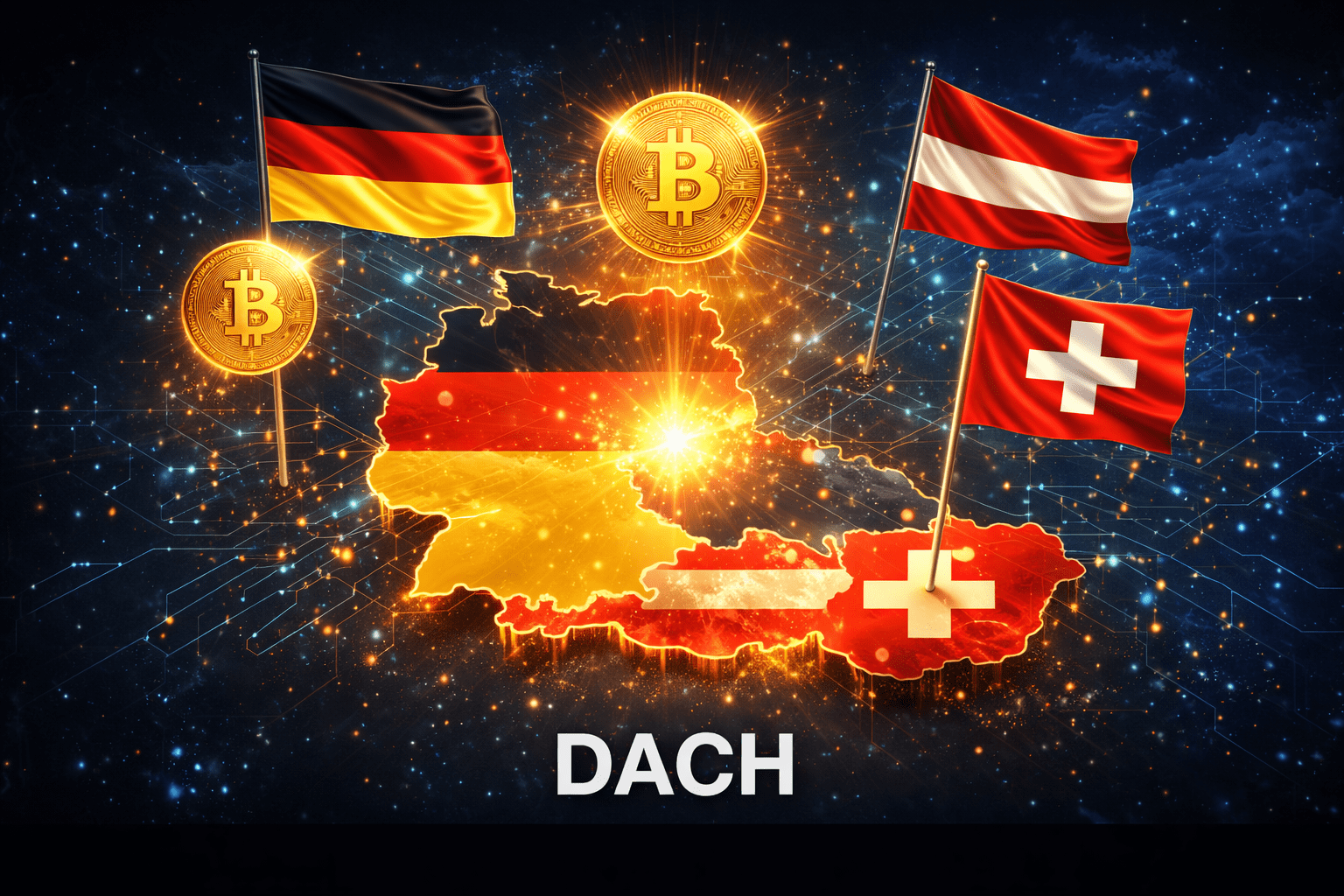
For the DACH region, this development means a strengthening of its role in the global crypto system:
- Switzerland is establishing itself as a leading location for physically secured products.
- Germany is the trading center with the highest turnover.
- Austria is a MiCAR hub with a growing number of providers.
The strong capital inflows show: Europe – and especially the DACH region – is increasingly becoming the preferred destination institutional investors, not just in the crypto segment.




No Comments