Europe’s Capital Shortfall: The €750–800 Billion Investment Gap
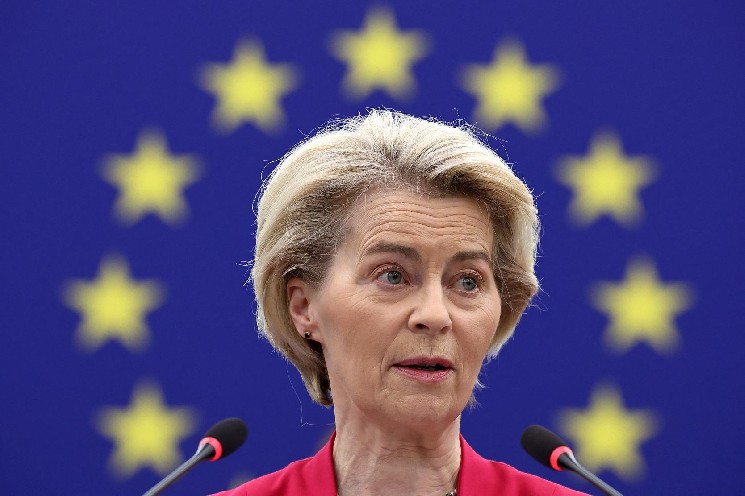
European Commission President Ursula von der Leyen recently told French business leaders that trillions of euros in household savings held in bank accounts are sitting idle
. She argued that Europe needs to put these savings to work for its companies
. Her concern reflects a genuine structural issue: European companies struggle to access the capital required for growth, while households keep a disproportionate share of wealth in bank deposits.
The European Commission’s Savings and Investments Union strategy cites the Draghi report’s estimate that the EU requires an additional €750 billion to €800 billion in annual investment by 2030. Banks remain central to the European economy, yet early-stage technology firms need equity capital and deep markets capable of absorbing risk. Many promising companies still relocate to the United States to scale or are acquired by foreign competitors.
Household Savings vs. Capital Markets: The European Paradox
European households save a larger portion of their income than Americans but allocate far less to capital markets. In a November 2024 speech, European Central Bank President Christine Lagarde noted that the household savings rate stands at about 13% in Europe versus 8% in the U.S. She added that Europeans held roughly €11.5 trillion in cash and deposits in 2023, representing one‑third of household financial assets.
ECB analysis suggests that aligning the European deposit-to-financial-assets ratio with the American benchmark could redirect up to €8 trillion into European markets. Bridging the gap between savers and businesses could theoretically boost household wealth while helping European firms expand.
Brussels’ Proposal: Savings and Investment Accounts Explained
The rhetoric around mobilizing
savings has sparked fears of deposit seizures. The published policy does not support that claim. The Commission’s September 2025 recommendation on Savings and Investment Accounts asks member states to create simple investment accounts giving retail savers access to shares, bonds, and regulated funds. Key features include:
- No minimum opening balance
- Permission to hold multiple accounts
- Assets can move between providers without triggering a taxable event
The Commission aims to attract capital through favorable tax treatment — deductions, exemptions, deferrals, or a uniform tax rate — paired with broad provider access. Participation is voluntary. Providers are encouraged to offer diversified investments across asset classes and geographies, including options aligned with European priorities such as digital infrastructure, defense, and green
infrastructure. Most crypto assets are excluded, though financial instruments with crypto exposure may qualify under existing rules.
Why Bank Deposits Aren’t Truly Idle
Labeling deposits as idle
makes sense only from the perspective of the investment Europe desires. A deposit appears inactive because it has not yet become equity in a startup, a bond issued by a European manufacturer, or a fund holding European securities. The household holding it may have entirely different objectives.
A bank deposit provides liquidity, stability, and optionality. It may cover next month’s rent, fund medical or caretaking needs, or serve as a cushion against unemployment. It also functions as a liability on a bank’s balance sheet, supporting the banking system’s lending and liquidity operations. The return may be low, especially after inflation, but low yield can be the price a saver knowingly pays for immediate access and lower volatility.
The ECB’s own data helps explain this mindset. Lagarde reported that 45% of European consumers lack confidence that financial advice serves their best interests. European retail investors in mutual funds pay almost 60% more in fees than their American counterparts. A household responding to high fees, opaque risk, and distrust is making a rational choice under imperfect conditions. Better markets could gradually shift behavior, but describing hard‑won savings in negative terms obscures the institutional failures that produced this attitude.
Bitcoin and the Ownership Question
Bitcoin cannot solve Europe’s immediate equity‑financing shortage or close the technology gap. However, it is relevant because it provides money that is separate from any state or government. A bitcoin holder controls the keys required to authorize a transaction. The Bitcoin network has no central issuer or account administrator with the power to redirect balances toward an approved industrial objective. Governments can regulate exchanges, tax gains, and prosecute crimes, but the protocol itself offers no administrative lever for reallocating coins because officials believe another use would be more productive.
This architecture gives technological form to an old idea: savings are deferred consumption created by labor, judgment, and restraint. Their owner may invest, spend, lend, or hold them untouched. Bitcoin allows that decision to remain with the holder when kept in self‑custody, provided the holder is responsible and comfortable with the technology. While bitcoin’s price remains more volatile than many would accept as a sole savings vehicle, volatility and the risk of permanent loss of purchasing power are distinct. Savers need the freedom to decide how much volatility they can tolerate, especially when that volatility comes with a lower risk of inflation and confiscatory policy interventions.
Competing for Capital: Trust, Property Rights, and Cultural Change
If we steelman the Savings and Investments Union, its proposals for simplified investment accounts, lower fund fees, consistent rules, and better risk disclosures are easy to support. They would give households the confidence and access needed to engage with markets that have been fragmented and difficult to navigate. If European companies offer attractive returns and Europe protects property rights, household capital will have reasons to invest.
However, defense of private property rights in Europe has been historically inconsistent. In extreme cases — which nonetheless manifest every few decades — countries have confiscated savings directly from accounts, or even displaced millions of people, seizing their homes and belongings. Europeans’ desire for higher savings buffers is therefore rational. Building trust in markets requires strong financial engineering, but that alone is insufficient. Cultivating a culture of individual liberty and respect for private property would do far more to align European savers’ attitudes with their U.S. counterparts. The European Commission would do well to recognize the need for this cultural transformation, take steps to advance it, and even acknowledge bitcoin as part of the picture.
Von der Leyen’s phrase captured the urgency of Europe’s capital shortage, but it also exposed the need for a public conversation about why trust in European markets remains relatively low. A strong investment case earns capital by offering terms savers accept. Savings are accumulated choices. Europe may compete for them. The last word should belong to the people who did the work.