
EU Directive DAC8: Crypto taxes remain as they are – but the data is forcibly recorded

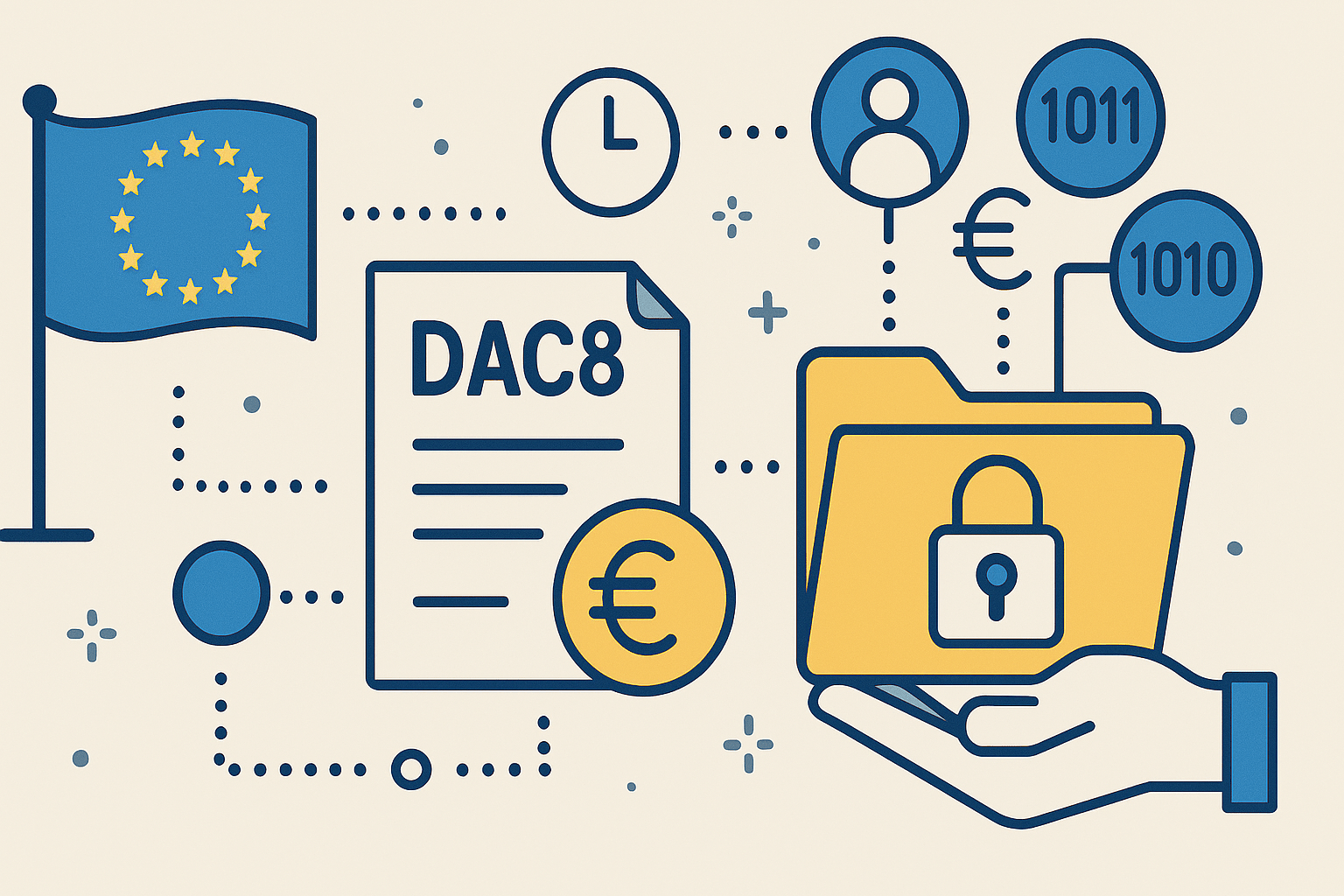
- With DAC8, the EU will introduce a new transparency framework for digital assets in 2026. It does not change taxation itself, but rather the form in which it is levied.
- Relevant crypto transactions are systematically recorded, evaluated and automatically reported to the tax authorities. Everything will be easier for honest taxpayers – for others it will be difficult.
To clear up a common misunderstanding, the DAC8 regulations do not mean new taxes on profits from crypto assets. The existing national tax obligations remain unchanged.

In Germany, the one-year holding period still applies to private sales transactions. The change lies in the transparency of tax obligations, or more precisely, in the recording of the relevant data.
From 2026, all relevant crypto service providers – exchanges, brokers, custodians and certain wallet providers – will be required to record and report transaction data in detail. This includes identity data, trading data, swaps, deposits and withdrawals as well as transfers to external wallets.
Non-EU platforms that serve EU customers are also subject to this reporting requirement. The definition of crypto assets is based on MiCAR and therefore also includes stablecoins and decentrally issued tokens.
First the data collection – then the data exchange

The practical implementation takes place in two steps. From January 1, 2026, service providers must record all relevant transactions. The first transmission to the tax authorities will take place in 2027 for the 2026 tax year.
The data first goes to the national tax authorities and is then distributed across the EU.

For investors this means: The tax offices receive complete transaction profiles, including holding periods, realized profits and losses as well as account movements, which also include movements in and out of wallets.
Discrepancies between the tax return and reported data are automatically visible.
For service providers, this means that they have to expand their KYC processes, obtain tax self-disclosures and set up technical reporting infrastructures. If customers do not cooperate, accounts and transactions can be blocked.
Taxation remains the same
DAC8 does not change the taxation of crypto profits, but rather the ability of tax authorities to audit them. The current situation in which a lack of data access makes tracking difficult is ending. Tax evasion becomes effectively impossible because every transaction, every swap and every payout is recorded. Self-custody is also recorded because transfers to external wallets are also documented if they originate from a service provider.
This means a new reality for investors: errors in the tax return are immediately noticeable, and your own documentation must match the officially collected data sets. There is considerable compliance pressure for service providers, which means a lot of additional work, especially for smaller providers.
DAC8 marks the shift from a largely “self-governing” crypto tax practice to a system controlled by tax authorities.




No Comments