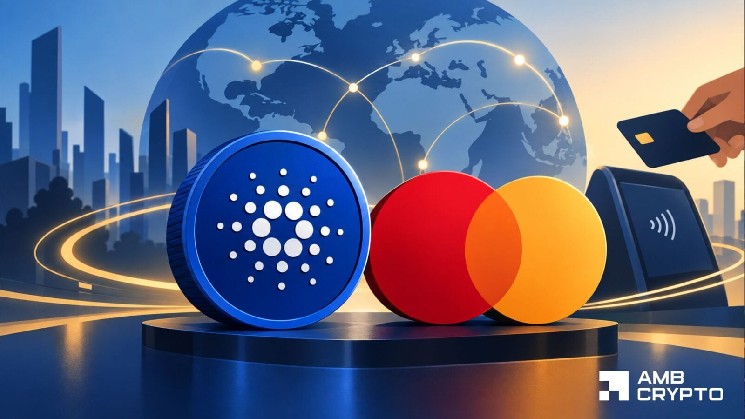
Mastercard’s engagement with Cardano signals potential collaboration rather than direct integration of the blockchain into the payments giant’s core platform. The development opens avenues for future use cases, though it stops short of an established institutional relationship. Should discussions progress into live payment applications, Cardano would gain a notable level of institutional recognition.
Cardano’s Stablecoin Liquidity Faces Critical Test
A primary hurdle for Cardano’s payment ambitions is stablecoin liquidity. The network’s stablecoin market currently holds approximately $60 million, but data from Cardanoscan.io shows that USDCx accounts for over 70% of that total, representing roughly $43 million in dollar-denominated assets.
Most current activity stems from decentralized finance (DeFi) applications rather than real-world payments. This distinction matters because Mastercard’s program targets cross-border transfers, B2B payments, and settlement. Despite Cardano’s low fees, the limited liquidity constrains the network’s ability to process significant payment volumes. Growth in USDCx circulation, active user wallets, and overall transfer volumes would signal stronger payment demand and help convert theoretical potential into practical utility.
Can Cardano Scale for Global Payments?
The viability of Cardano as a payment rail will be tested through user adoption. According to Token Terminal data, daily active users hover near 10,000, while monthly active accounts reached 323,600. This suggests a large base of users retains access and interacts with the network intermittently.
Cardano’s average transaction fee of $0.06 supports small, high-volume cross-border transfers. However, the central question remains whether users are actively employing stablecoins for payments. If daily activity stays low, payment capacity remains largely theoretical. Rising stablecoin transfer counts, payment-focused wallets, and transaction frequency would demonstrate growing demand and give the Mastercard partnership tangible significance.