
Bundesbank President Nagel: Digital euro and euro stablecoin mean dollar independence

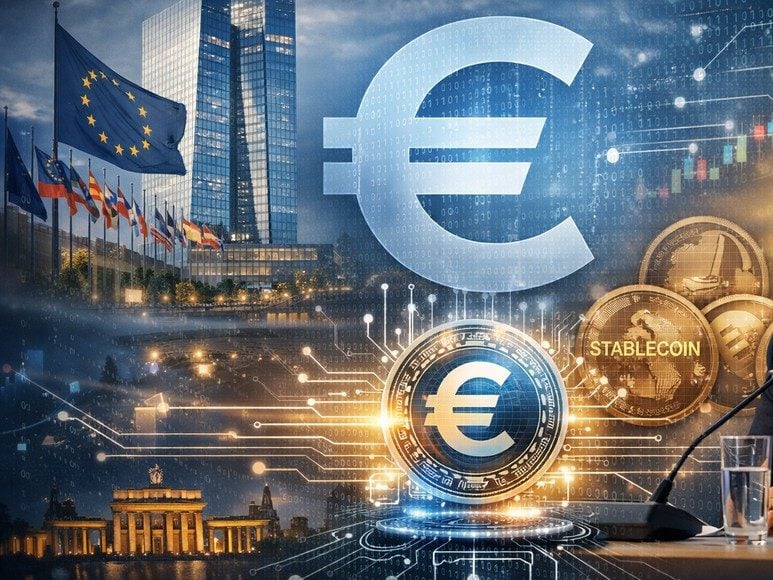
- Bundesbank President Joachim Nagel made it clear at the American Chamber of Commerce’s New Year’s reception in Frankfurt that Europe should become more independent of the dollar when it comes to payment systems and payment applications.
- He made it clear that this also includes the digital euro, both in the retail version for private individuals and retailers, as well as in the programmable wholesale version for companies, in order to make international payments more cost-effective.
From the EU perspective, the USA has inadequate regulatory instruments for digital money. But they have plenty of digital money in the form of dollar stablecoins.
In the EU it is the other way around: it has a fabulous regulatory system with MiCAR. It took years to complete, but in the end all 27 member states agreed on the regulation of digital money. There is only one thing that was forgotten in the rush: digital money. There simply isn’t one, at least not on a euro basis.
The few existing EURO stablecoins have a hopeless maximum share of 0.3% of the global stablecoin market. Dollar stablecoins have over 99% market share, and the tiny remainder goes to exotics like the Hong Kong stablecoin and a few others.
But isn’t there the Digital Euro? Yes, but it won’t come until 2029 at the earliest.
Euro stablecoins and digital euro

Bundesbank President Nagel explainedregulated Euro stablecoins are a sensible addition to the planned digital euro. They would have significant advantages, particularly in international payment transactions, as they enable fast, cost-effective transactions.
This would create new opportunities for businesses and consumers to process international payments without the delays and fees that are common today.
However, the prerequisite is that the Euro stablecoins are fully backed and issued under national or EU central bank supervision. This is the only way to create trust and build stable demand.
Europe acts now or will be left behind
While the US and parts of Asia are already actively expanding their digital payment infrastructures, Europe is falling behind. The Bundesbank President therefore sees an urgent need for action to advance the modernization of the European payment system.
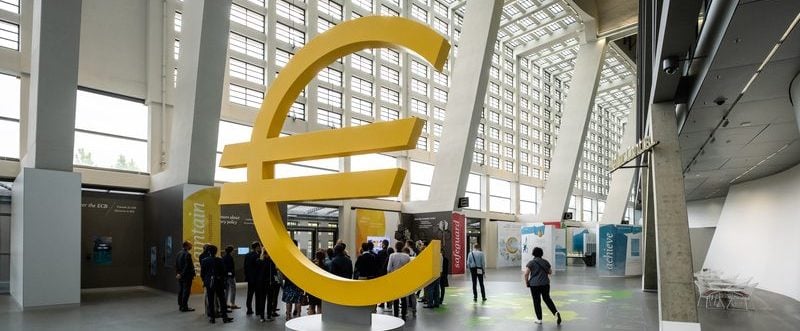
With the digital euro and its clear regulatory framework for euro stablecoins, the EU could strengthen its position in the global financial system, maintain its economic position and act on an equal footing with the USA and China.
But the time window is not open for much longer.


No Comments