


- In Brazil, an ambitious crypto project is making its second attempt: A revised draft law stipulates that Brazil will be allowed to buy up to one million Bitcoin within five years.
- This is intended to create a “Strategic Sovereign Bitcoin Reserve”. Lead MP Luiz Gastão presents Bitcoin as a long-term strategic asset that will make the national financial system more independent.
The draft law defines Bitcoin as a potential reserve instrument that can be used to hedge national risks, similar to gold and foreign currencies. The planned reserve would comprise around five percent of the maximum possible amount of Bitcoin in circulation and Brazil suddenly became one of the largest state Bitcoin investors do worldwide.

In addition to government acquisition, the law also provides for Bitcoin to be used as the basis of security for the digital real (Drex) and confiscated Bitcoins to generally no longer be sold. Tax benefits for mining companies are also part of the bill.

Possible consequences for the market
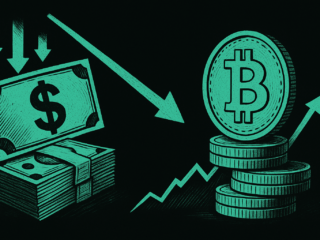
Gastão puts the cost of the program at at least $68 billion. A government purchase of this magnitude would significantly reduce the available Bitcoin supply on the market and could create significant long-term price pressure. Observers also point to the geopolitical signaling effect:
If a G20 and BRICS country like Brazil accumulates Bitcoin on this scale, it could motivate other countries to take similar steps or at least trigger a reassessment of digital reserve strategies.
Central bank resistance

Despite the media attention, the road to implementation is long. The draft has to pass through several committees and the parliamentary process can drag on for months.
The central bank has already made it clear that it does not currently consider Bitcoin to be a suitable reserve asset.
It fears that its monetary policy powers will be weakened. This conflict with a state authority could be the decisive factor as to whether the project survives politically or fails in the parliamentary process.




No Comments