Bitcoin On-Chain Sell-Side Risk Drops Below Half of August Peak, Glassnode Reports
Bitcoin’s on-chain sell-side risk has declined to less than half its August high, signaling reduced potential selling pressure even as a significant cluster of older coins remains held above current market prices. Analytics firm Glassnode detailed the shift in a September 9 report covering on-chain data through September 7.
Sell-Side Risk Ratio Falls to 7 Basis Points
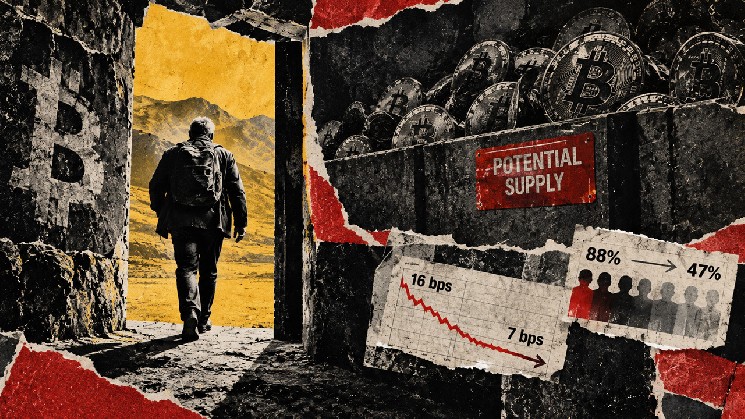
The firm’s Sell-Side Risk Ratio stood at 7 basis points per day on a seven-day basis, down sharply from 16 basis points at August’s peak. This metric aggregates on-chain profits and losses and divides the total by realized capitalization, measuring value realization relative to that capital base to indicate potential selling pressure.
Long-term holders accounted for 47% of realized profit during the period, compared with 88% at the August peak. The decline suggests older holders are contributing a smaller share of the market’s realized profit, though the percentage does not measure their share of all Bitcoin sales.
A ratio below half its earlier level does not mean the volume of Bitcoin sold on exchanges has halved.
Profit Realization Spikes Moderate
Glassnode separately reported that the realized-profit spike on September 3 was less than half the size of August’s spike. That comparison tracks profit spikes specifically, distinct from the seven-day risk measure. Together, the findings describe quieter realization activity and a changed mix of holders taking profits.
Overhead Supply Cluster Holds at $83,000–$86,000
The report identifies roughly 1.07 million BTC acquired between $83,000 and $86,000, almost all held by long-term holders. That block of coins barely changed over 30 days. The holdings remain potential supply, while the realization data describe what holders have recently been doing.
Exchange Demand Remains a Separate Test
Reports noted negative exchange spot flow on September 8. Spot cumulative volume delta (CVD) remained negative despite improving, meaning aggressive exchange selling still outweighed aggressive buying in that measure.
CVD tracks the balance of executed trading, while sell-side risk tracks on-chain profit-and-loss realization relative to realized capitalization. A lower reading in the latter does not require the former to turn positive.
Bitcoin holders are realizing less profit and loss relative to the capital base, while the overhead coins remain largely in place. Treating that entire block as immediate selling pressure would overstate the evidence. A sustained advance would still require buyers to absorb the supply that actually comes to market.
Related Reading: Bitcoin’s next $80,000 breakout has $47 billion more profitable supply to absorb