

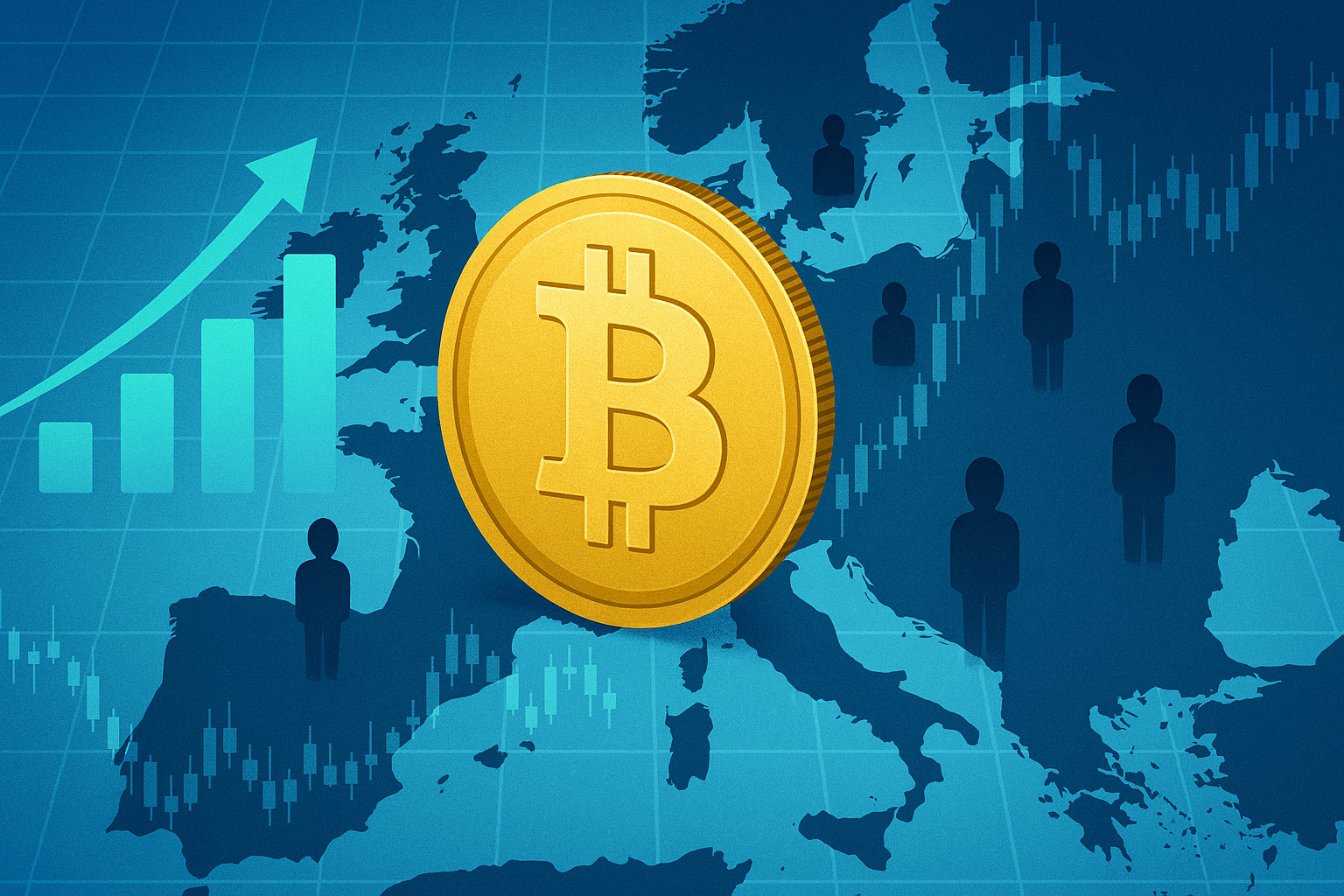
- Europe’s crypto market is changing rapidly. Since we knew that the uniform MiCA rules were coming, the number of investors has been growing rapidly.
- Digital assets are becoming an integral part of portfolios. But who actually invests the most – and why?
Market analyzes show that the strongest growth in the number of cryptocurrency owners is in Central and Eastern Europe, while the largest sums are invested in economically stronger Western Europe.
Germany is the front runner
Germany, France and the Netherlands are among the largest markets for Bitcoin and Co in terms of trading volume and institutional activity.
Germany in particular benefits from the increasing number of regulated providers, a strong FinTech sector and more and more crypto-savvy investors.
At the same time, the Eastern European states of Poland, the Czech Republic and Bulgaria are rapidly catching up. Here, younger, digitally savvy population groups in particular are driving the growth of crypto assets.
Eastern Europe is quickly catching up

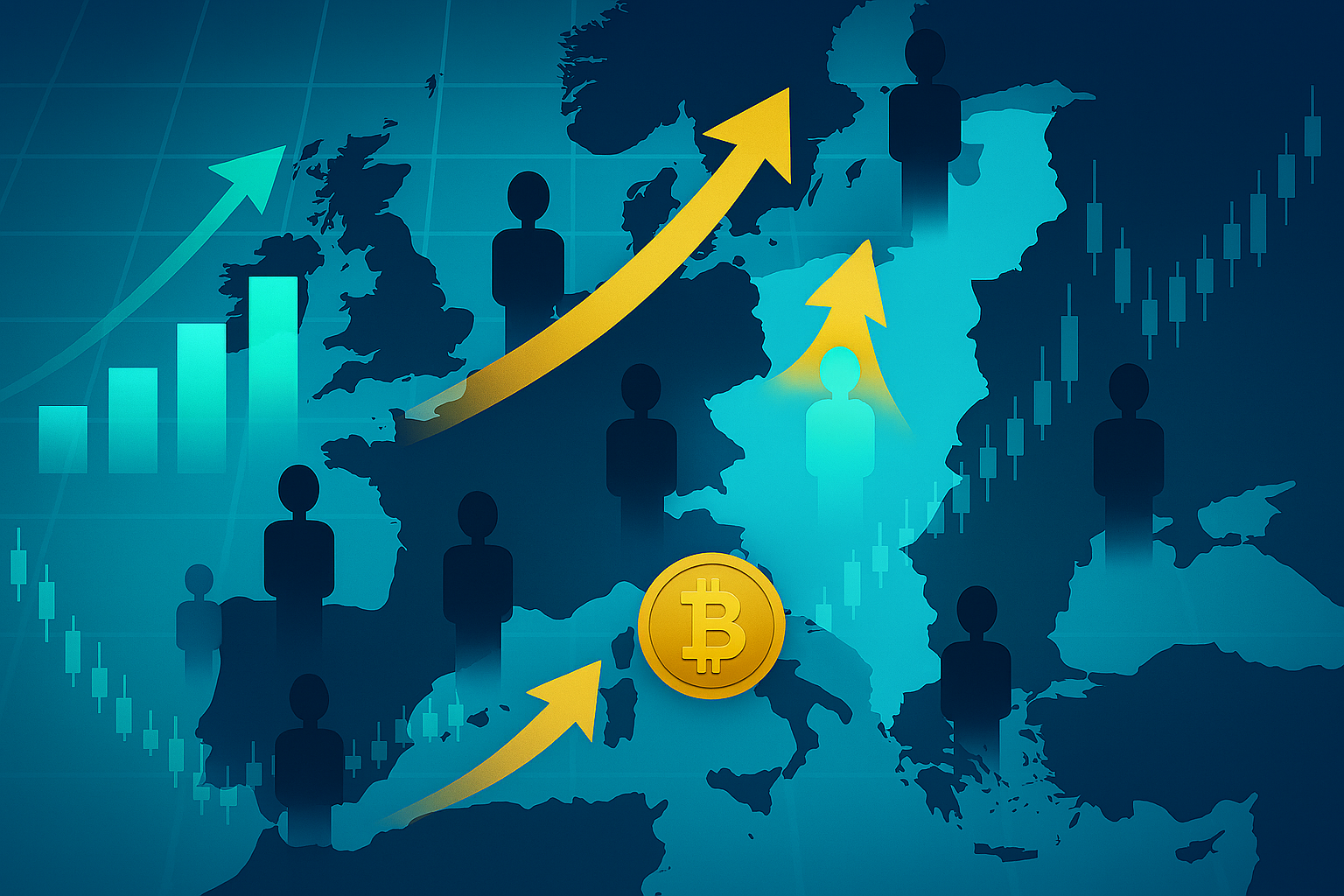
The entry threshold is low, interest in alternative forms of investment is high, and the economic uncertainty of recent years has increased interest in independent forms of investment. In some Eastern European countries, the proportion of the population with crypto ownership is already above the EU average.
Another driver is the institutions. European asset managers, banks and family offices are investing more and more in Bitcoin, Ethereum and tokenized RWA. The MiCA regulation acts like a catalyst here.
Trust through legal certainty
Legal certainty creates trust, and trust creates capital inflows. Crypto financial systems are emerging particularly in Luxembourg, Switzerland – not in the EU, but closely interconnected – and Liechtenstein, which specifically attract institutional investors.
Legal certainty is the common basis of motivation in the different regions of Europe. While investors in Western Europe tend to view cryptocurrencies as a long-term investment, in Southern and Eastern Europe the tangible, pragmatic reasons dominate.
These include protection against inflation, access to global markets and the certainty of being able to build and hold assets independently of banks.
All of these positive effects of the EU MiCA Regulation are taking Europe into a new phase in terms of the importance of forms of investment and thus their growth. Cryptoassets are gaining an increasingly broader base among the EU population.
They are no longer an investment niche for the initiated. They have arrived in the middle of Europe, which has accepted cryptocurrencies and made them socially acceptable.





No Comments