
Abu Dhabi bought 49% of Trump company WLFI – $500 million for political favors

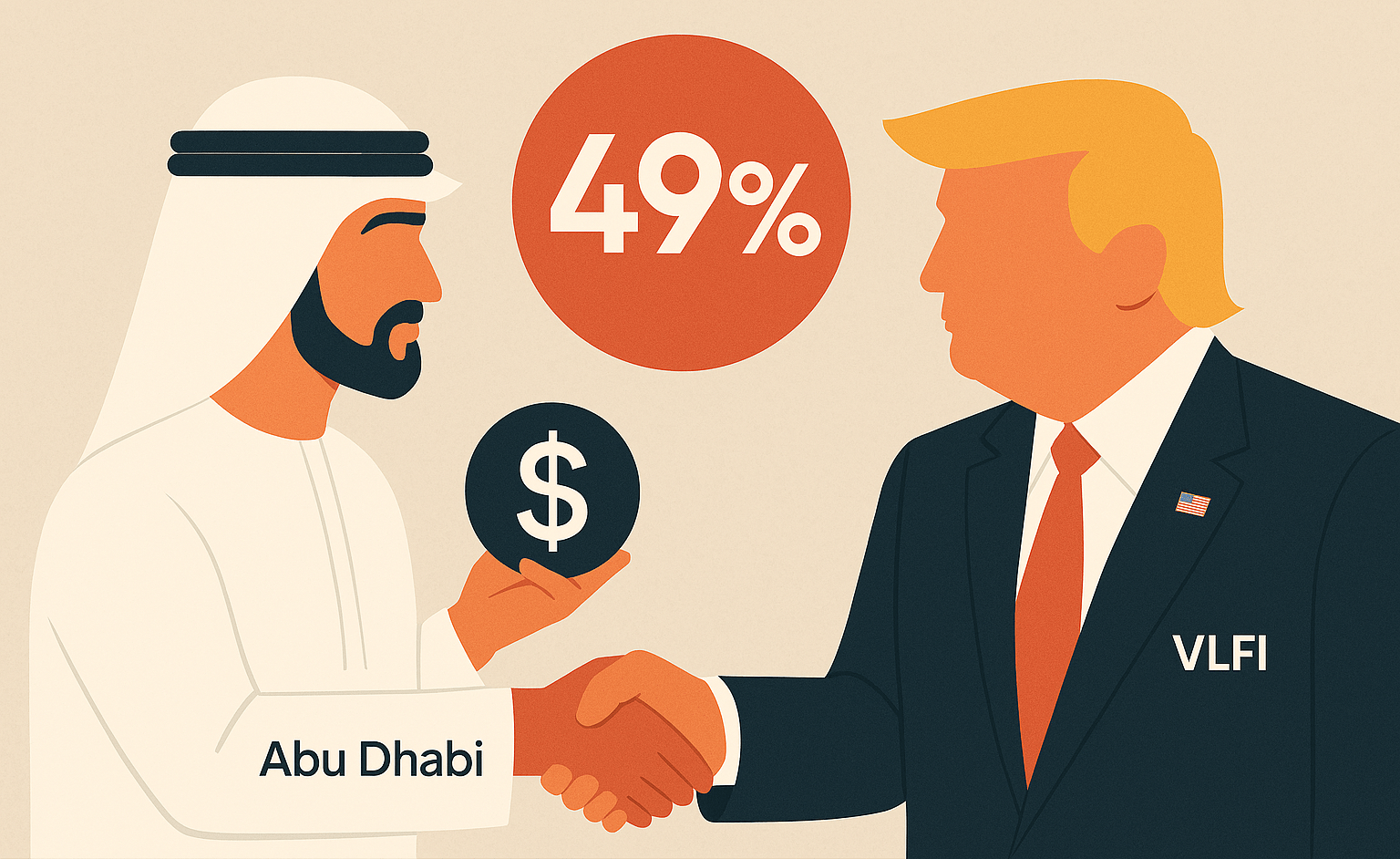
- The fact that a company from Abu Dhabi has taken over almost half of Donald Trump’s crypto company World Liberty Financial is currently causing political unrest in the USA – even if people there are now used to a lot.
- The buyer is Sheikh Tahnoon bin Zayed Al Nahyan, one of the most powerful puppet masters in the Emirates. He is national security advisor to the UAE, controls several sovereign wealth funds and is head of the AI group G42, which invests in AI on a large scale worldwide.
The “deal” took place in January 2025, a few days before Trump’s inauguration. A total of $500 million flowed into WLFI through the company “Aryam Investment 1,” including $250 million immediately after the contract was signed. According to media reports, a significant portion of this sum went directly to companies belonging to the Trump family and to companies owned by real estate entrepreneur Steve Witkoff, who – what a coincidence – was also working as the US envoy to the Middle East.
Political decision in the shadow of the deal

The timing is particularly sensitive: the contract was signed a few days before Trump took office.
Shortly thereafter, Tahnoon visited the White House. Four months later, the US government approved delivery of 500,000 State-of-the-Art Nvidia-Chips per year to the Emirates. 20 percent of this, 100,000 pieces per year, goes to Tahnoon’s own company G42. The contract runs until 2027 and has an extension option until 2030.
It is a decision that the Biden administration had previously rejected, and for good reason. The critics see this as a direct mixing of private business interests with state technology policy, which is traditionally considered particularly sensitive in the USA – but in the Middle East is often a prerequisite for a business deal.
Crypto project with political explosiveness

WLFI is an ambitious project that aims to combine cryptocurrencies, tokenization and wealth creation. The wealth creation thing has worked out well so far, at least for the Trump family. She still holds the majority stake in the company and therefore benefits directly from its economic success.
The fact that millions of pieces of critical hardware technology are now being delivered free to a state whose general US-friendliness is doubted by many raises questions about influence, transparency and control of the final use. Legal experts and Congress are now debating whether the deal creates a new form of political vulnerability.
One thing is certain: The Intertwinement of crypto, geopolitical interests and personal profit motive makes this case one of the most controversial financial transactions in recent US politics.


No Comments