

- 2026 will be a year of opportunities for Germany’s crypto investors: more mature markets, more transparency and new technological developments.
- But 2026 will also be a year of greater due diligence: more regulation, more tax involvement – less anonymity.
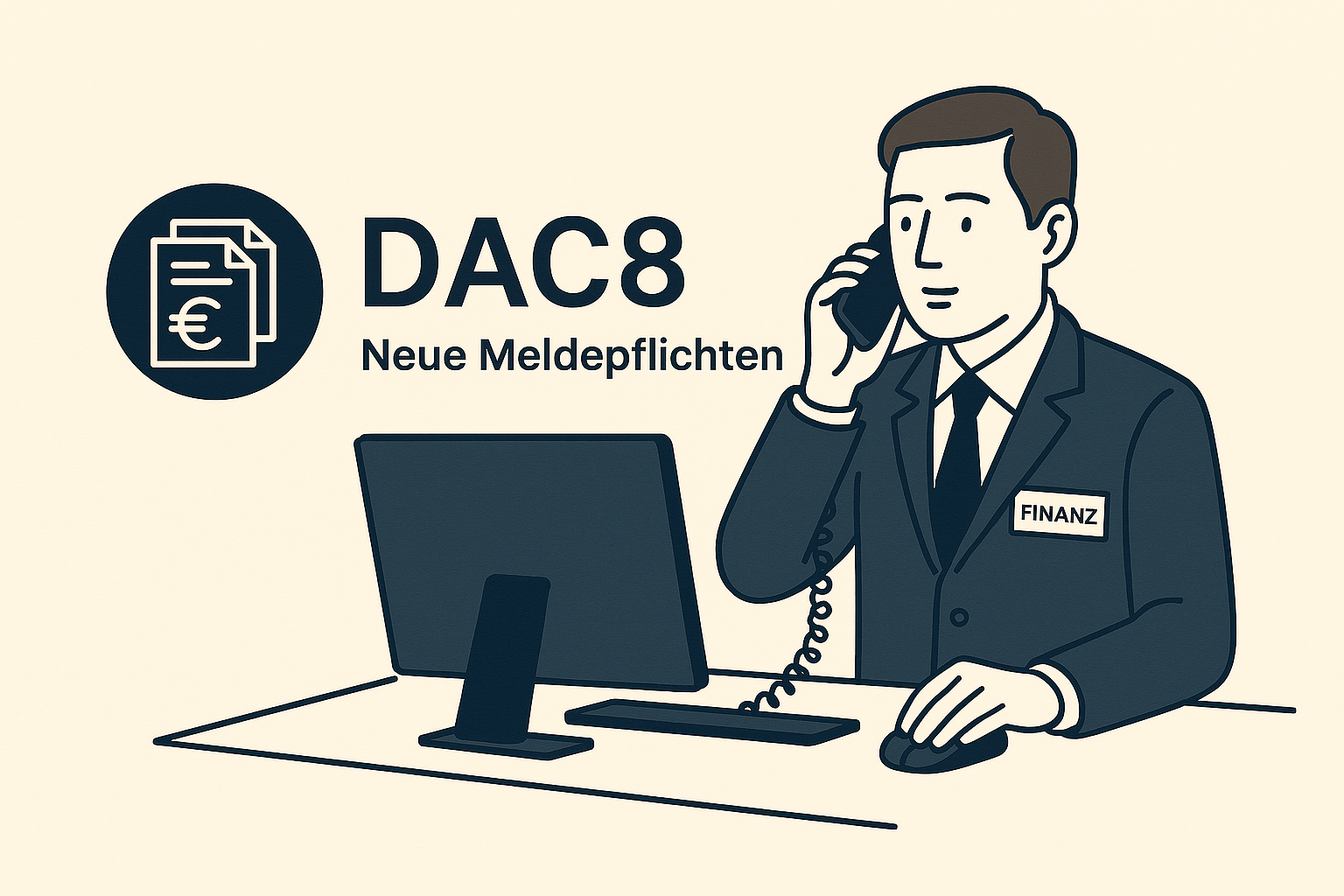
With the implementation of the EU Directive DAC8, Germany will introduce a new transparency regime from 2026. Exchanges, brokers and other crypto service providers will in future have to report all holdings, transactions and customer identities to the tax authorities. The data is automatically exchanged across the EU. This means for investors:
DAC8: End of lack of transparency
- Every transaction, whether purchase, sale, exchange, staking or lending, is subject to reporting.
- Tax offices receive a complete overview of personal crypto activities.
- Incorrect or late information can result in a fine of up to 50,000 euros.
Tax gray areas disappear and correct documentation becomes mandatory.
Favorable tax rules remain – controls are becoming stricter
The good news: The one-year holding period for tax-free crypto profits remains. Anyone who holds Bitcoin, Ethereum and other assets for more than twelve months will continue to pay no taxes on profits.

But from 2026 onwards, the tax offices will be able to automatically check whether holding periods have been observed and whether staking and mining income has been correctly stated.
Consequence: Long-term investors continue to benefit – if their documentation is correct.
Possible Bitcoin supercycle
Several experts expect a multi-year Bitcoin supercycle that could extend into the 30s. Reasons:
- Institutional demand from ETPs and funds
- Supply shortage due to halvings
- Geopolitical uncertainties
- Growing trust in Bitcoin as a store of value
This is relevant for German investors because it shifts investment strategies: away from short-term trading and towards structured, long-term positions.
Self-custody becomes standard
With Tether’s new AI-supported self-custody wallet, a trend is emerging: self-custody becomes easy, secure and automated. The wallet offers:
- Local AI modules instead of cloud dependency
- Support for Bitcoin Lightning network, USDT, XAUT and USAT
- Automated security procedures
- Ein Open Wallet Development Kit
For German investors this means: Self-custody is practical for everyone, but at the same time relevant from a regulatory perspective because private wallets are also subject to the DAC8 regulations as soon as they interact with regulated service providers
Compliance is enforced
Exchanges, brokers and FinTechs may need to reorganize their systems to enable DAC8-compliant reporting. For investors this means:
- KYC processes are becoming stricter
- Transaction histories must be complete
- Tax reports are becoming more detailed
- On-chain analyzes are becoming standard
More opportunities than risks in the new year
Anyone who still switches to unregulated platforms in 2026 risks tax and legal problems. Anyone who relies on clean documentation, regulated providers and a clear strategy early on will see 2026 as an opportunity.




No Comments