Key Highlights
- Vicky Krieps portrays dual roles in Monster: The Lizzie Borden Story — primary character Bridget ‘Maggie’ Sullivan and historical figure Countess Elizabeth Báthory in fantasy flashback sequences.
- The fourth instalment of Ryan Murphy’s Netflix anthology premiered on 19 September 2024, dramatizing the unsolved 1892 axe murders of Andrew and Abby Borden in Fall River, Massachusetts.
- Historical consultant Dr. Annouchka Bayley challenges the ‘Blood Countess’ legend, suggesting Báthory may have been the victim of a politically motivated witch hunt rather than a serial killer.
Vicky Krieps Anchors Dual Roles in Latest Monster Anthology
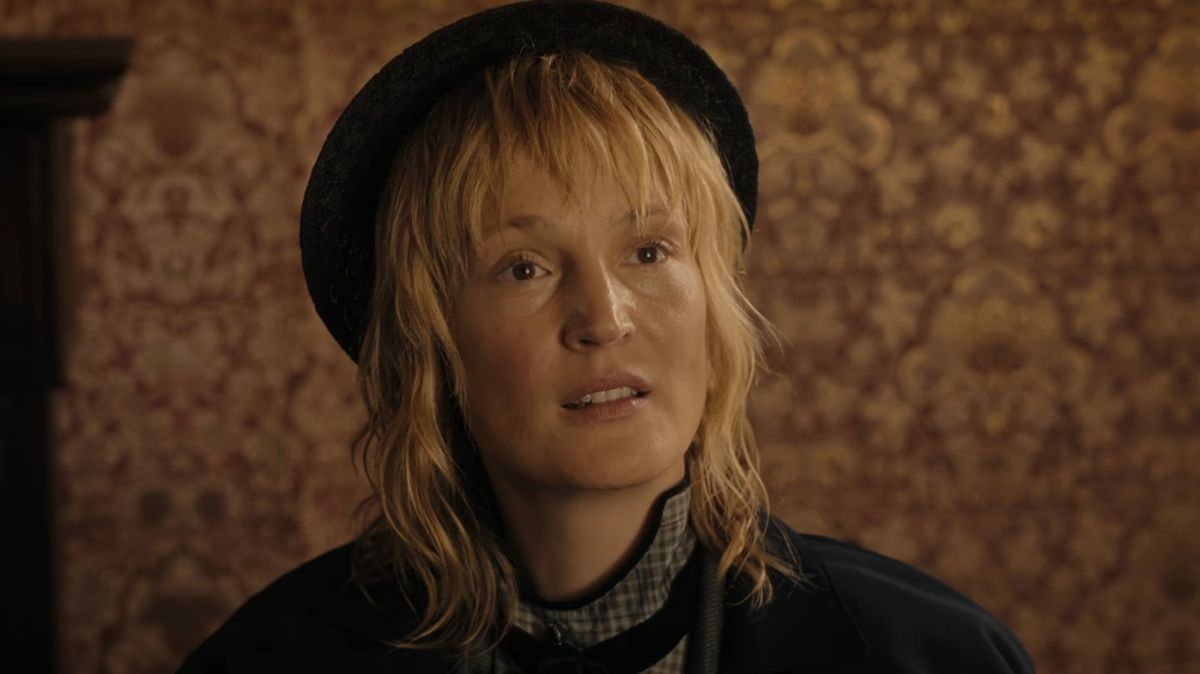
Luxembourg-born actress Vicky Krieps commands significant screen time in the fourth season of Netflix’s Monster anthology, Monster: The Lizzie Borden Story, which debuted on 19 September 2024. The 42-year-old performer takes on a demanding dual assignment: her primary role as Bridget ‘Maggie’ Sullivan, the Bordens’ housekeeper, and a secondary portrayal of Countess Elizabeth Báthory — the infamous “Blood Countess” — in stylized fantasy flashback sequences filmed in Italy. The casting decision for Báthory came late in production, with co-creator Ian Brennan revealing to Tudum that the role remained unfilled until Ryan Murphy proposed Krieps. “That was all shot in Italy, so we knew that that would be at the end of the schedule anyway, and we just couldn’t think of who would do it or who seemed right,” Brennan explained. “It was Ryan’s idea. He pitched it to her and she loved it. Now it seems like such an obvious choice, but it actually came very late in the process.”
A Catalyst for Chaos in the Borden Household
As Bridget Sullivan, Krieps embodies what Brennan describes as a disruptive force within the repressed Borden family dynamic. “She’s like a foreign object that gets introduced to this ecosystem, and completely turns it on its head,” he told TV Insider. The character introduces Lizzie Borden (played by Ella Beatty) to literature, hair dye, sex toys, and the concept of revenge — elements that destabilize the rigid household headed by Andrew Borden (Charlie Hunnam) and his wife Abby (Rebecca Hall). “I think Lizzie’s just completely perplexed [by Bridget] at first. She becomes, very quickly, an object of deep fascination and then desire,” Brennan added. Beatty characterized her collaboration with Krieps as the “most incredible partner in crime,” a description that resonates given the series’ murder-centric narrative.
Ryan Murphy’s Vision: A Feminist, Unapologetic Reimagining
Krieps offered insight into Murphy’s creative direction for Bridget during an interview with Vanity Fair. “The way Ryan thought of it, she’s almost like a Mary Poppins that comes out of nowhere, who can be anyone from any time. Ryan said, ‘It’s women-driven, feminist, lesbian, dirty, unapologetic’.” This framing positions the series as a deliberate subversion of traditional true-crime storytelling, centering female agency and desire within a historical case that has long been sensationalized through a patriarchal lens. The Borden murders — Andrew and Abby Borden were hacked to death with an axe in August 1892 — resulted in Lizzie’s acquittal, though she lived under suspicion until her death in 1927 at age 66.
The Blood Countess: Historical Horror as Narrative Mirror
The Báthory flashbacks serve as a thematic counterpoint to Lizzie’s story. In the series, Maggie recounts the legend of the Hungarian noblewoman who allegedly bathed in the blood of virgins to preserve her youth. “She was completely restored,” Maggie tells Lizzie. “Because…blood is life.” Historical records accuse Elizabeth Báthory of torturing and killing hundreds of young women between 1590 and 1610 alongside four servants; she was imprisoned in Csejte Castle until her death in 1614, while her alleged accomplices were executed. The show depicts her bathing first in milk, then escalating to blood to achieve “pure white skin like a child.” Folklore links Báthory to the evil queen in Snow White, and the series draws explicit parallels: both women were accused of heinous crimes, neither was convicted, and both became cultural bogeymen.
Why This Matters: Revisiting History Through a Revisionist Lens
Monster: The Lizzie Borden Story continues Ryan Murphy’s anthology strategy of re-examining notorious criminal cases through contemporary social frameworks. By casting Krieps in dual roles — one grounded in historical documentation (Sullivan was a real witness at Lizzie’s trial), the other in mythologized history (Báthory) — the series interrogates how female violence is narrated, remembered, and often distorted. The inclusion of Dr. Annouchka Bayley’s scholarly challenge to the Báthory legend underscores a broader editorial intent: to question whether history’s most “monstrous” women were perpetrators or convenient targets for patriarchal suppression. Bayley, a Cambridge associate professor, told the BBC in 2024 after years of research: “I mean, who has the time in one lifetime to, one by one, kill 650 young women? I mean she would have been a busy girl.” She further argued that Báthory — “the first female self-publisher that we have on record” — was likely silenced because her literacy and independence threatened power structures: “And that’s arguably why she needed not only to be shut up, but erased from the history books and, where not erased, turned into a bogeyman. Lock up your daughters — because Báthory is going to come and drain them of their blood to keep her looking young.” This revisionist perspective aligns with the series’ feminist framing and invites viewers to apply similar skepticism to the Lizzie Borden narrative.
Frequently Asked Questions
What two characters does Vicky Krieps play in Monster: The Lizzie Borden Story?
Krieps portrays Bridget ‘Maggie’ Sullivan, the Bordens’ housekeeper and a central figure in the main narrative, and Countess Elizabeth Báthory, the Hungarian “Blood Countess,” who appears in fantasy flashback sequences filmed in Italy.
When did Monster: The Lizzie Borden Story premiere on Netflix?
The fourth season of the Monster anthology premiered on Thursday, 19 September 2024.
Is the Countess Elizabeth Báthory storyline historically accurate?
The series dramatizes the legendary account of Báthory bathing in blood to preserve her youth. However, historian Dr. Annouchka Bayley has argued that Báthory may have been the victim of a politically motivated witch hunt, noting her status as an early female publisher and suggesting the 650-victim claim is logistically implausible. The show presents the legend as a story within the story, told by Maggie to Lizzie, rather than as established fact.