Key Highlights
- The New York Times’ new puzzle game Pips, released in August 2025, reimagines dominoes as a single-player logic challenge with color-coded conditional spaces.
- Daily puzzles span three difficulty tiers—Easy, Medium, and Hard—each requiring players to satisfy mathematical conditions like sums, equality, and inequality constraints.
- Unlike traditional dominoes, touching tiles in Pips do not need to match; only the color-coded zones impose rules, and partial tile coverage within zones is common.
Understanding Pips: The New York Times’ Latest Logic Puzzle
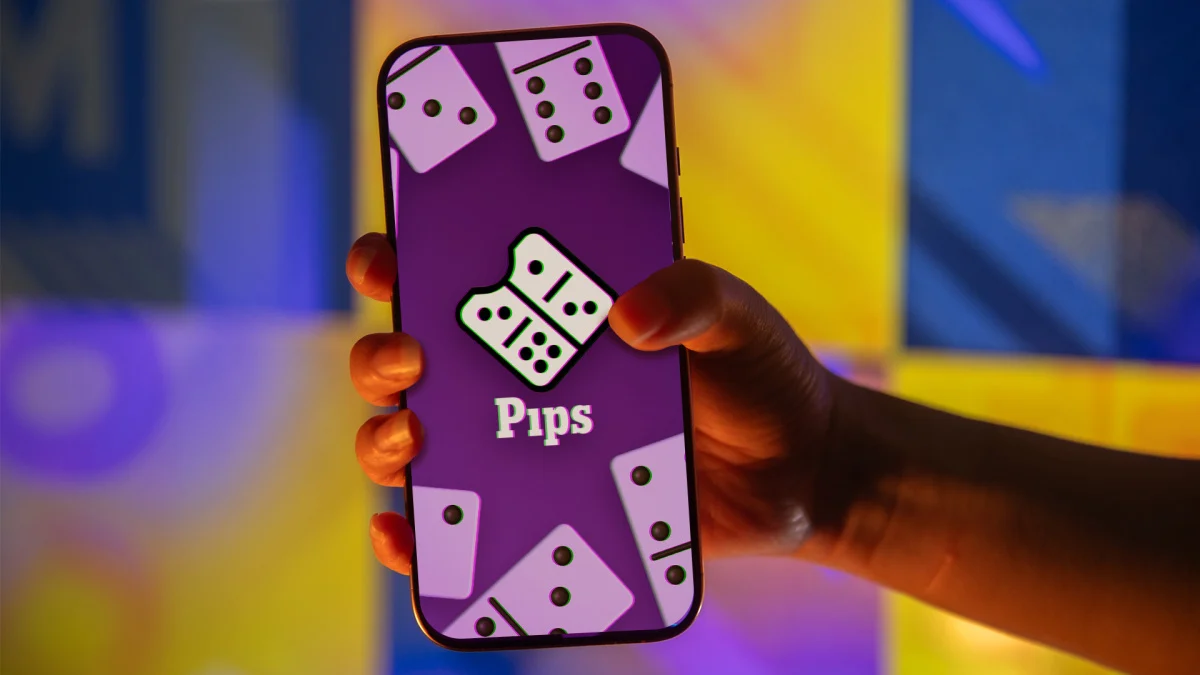
The New York Times continues to expand its gaming portfolio with Pips, a single-player puzzle game that debuted in August 2025. Drawing inspiration from classic dominoes, Pips tasks players with placing double-ended tiles onto a grid where color-coded spaces dictate mathematical conditions. While the tiles themselves resemble standard dominoes—featuring pip counts from 0 to 6 on each half—the resemblance largely ends there. In a significant departure from traditional domino rules, adjacent tiles in Pips are not required to match. Instead, the puzzle’s logic derives entirely from the constraints imposed by colored regions on the board.
How Color-Coded Conditions Drive Gameplay
Each puzzle presents a grid with regions highlighted in distinct colors. These regions carry specific mathematical requirements that apply to every domino half falling within their boundaries—even if only half of a tile occupies the space. Common condition types include Number (all pips in the zone must sum to a target value), Equal (every half must show the same pip count), Not Equal (all halves must differ), Less Than (each half must total less than a given number), and Greater Than (each half must exceed a threshold). Uncolored areas carry no restrictions, offering strategic flexibility. This system transforms the familiar domino tile set into a pure logic instrument, where placement and orientation—horizontal or vertical—become the primary variables under the player’s control.
Daily Puzzle Solutions for September 21, 2026
For players seeking a nudge without revealing the full board, the following piecemeal hints correspond to the September 21, 2026 daily puzzles across all three difficulty levels. Each entry identifies the condition, the affected zone, and the specific tile placement that satisfies it.
Easy Difficulty
- Equal (1): Zone requires all halves to equal 1. Solution: 1-1 placed horizontally.
- Number (1): Zone pips must sum to 1. Solution: 1-5 placed horizontally.
- Greater Than (5): All halves must exceed 5. Solution: 1-6 placed horizontally.
- Equal (5): All halves must equal 5. Solution: 1-5 horizontal; 5-5 horizontal.
- Equal (1): All halves must equal 1. Solution: 1-6 horizontal; 0-1 horizontal.
Medium Difficulty
- Equal (0): All halves equal 0. Solution: 0-0 horizontal; 0-1 horizontal.
- Greater Than (4): All halves exceed 4. Solution: 6-2 horizontal.
- Number (6): Zone sums to 6. Solution: 6-2 horizontal; 4-4 horizontal.
- Greater Than (3): All halves exceed 3. Solution: 4-4 horizontal.
- Equal (1): All halves equal 1. Solution: 0-1 horizontal; 1-4 horizontal.
- Greater Than (3): All halves exceed 3. Solution: 4-4 horizontal.
- Greater Than (7): All halves exceed 7. Solution: 5-5 vertical.
- Equal (2): All halves equal 2. Solution: 2-2 vertical.
Hard Difficulty
- Number (6): Zone sums to 6. Solution: 6-5 vertical.
- Number (10): Zone sums to 10. Solution: 6-5 vertical; 5-2 horizontal.
- Less Than (3): All halves under 3. Solution: 5-2 horizontal.
- Number (1): Zone sums to 1. Solution: 1-5 horizontal.
- Number (4): Zone sums to 4. Solution: 4-0 horizontal.
- Number (0): Zone sums to 0. Solution: 4-0 horizontal.
- Number (0): Zone sums to 0. Solution: 0-5 horizontal.
- Number (6): Zone sums to 6. Solution: 0-5 horizontal; 1-6 vertical.
- Number (6): Zone sums to 6. Solution: 0-6 horizontal.
- Equal (5): Light blue zone, all halves equal 5. Solution: 1-5 horizontal; 5-5 vertical.
- Equal (0): Green zone, all halves equal 0. Solution: 0-6 horizontal; 0-1 horizontal.
- Number (1): Zone sums to 1. Solution: 0-1 horizontal.
- Number (12): Zone sums to 12. Solution: 1-6 vertical; 6-4 vertical.
- Number (9): Red zone sums to 9. Solution: 3-3 vertical; 3-6 horizontal.
- Equal (6): All halves equal 6. Solution: 3-6 horizontal; 6-6 horizontal.
- Equal (4): All halves equal 4. Solution: 4-4 horizontal; 6-4 vertical.
Why This Matters: The Evolution of NYT’s Puzzle Ecosystem
The launch of Pips signals the New York Times’ continued investment in original logic games beyond its flagship Wordle, Spelling Bee, and Connections franchises. By adapting the universally recognized domino tile set into a constraint-satisfaction puzzle, the Times lowers the barrier to entry while introducing a fresh mechanical vocabulary—color-coded zones, partial-tile logic, and non-matching adjacency—that distinguishes Pips from both traditional dominoes and existing grid-based puzzles like Sudoku or KenKen. The daily release cadence across three calibrated difficulty tiers mirrors the Times’ proven habit-forming model, encouraging routine engagement. For the broader puzzle market, Pips represents a hybrid category: accessible enough for casual solvers yet deep enough to support dedicated strategy communities, potentially expanding the Times’ subscriber base in the competitive digital games landscape.

Dylan Efron Reacts to Derek Hough’s Hilarious Tyler Cameron ‘DWTS’ Flub and Viral TikToks
Frequently Asked Questions
How does Pips differ from traditional dominoes?
In Pips, adjacent tiles do not need to match. Instead, color-coded zones on the grid impose mathematical conditions—such as sums, equality, or inequality—that apply to every domino half within them, even if only half a tile falls inside the zone. Uncolored spaces have no restrictions.
What are the difficulty levels in Pips and how do they scale?
Pips offers three daily difficulty tiers: Easy, Medium, and Hard. Easy puzzles feature fewer zones and simpler conditions. Medium introduces more zones and combined constraints. Hard expands the grid further, adds more condition types (including Less Than), and uses color coding to distinguish overlapping zones with different rules.
Where can I play Pips and find daily hints?
Pips is available in the New York Times Games catalog. Daily hints and piecemeal solutions for each difficulty level are published by outlets like Mashable, which also operates a games hub featuring Mahjong, Sudoku, and free crosswords for additional puzzle variety.