Key Highlights
- The New York Times released daily hints for its Pips puzzle on September 20, 2026, covering Easy, Medium, and Hard difficulty tiers with specific tile placements.
- Pips, launched in August 2025, reimagines dominoes as a single-player logic game where color-coded spaces impose mathematical conditions rather than requiring matching pips.
- Mashable’s guide provides piecemeal hints per colored region to prevent the game’s native “reveal entire puzzle” feature from spoiling the full solution.
New York Times Pips Puzzle Gets Daily Hint Guide for September 20
Understanding Pips: A Single-Player Domino Variant
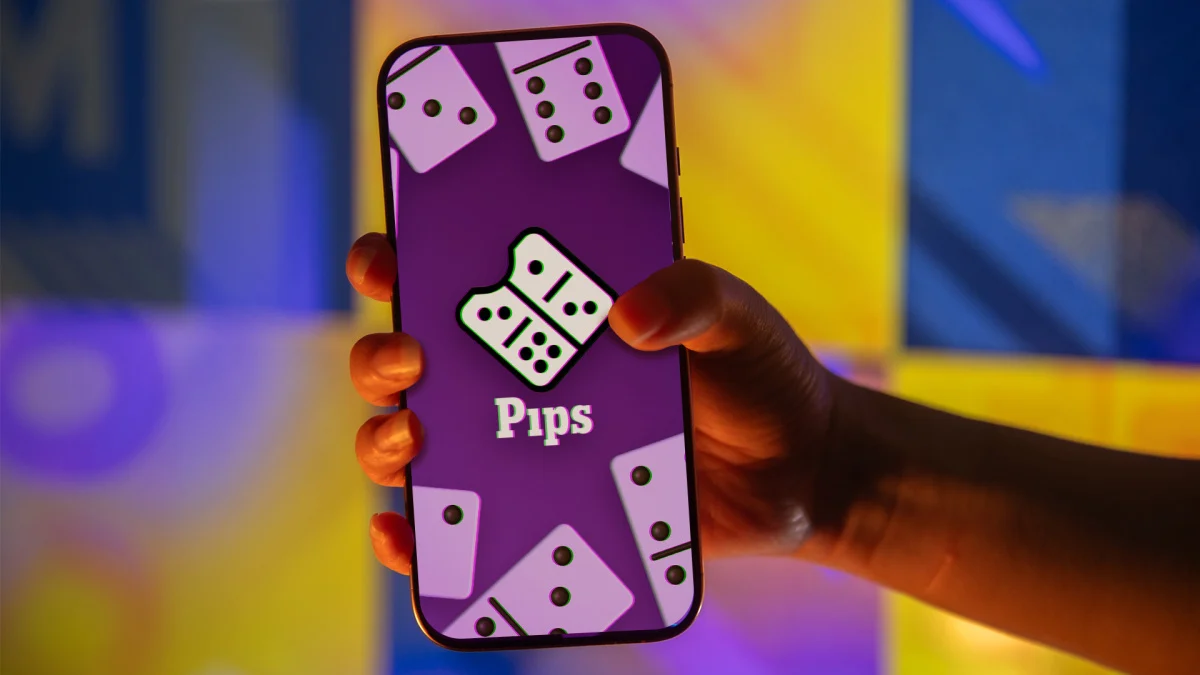
The New York Times continues to expand its gaming catalog with Pips, a single-player puzzle game released in August 2025 that puts a distinctive spin on traditional dominoes. Unlike conventional dominoes where touching tiles must match pip counts, Pips introduces color-coded spaces that impose specific mathematical conditions on the tile halves placed within them. Tiles can be oriented vertically or horizontally, and it is common for only half a domino to fall inside a conditioned space. The game currently offers a single native hint mechanism: revealing the entire puzzle solution, which forces the player to advance to the next difficulty level and start over. To bridge this gap, Mashable has published a structured hint guide for the September 20, 2026 edition that breaks down solutions by individual color-coded regions across all three difficulty settings.
Color-Coded Conditions Replace Traditional Matching Rules
The core innovation in Pips lies in its condition types, each tied to a distinct color. Number spaces require all pips within the region to sum to a target value. Equal spaces demand every domino half show the same pip count. Not Equal spaces require all halves to display different values. Less Than and Greater Than spaces set upper or lower bounds on the sum of pips in each half. Uncolored spaces carry no restrictions. This system transforms the familiar domino tile set into a logic puzzle where placement and orientation must satisfy overlapping arithmetic constraints. The September 20 puzzle exemplifies this design: the Easy tier features five Number regions and two Equal regions with targets such as 1, 8, and 9; the Medium tier introduces Greater Than, Less Than, and multiple Number regions color-coded orange, dark blue, purple, and red; the Hard tier layers ten distinct conditions including Equal (0), Equal (1), Equal (2), Greater Than (3), Greater Than (4), Less Than (2), Less Than (3), and Number spaces targeting 5, 8, 9, and 10.
Tiered Solutions for Easy, Medium, and Hard Difficulties
Mashable’s guide enumerates the exact tile, orientation, and placement for each conditioned space. On Easy, the Number (1) region at the top resolves to a vertical 1-4; the Equal (0) region takes a vertical 0-0 and a vertical 0-6; two Number (8) regions accept vertical 4-2 and vertical 1-4; a Number (9) region uses vertical 0-6 and vertical 3-1; and a final Number (1) region takes vertical 3-1. Medium difficulty adds spatial complexity: a Greater Than (3) region requires vertical 6-5; another Greater Than (3) takes horizontal 4-2; an Equal (2) region spans horizontal 4-2, horizontal 2-3, and vertical 2-5; a Less Than (3) region uses horizontal 1-6; and four Number (9) regions—orange, dark blue, purple, and red—each receive two specific tile placements. Hard difficulty compounds these mechanics across ten regions, including an Equal (0) region demanding four tiles (vertical 1-0, vertical 0-4, vertical 0-0, horizontal 0-6), a Number (10) region solved by horizontal 5-5, and a final Equal (2) region requiring vertical 6-2 and vertical 2-2.
Why This Matters
The publication of daily hint guides for Pips reflects the growing ecosystem around the New York Times’ games portfolio, which now includes Wordle, Connections, Strands, and the Crossword. As the Times seeks to deepen subscriber engagement through daily puzzle habits, third-party hint providers like Mashable fill a critical usability gap: the game’s built-in hint system is binary and punitive, offering only a full reveal that resets progress. By mapping solutions to individual color-coded regions, these guides preserve the puzzle’s logic-solving core while preventing frustration-induced churn. The September 20 guide also serves as a de facto tutorial, illustrating how each condition type manifests across escalating difficulty tiers. For the Times, a robust hint culture signals strong player investment and can drive retention; for players, it lowers the barrier to entry for a game whose rule set is more abstract than Wordle or Connections.
Frequently Asked Questions
What is Pips and how does it differ from traditional dominoes?
Pips is a single-player puzzle game released by the New York Times in August 2025. While it uses domino-style tiles placed vertically or horizontally, the core difference is that touching tiles do not need to match. Instead, color-coded spaces on the board impose mathematical conditions—such as sums, equality, inequality, or greater/less-than thresholds—on the pip values of tile halves within those spaces.
How do the color-coded conditions work in the September 20, 2026 puzzle?
Each color corresponds to a rule: Number spaces require all pips in the region to add up to a given total; Equal spaces require every domino half to show the same pip count; Not Equal spaces require all halves to differ; Less Than and Greater Than spaces bound the sum of pips per half. The September 20 puzzle applies these rules across Easy (5 regions), Medium (9 regions), and Hard (10 regions) tiers, with each region solved by specific tile placements listed in the guide.
Why does the game’s native hint system force a full reveal, and how does this guide help?
The New York Times’ built-in hint for Pips only offers to reveal the entire puzzle solution, which advances the player to the next difficulty and restarts the level. Mashable’s guide circumvent this by providing region-by-region answers, allowing players to unstick themselves on a single colored space without spoiling the rest of the board or losing their progress on the current difficulty.