Key Highlights
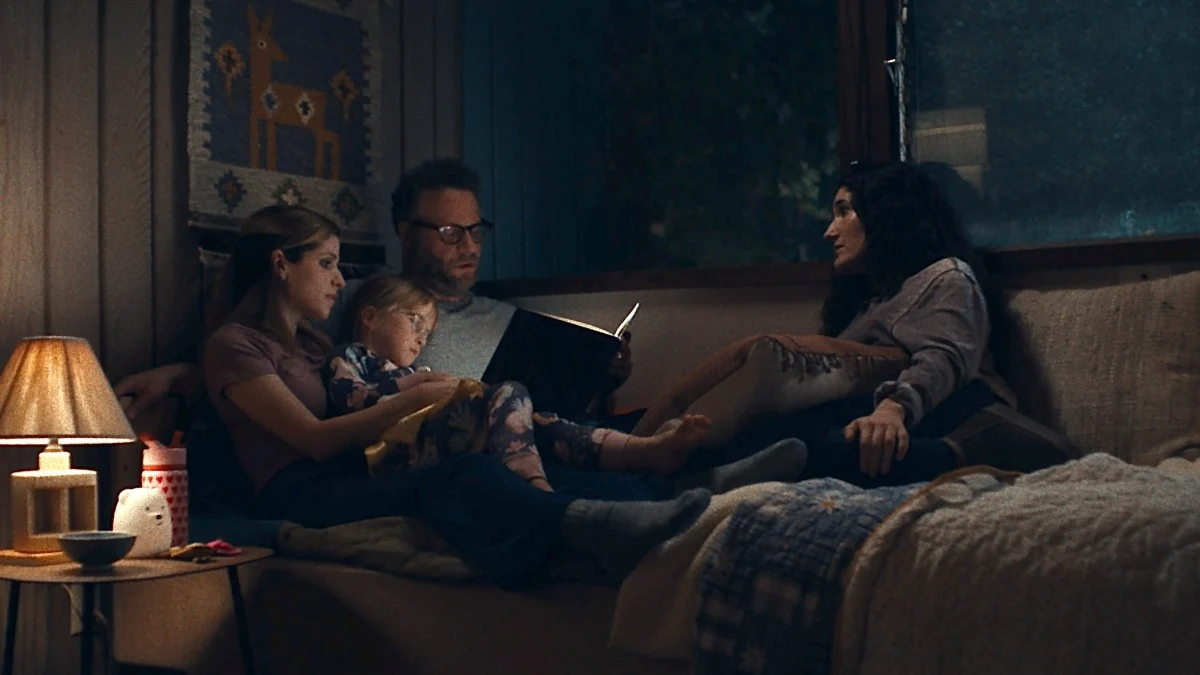
- Lauren Miller Rogen’s directorial debut Babies world premiered at the Toronto International Film Festival, starring Anna Kendrick and Seth Rogen as a child-free couple confronting societal pressure and personal ambivalence about parenthood.
- The comedy balances raunchy humor with a grounded subplot about caring for a parent with dementia, challenging the stereotype that child-free adults lack significant caregiving responsibilities.
- Rather than succumbing to external expectations from friends or family, the central couple’s decision about children emerges from their own values, offering rare on-screen representation of child-free life without regret or tragedy.
The Premise: A Comedy Born from Real-Life Pressure
“When are you going to put a baby in there?!” This was the question an acquaintance asked me as she grabbed my belly with both of her hands and and shook it, while a gaggle of mothers and grandmothers smiled on approvingly. That was just the first time this happened. While aggressive pressure to become a parent didn’t always involve a near-stranger rattling my vacant uterus, it was always uncomfortable.
Thankfully, Babies has come for those of us who have endured the bizarre barrage of personal questions that come from the heteronormative assumption that all married couples must procreate. Written and directed by Lauren Miller Rogen, and co-starring her husband Seth Rogen opposite Anna Kendrick, this hilarious comedy explores what it means to be the only child-free couple left when all your friends have gone the breeder route.
Meta Context and Creative Pedigree
From For A Good Time, Call… to Babies
Babies carries a can’t-miss meta context. In 2021, Miller Rogen co-wrote the sidesplitting buddy comedy For A Good Time, Call… in which she starred with Ari Graynor as two twenty-somethings running a phone sex line to make a living in New York City. First off, if you missed that movie, seek it out. It’s one of the funniest buddy comedies ever made, and criminally underseen. Secondly, Miller Rogen takes the wit and irreverence shown in that funny film and channels it into an exploration of what it means to consider the kids question.
Life Imitating Art
Kendrick stars as the writer/director’s alter ego, Annie, while Seth Rogen plays the happy-go-lucky husband, Aaron. Fans of the Rogens will recognize some similarities, as Babies‘ central couple is child-free, loves making pottery, and smoking weed. Plus, Annie, like Miller Rogen, has a mother who’s suffering from debilitating dementia. Knowing any or all of this will enrich Babies, as it gives Annie and Aaron’s inner-monologue narrations an inherently more personal feel.
Dual Portraits of Motherhood: The Dream and the Nightmare
Don’t be mistaken. Babies isn’t taking the Knocked Up route, splitting the focus between Rogen’s chuckling dude and his anxious partner. Most of the movie is firmly on Annie, revealing how she’s trying to build her own art gallery while juggling the needs of her friends, who are both moms with a lot going on.
Blissful Becky (Issa Rae) seems initially like a poster girl for moms, radiant while pregnant, adored by her husband (Zach Cherry), and patiently balancing the demands of her daughters with the rigors of her work. Meanwhile, high-strung Eliza (Kate Berlant) is a real estate agent with a quirky kiddo that she shares with a mirthful manchild (Dan Stevens) that she’s steadily growing to hate. With these two figures, Miller Rogen deftly sets up the dream of motherhood — and a nightmare of it. What if she can’t live up to the example of the former? What if becoming the latter would destroy her relationship with her partner?
Test-Driving Parenthood: Babysitting as Social Experiment
Annie and Aaron’s ambivalence about parenthood is tested when they’re trusted to babysit a friend’s kid for months. It becomes like a sampling of parenthood, which they respond to with a mix of amusement, irritation, and horror. But whether they’re learning the quirks of potty training or the pleasures of playtime, Babies keeps things fun.
When Comedy Gets Serious: The Elder Care Subplot
Dementia Care as Counter-Narrative
Babies gets smartly serious. Through a running inner monologue, Annie expresses to the audience the less-than-socially acceptable fears and frustrations about motherhood. Miller Rogen’s terrific script brings bite and humanity to her humorous heroine, making for side-splitting observations. However, as Annie visits with her folks, Babies steps into another challenging part of growing up: caring for elderly parents.
Annie’s mother is no longer ambulatory, can’t speak or eat on her own. She’s cared for by her husband (David Straitharn) and a health aide. This subplot swiftly dispels the notion that the child-free have no substantial personal responsibilities. Plus, these scenes — tender, tense, and occasionally heart-breaking — suggest how what was right for our parents might not be right for us, and vice versa. Heart-to-heart conversations with her dad push Annie to consider not only what she wants for her life, but what he needs for his. And in this collision, both grow closer, even in the face of grief.
Tone and Resolution: Absurdity Meets Meaning
This thoughtful dose of drama amid poop jokes and comically high-energy crashouts gives Babies an added dimension that reflects how even the silliest moments can have deep meaning, while defining, dramatic moments can also be absurd. This awareness makes Babies feel like a breath of fresh air, as the Rogens and their ensemble of rightly celebrated actors refuse to make a punchline out of the desires of the child-free.
This all leads to a climax that’s silly and satisfying. What Aaron and Annie choose won’t be determined by pressure of friends or family, or the fears of what might come. And in that, this comedy is not just terrifically entertaining and heartwarming, but also a welcomed representation of living child-free without regrets.
Why This Matters
Babies arrives at a cultural moment when reproductive autonomy and the validity of child-free lives are increasingly visible in public discourse, yet remain underrepresented in mainstream cinema. By centering a child-free couple whose narrative arc isn’t defined by tragedy, infertility, or eventual capitulation to pressure, the film expands the emotional vocabulary available to audiences navigating similar choices. The dementia-care subplot simultaneously addresses the looming “elder care crisis” facing millennials and Gen X, reframing caregiving as a universal human experience rather than one exclusive to parents. Premiering at the Toronto International Film Festival signals industry recognition for a comedy that refuses to flatten its characters into archetypes, instead letting Anna Kendrick’s Annie occupy the messy, funny, contradictory space where most real decisions are made. For viewers, the film offers both catharsis and a rare cinematic mirror: proof that a life chosen deliberately — not by default — can be the punchline and the victory.
Frequently Asked Questions
- Who stars in Babies and who directed it?
- The film is written and directed by Lauren Miller Rogen. Anna Kendrick stars as Annie, Seth Rogen as Aaron, with Issa Rae as Becky, Kate Berlant as Eliza, Dan Stevens as Eliza’s partner, Zach Cherry as Becky’s husband, and David Straitharn as Annie’s father.
- Where did Babies premiere?
- Babies had its world premiere at the Toronto International Film Festival (TIFF).
- What are the main themes of Babies?
- The film explores societal pressure on married couples to have children, the ambivalence of reproductive choice, the realities of dementia caregiving, friendship dynamics across diverging life paths, and the validity of a child-free life chosen without regret.