Key Highlights
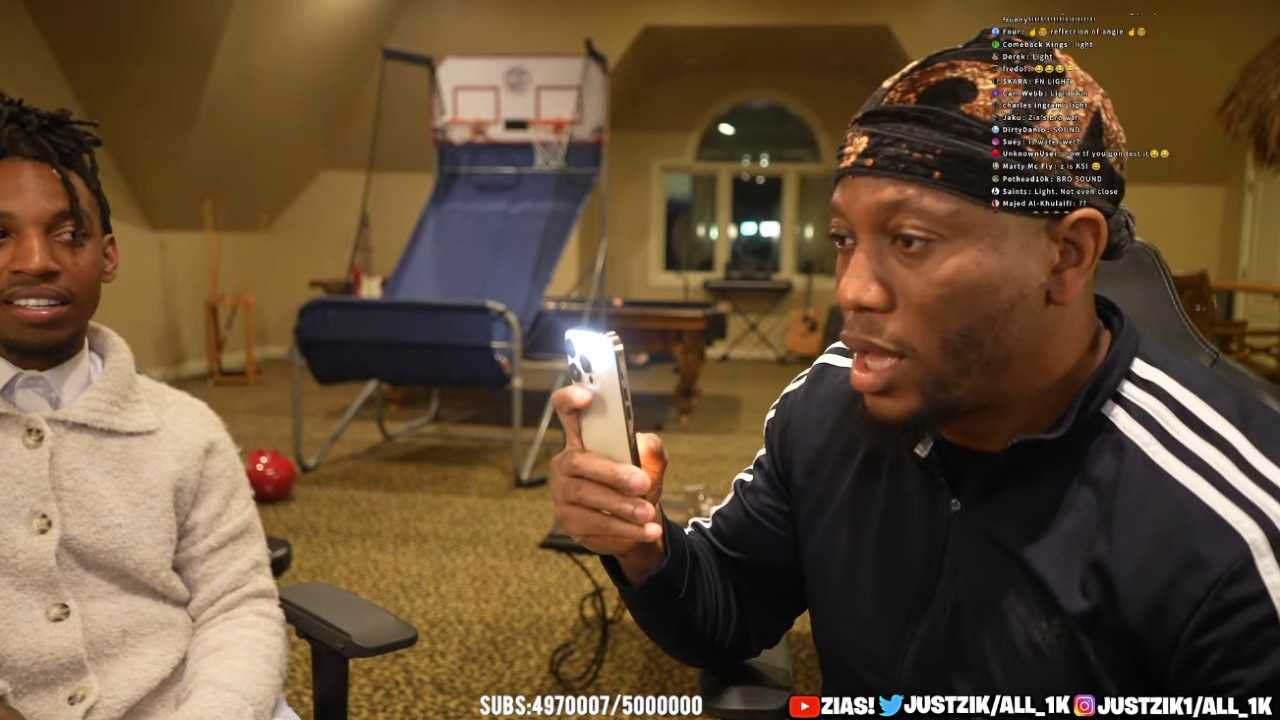
- Streamers Zias and B.Lou inadvertently sparked a viral science meme on March 22, 2025, by testing if sound or light travels faster using a phone flashlight and an “Ah” vocalization.
- The clip gained massive traction on TikTok in 2025 and experienced a significant resurgence in September 2026, inspiring ironic “great scientists” edits across TikTok and Instagram Reels.
- The phenomenon highlights how spontaneous creator moments can evolve into enduring internet folklore, blending genuine curiosity with absurdist humor across platform algorithms.
The Origin: A Backyard Physics Experiment Goes Viral
On March 22, 2025, popular streamers Zias and B.Lou conducted an impromptu physics demonstration during a live broadcast that would unexpectedly capture the internet’s imagination. The duo attempted to settle a rudimentary scientific question—whether sound or light travels faster—by simultaneously activating a smartphone flashlight and emitting a vocal “Ah” sound. The premise was simple: observe which sensory signal reached the camera or microphone first. While the laws of physics dictate light’s decisive victory at roughly 299,792 kilometers per second versus sound’s 343 meters per second in air, the execution’s charmingly unscientific nature—relying on consumer-grade hardware and human reaction times—struck a chord with viewers. The clip rapidly circulated on TikTok throughout 2025, amassing millions of views as audiences delighted in the streamers’ earnest yet flawed methodology.
Resurgence and the “Great Scientists” Irony
Approximately 18 months after its initial explosion, the footage found new life in September 2026. A fresh wave of video edits and memes flooded TikTok and Instagram Reels, this time steeped in heavy irony. Creators began captioning the clip with hyperbolic praise, referring to Zias and B.Lou as “great scientists,” “physics pioneers,” and “the Einstein and Newton of our generation.” This satirical framing transformed the original moment from a mere viral blooper into a collaborative inside joke. The resurgence demonstrates the cyclical nature of short-form video trends, where older content is excavated by algorithm-driven “For You” pages and reinterpreted through the lens of current meme culture—specifically, the post-ironic humor that celebrates mundane actions as historic achievements.
Anatomy of a Cross-Platform Meme Lifecycle
The trajectory of the “Sound Faster Than Light Test” offers a case study in modern meme propagation. The initial 2025 virality was driven by TikTok’s algorithm amplifying authentic, unscripted creator interactions. The 2026 revival, however, was fueled by remix culture: editors isolated the flashlight-and-“Ah” sequence, layered it with dramatic orchestral scores, fake documentary narration, and pseudo-academic graphics, then distributed these derivatives across both TikTok and Instagram Reels. This cross-pollination between Meta’s and ByteDance’s ecosystems underscores how memes no longer remain platform-exclusive; they migrate fluidly, adapting to each community’s distinct comedic vernacular while retaining the core visual anchor. Zias and B.Lou, established figures in the streaming and reaction-video sphere, became unwitting mascots for a joke about scientific illiteracy that required their genuine personalities to land effectively.
Why This Matters
The enduring popularity of the Zias and B.Lou clip illustrates a broader shift in digital culture: the blurring line between content creation and collective folklore. In an era where attention spans are measured in seconds, a three-second improvisation from a March 2025 stream can generate two distinct viral cycles separated by over a year. For platforms, it validates the long-tail value of archived live content. For creators, it serves as a reminder that unguarded moments often outperform polished productions in meme potential. For audiences, the “great scientists” narrative provides a shared language of absurdity—a way to collectively pretend that two streamers yelling at a flashlight constitutes a peer-reviewed breakthrough. As algorithmic resurfacing becomes more sophisticated, expect more “dormant” clips to re-enter the cultural bloodstream with entirely new ironic contexts attached.
Frequently Asked Questions
- When did the original Zias and B.Lou “Sound Faster Than Light Test” stream take place?
- The original stream occurred on March 22, 2025, during which the streamers attempted the flashlight-and-vocalization experiment live.
- Why did the clip go viral again in September 2026?
- The resurgence was driven by ironic meme edits on TikTok and Instagram Reels that humorously labeled Zias and B.Lou as “great scientists,” repurposing the 2025 footage into a new absurdist trend.
- What does the meme reveal about internet culture?
- It highlights how algorithms resurface old content for new audiences, how irony layers transform genuine moments into shared folklore, and how cross-platform distribution (TikTok to Instagram Reels) extends a meme’s lifespan and mutates its meaning.