
‘Most unethical human experiment of all time’ was followed-up one month later to see true influence

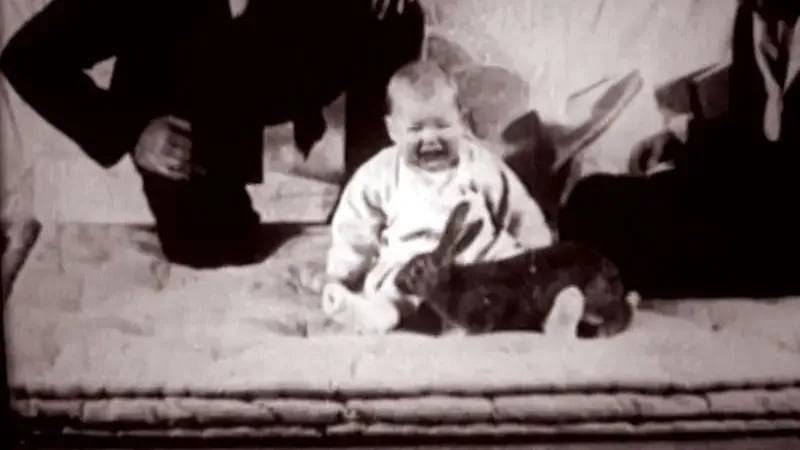
Within the rankings of probably the most unethical experiments of all time, there are sadly a lot of candidates, and amongst them is the ‘Little Albert experiment’.

Outcomes of the research have been revealed in 1920 and have been impressed by Pavlov’s canine, that well-known behavioural conditioning experiment the place a person taught his canine to affiliate the sound of a ringing bell with meals, and finally they’d salivate at simply the sound of the bell even when there was nothing to eat.
US psychologist John B. Watson and graduate pupil Rosalie Rayner determined to take issues a step additional by experimenting with conditioning methods on a nine-month previous child named Little Albert.
They wished to see if they may situation the toddler to turn into afraid of sure animals, with them exhibiting the child varied issues together with a rabbit, monkey, a white rat, and burning newspapers.
When the white rat was proven, they performed a loud noise to scare Little Albert and see if they may get him to affiliate the sight of it with concern.
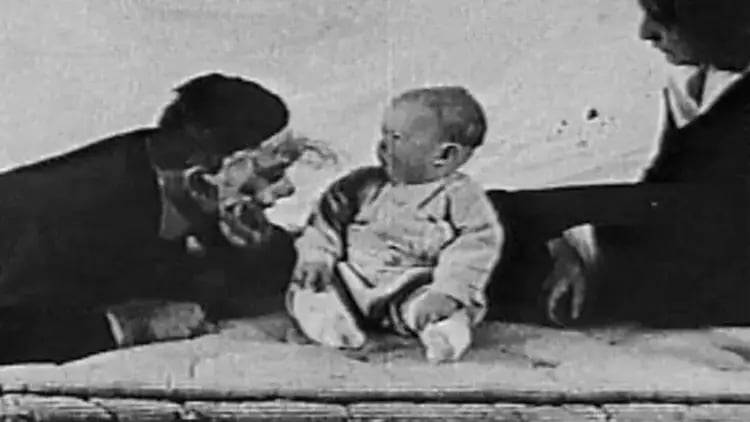
The Little Albert experiment
In keeping with Simply Psychology, through the first session with the nine-month previous, they managed to make the child cry as a result of scarily loud noise, and in subsequent classes, they conditioned Albert to affiliate the scary noise with the white rat.
They recorded through the second session that the noise and sight of the rat produced a ‘startle/whimper’, and per week later they’d a 3rd session the place simply the rat alone ‘elicited delicate concern’.
Albert was then subjected to 5 situations of the scary noise and the rat, after which once they confirmed the little boy the rat by itself once more, his response was one in every of ‘sturdy concern’.
Just a few days later, they began exhibiting him different issues, most of which scared him, whereas on the fifth session, they scared the kid with a barking canine.
All of this was deeply unethical and amounted to at least one very scared baby.
Returning a month later
Sadly for Little Albert, they weren’t fairly accomplished with him, because the researchers visited him once more a month later for one last session the place he was as soon as once more afraid of the issues they confirmed him.
He was scared at any time when he noticed the rat, although he did not cry when he noticed it now, and the scientists recorded that the boy was ‘shuddering’ and ‘thumb-sucking’ to consolation himself.
Albert’s mom took him out of the hospital so there have been no ‘deconditioning’ exams.
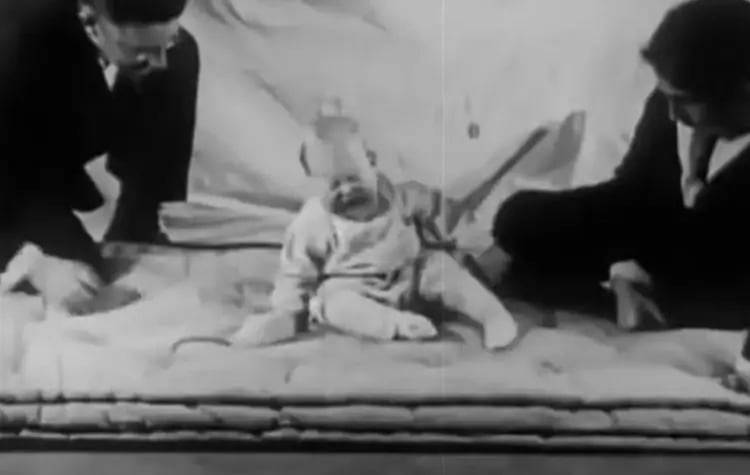
Why it would not be accomplished immediately
The obvious reply is that it is deeply unethical to torment kids within the identify of science.
The outcomes of the research have additionally been questioned over time, as Little Albert was simply 9 months previous when the classes began and thus could not give consent to the experiments.
As for what occurred to Little Albert, that is unclear, as subsequent researchers attempting to determine him discovered two potential candidates.
Corridor Beck of Appalachian State College recognized the boy as Douglas Merritte, the son of a moist nurse who labored at Johns Hopkins College Hospital the place the experiments have been accomplished.
Sadly the boy suffered from water on the mind, which led to intervals of blindness in his brief life earlier than he died on the age of six.
Russ Powell of MacEwan College in Alberta thought Little Albert was really another person, William Albert Barger, who lived a protracted and completely happy life till he died in 2007.
His niece did not know if he was the kid from the experiment, however she did say her uncle had an aversion to animals.


No Comments