
Key Highlights
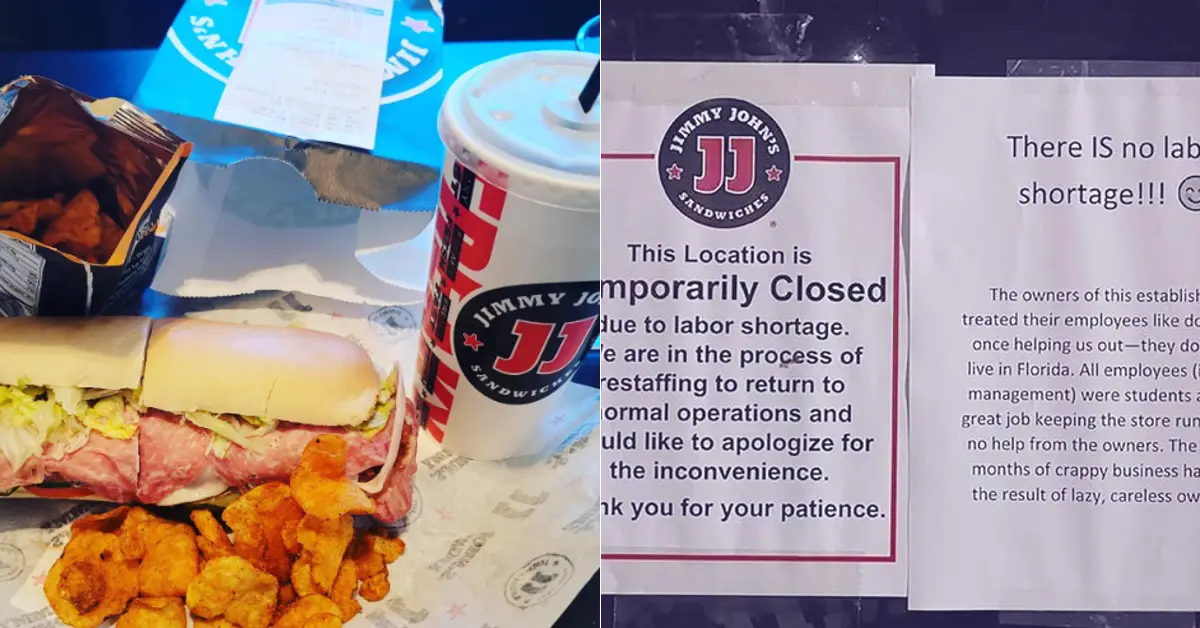
- Employees at a Florida Jimmy John’s location publicly challenged upper management’s claim of a “labor shortage.”
- The workers’ rebuttal gained significant traction online, going viral across social media platforms.
- The incident highlights ongoing tensions between frontline staff and corporate narratives regarding staffing levels in the fast-food industry.
Florida Jimmy John’s Staff Dispute Corporate “Labor Shortage” Narrative
A Jimmy John’s franchise location in Florida became the center of online attention after its employees publicly contradicted upper management’s assertion that the restaurant was suffering from a “labor shortage.” The workers’ decision to expose what they characterized as a false narrative struck a chord with a broad audience, rapidly circulating across social media and drawing scrutiny to the sandbox chain’s staffing practices.
Workers Challenge Management’s Account
The conflict emerged when employees at the Florida location took issue with the explanation provided by higher-level management for operational difficulties. According to the staff, leadership had cited a widespread “labor shortage” as the primary reason for understaffing or service issues. The workers rejected this characterization, arguing that the reality on the ground did not align with the corporate messaging. Their collective pushback suggests a disconnect between the franchise’s public-facing justifications and the internal experience of the team members responsible for daily operations.
Viral Response Amplifies Workplace Grievances
The employees’ decision to air their grievances publicly resonated far beyond the local community. The story quickly went viral, amassing significant engagement as users shared and commented on the workers’ rebuttal. The widespread reaction underscores a growing public skepticism toward the “labor shortage” label, which critics argue is often used by employers to obscure issues related to wages, working conditions, or retention strategies. The Florida Jimmy John’s case has become a flashpoint in this broader discourse, illustrating how frontline workers are increasingly leveraging digital platforms to contest employer narratives in real time.
Why This Matters
The incident at the Florida Jimmy John’s reflects a systemic friction point within the quick-service restaurant sector. For years, industry groups and franchise operators have pointed to a structural “labor shortage” to explain hiring challenges. However, labor economists and worker advocates frequently counter that the issue is more accurately described as a “wage shortage” or a failure to offer competitive compensation, stable scheduling, and adequate benefits. When employees at a specific location successfully dispute the shortage claim with evidence of applicant interest or retention failures tied to management practices, it undermines the macroeconomic argument and shifts focus to operator-level decisions. As labor organizing efforts gain momentum in the fast-food space—from unionization drives to legislative pushes for sectoral bargaining—viral moments like this serve as both evidence and catalyst, empowering workers at other chains to document and challenge similar discrepancies.
Frequently Asked Questions
Which Jimmy John’s location was involved?
The source identifies the restaurant only as a Jimmy John’s franchise in Florida. The specific city or franchisee group has not been disclosed in the initial viral report.
What exactly did the employees say to dispute the labor shortage claim?
The workers contended that upper management’s “labor shortage” explanation was a lie, implying that staffing issues stemmed from other factors such as pay, scheduling, or management decisions rather than a lack of available applicants.
Has Jimmy John’s corporate responded to the viral incident?
Based on the available source information, no official statement from Jimmy John’s corporate headquarters or the relevant franchise ownership group has been reported in connection with this specific Florida location’s viral moment.